


 Eelvaade
 Saada
Saada Jaga
Jaga
 Teave teose kohta
 Juhend

 Laadi alla
 Sarnased teosed
 Röntgenuuring
 Slaidietendus
 Statistika
Composition


 Loe lähemalt
Hankige trükiivaldatav fail, mis on kvaliteedilt palju parem kui veebilehel näidatud eelvaade. Kõik meie müüdavad digitaalsed pildid pärinevad meie arhiivist kõrge resolutsiooniga originaalfailidest — tavaliselt 5000 kuni 15 000 pikslit laiust — nii et saate julgelt trükida suurematsat, lüüdist teha või detailset sisu reproduktsiooni teha.
Meie stuudiost ei lahtu ükski fail puutumatuna. Digiekpert võrdleb värve algsest maalistimusega ja vajadusel korrigeerib neid, seejärel parandab selgust ja detaile professionaalsete retušimisvahendite abil — püüdes alati jääda truudeks kunstniku pintoonile ja stiilile. Tulemuseks on pilt, mis näeb välja nagu maali, mitte nagu filtreeritud skann.
Teet kinnituse enne lõplikku valmimist: meie ekspert saadab pildi 72 tunni jooksul e-posti ülevaatamiseks. Ei ole rahul? Paluge parandusi või korrektsioone ning kui kvaliteet ei vasta ootustele, võite paluda tagastamist.
See on kvaliteet, millele tuguvad väljaandjad, disainistuudiod, galeriid ja trükikoda.
Digitaalne kunstiteos
Laadi alla kõrge resolutsiooniga fail isiklikuks vaatamiseks, trükkimiseks ja loomingulisteks projektideks. ( Lülita trükkitoodetele Osta käsitsi maalatud teos)
Sisse kuulub iga digitaalse pildi tellimusega
Eksperdi digitaalne kohaletoimetamine, garanteeritud
Valides AllPaintingsStore.com, ei saa sa lihtsalt pilti – saad professionaalselt parandatud digitaalse teose, mida on valmistatud täpsusega ja mis on toetatud rahuldamatusgarantiiga. Siin on kõik, mis sinu tellimusega automaatselt kaasneb:

Kiire digitaalne edastus
Teie kõrge resolutsiooniga digitaalne pildifail saadetakse teile e-posti 72 tunni jooksul pärast tellimist – kohe kasutamiseks valmis.

Tehisintellektiga täiustatud digitaalne fail
Teie teos on professionaalselt optimeeritud arenenud tehisintellekti tööriistade ja käsitsi redigeerimise abil, tagades maksimaalse detailitaseme, selguse ja värvitäpsuse.

Tasuta eluaegne uuesti saatmine
Kas kustutasid faili kogukalu unustamisel või kustutamisel? Puudub mure – saad selle uuesti igal ajal ilma lisatasuta.

Puuduvad importimaksud – alati
Nautige oma teoseid koheselt ilma tolli-, maksude või tarnimaskuludeta – digiletchargused on alati maksuvabadud.

Värvitäpsuse garantii
Me tagame, et teie digitaalne pilt kajastaks originaali värve professionaalsete tööriistade ja värvihalduse abil võimalikult täpselt.

100 päeva rahuldamatuse garantii
Kui te ei ole oma digitaalse pildi eest rahul, siis me parandame seda või tagastame 100% summast 100 päeva jooksul – küsimusteta.

100% raha tagastamise garantii
Ei ole rahul? Saate täielise tagastaja 100 päeva jooksul pärast digitaalse faili kättesaamist – ilma küsimusteta.

Suurema tellimuse soodustused
Osta 3 pilti, säästa 10% - Osta 5, säästa 15% - Osta 10+, säästa 20%. Sobib suurepäraselt loomingulisteks projektideks, galeriideks ja agentuurideks.
Sarnased teosed


Kunstniku elulugu
Arthur Hughes (1832–1915): A Pre-Raphaelite Visionary
Born in London in 1832, Arthur Hughes was a figure of quiet intensity within the vibrant circle of the Pre-Raphaelites, an artist whose work often reveals a profound sensitivity to beauty and a deep engagement with literature and mythology. While he never formally joined the Brotherhood, his artistic trajectory – marked by a gradual shift towards their aesthetic principles – produced some of the most evocative and emotionally resonant paintings of the Victorian era. Hughes’s life was one of evolving artistic expression, shaped by rigorous training, personal tragedy, and a persistent pursuit of capturing the essence of human experience through luminous color and intricate detail.
Hughes's early education at Archbishop Tenison's Grammar School provided a solid foundation, followed by studies at the School of Design, Somerset House, where he honed his skills under Alfred Stevens. It was in 1847 that his artistic ambitions truly took flight with an art studentship secured at the Royal Academy Schools, culminating in his debut exhibition at the Academy in 1849 – *Musidora*, a portrait that hinted at the melancholic beauty to come. This initial success paved the way for a career spanning several decades, marked by both critical acclaim and personal hardship.
The pivotal moment in Hughes’s artistic development occurred around 1850 when he encountered the Pre-Raphaelite movement through reading *The Germ* magazine. Inspired by the Brotherhood's rejection of academic conventions and their reverence for medieval art, he began to incorporate elements of their style into his work – a shift that culminated in the creation of *Ophelia* (1852), a haunting depiction of Shakespeare’s tragic heroine, which cemented his place within the Pre-Raphaelite sphere. He quickly established connections with key figures like William Holman Hunt, Dante Gabriel Rossetti, and Ford Madox Brown, sharing studio space with Alexander Munro for several years and collaborating on illustrations for prominent publications such as those by Thomas Hughes, George Macdonald, and Christina Rossetti.
The Illustrative Years and a Shift in Focus
Following his artistic apprenticeship, Hughes found considerable success as an illustrator. His meticulous attention to detail and ability to capture the nuances of character made him a sought-after artist for books by celebrated authors. He produced illustrations for works by Thomas Hughes, George Macdonald, and Christina Rossetti, demonstrating a versatility that extended beyond purely painterly pursuits. This period saw him working tirelessly, contributing significantly to the visual landscape of Victorian literature.
However, around 1858, Hughes made a significant decision: he relocated to rural Kent, seeking respite from the pressures of London and a more contemplative artistic life. This move coincided with a deepening engagement with Pre-Raphaelite themes – particularly depictions of love, loss, and spiritual yearning. During this time, he produced some of his most celebrated works, including *April Love* (1855-6) and *The Long Engagement* (c. 1854-9), both characterized by their exquisite color palettes, intricate compositions, and profound emotional depth.
A Journey to Italy and Later Works
In 1858, Hughes embarked on a brief but formative journey to Italy, an experience that profoundly influenced his artistic sensibilities. Returning to England, he continued to exhibit at the Royal Academy until 1908, producing works that reflected both his Pre-Raphaelite roots and his evolving personal style. His later paintings often featured landscapes imbued with a sense of melancholy and spiritual contemplation – a testament to the enduring impact of his early experiences.
Hughes’s artistic output wasn't limited to painting; he also produced numerous drawings, watercolours, and engravings. His illustrations for children’s books, particularly those based on Tennyson’s *Idylls of the King*, showcased his remarkable ability to translate literary narratives into visually compelling forms. The sale of his works in 1921 underscored the enduring value and recognition of his artistic legacy.
Legacy and Influence
Arthur Hughes remains a significant figure within the Pre-Raphaelite movement, admired for his technical skill, emotional sensitivity, and profound engagement with literature and mythology. While he never achieved the widespread fame of some of his contemporaries, his work continues to resonate with viewers today due to its evocative beauty and timeless themes. His paintings offer a glimpse into the Victorian era’s fascination with romanticism, spirituality, and the power of art to capture the complexities of human experience.
Hughes's influence can be seen in the works of subsequent generations of artists, particularly those who sought to create images that were both visually stunning and emotionally resonant. His legacy is secured through scholarly research, including William Fredeman’s detailed study of his correspondence and Leonard Roberts’ comprehensive catalogue raisonné, ensuring that his artistic contributions are recognized and appreciated for years to come.
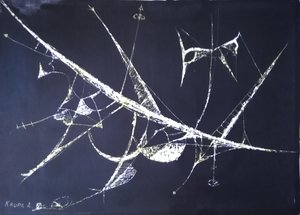
Alfred Joseph Krūppa
1915 - 1989 , Poland
Lühikesed faktid
- Full Name: Marc Chagall
- Nationality: Russian/French
- Date Of Birth: 1915
- Date Of Death: 1989
- Place Of Birth: Mikhlow, Poland
- Notable Artworks:
- I and the Village
- Maternity
- The Fiddler
- Artistic Movement Or Style: Cubism, Fauvism, Surrealism
- Artists Who Influenced This Artist:
- Russian Avant-Garde
- John Ruskin
- Artists Or Movements Influenced By This Artist:
- Picasso
- Matisse

