Rahatagastus garantii · 100 päeva Tasuta kohaletoimetamine üle maailma
449564teosed 30613kunstnikud 4660muuseumid 32keeled
Katalogi kirje

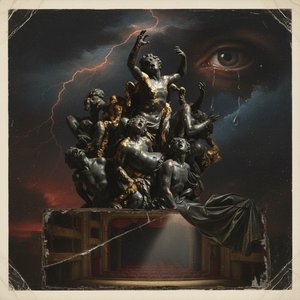
Richard Wagner Splitting

.

Joonis 1. André Gill, Richard Wagner Splitting. Näidatud on spetsifitseeritud reproduktsiona: , .

§ 1Kataloogandmed

§ 2Abstraktne

Kunstniku elulugu

André Gill (1840-1885): Explore the satirical world of this celebrated French caricaturist, famed for his exaggerated portraits & lithographs in La Lune & L'Éclipse.

§ 3Kommentaar

§ 4Kunstnik

André Gill

André Gill

1840 - 1885, France

Kiirinfo André Gill kohta

  • Full Name: Louis-Alexandre Gosset de Guînes
  • Nationality: French
  • Date Of Birth: 1840
  • Date Of Death: 1885
  • Place Of Birth: Paris, France
  • Notable Artworks:
    • Man of the Day series
    • Caricatures of La Lune
    • Caricature Of Jules Valles
    • Caricature of Bismarck
    • Le Lapin Agile sign
  • Artistic Movement Or Style: Realism, Caricature
  • Artists Who Influenced This Artist: ['James Gillray']
  • Artists Or Movements Influenced By This Artist: ['Cartoonists (generations)']

Kunstniku elulugu

A Life Etched in Satire: The World of André Gill

Born Louis-Alexandre Gosset de Guînes in 1840, the artist known to history as André Gill emerged from an aristocratic Parisian family into a world ripe for satirical observation. He wasn’t merely a recorder of his era; he was its most incisive commentator, wielding caricature not just as artistic expression but as a form of social and political critique. From his early studies at the Royal Academy of Painting and Sculpture, it became clear that Gill possessed an exceptional talent for capturing likeness, yet it was the spirit of James Gillray – the master British caricaturist – that truly ignited his artistic path. Adopting “André Gill” as a deliberate homage, he embarked on a career that would define French caricature in the 19th century. His initial foray into the art world began with illustrations for *Le Journal Amusant*, but it was through his association with Francis Polo’s weekly newspaper, *La Lune*, that Gill truly found his voice and established his signature style.

The Rise of a Satirical Style

Gill's breakthrough came with the series “The Man of the Day” for *La Lune*. This wasn’t simply portraiture; it was a deliberate distortion, an exaggeration of features that exposed character and often, hypocrisy. He became renowned for his technique of dramatically enlarging heads while diminishing bodies – a visual metaphor for inflated egos and diminished substance. These weren't subtle sketches; they were bold, hand-colored lithographic prints, meticulously detailed yet undeniably provocative. The accuracy within the exaggeration was key to their impact. Gill didn’t simply create monsters; he created recognizable figures pushed to their most revealing extremes. This style wasn’t merely innovative; it was instantly imitable, and soon artists across France were attempting to capture the same blend of precision and pointed satire. His work quickly became synonymous with a particular brand of French wit, a fearless commentary on the powerful and the pretentious. The banning of *La Lune* in 1867, due to its increasingly critical stance, didn’t silence Gill; it merely shifted his platform to *L'Éclipse*, Polo’s subsequent publication, where he continued to refine his art and challenge authority.

Portraits of an Era & Encounters with Controversy

The scope of Gill’s subjects was remarkably broad, encompassing the most prominent figures of his time. From the celebrated actress Sarah Bernhardt to the imposing Chancellor Otto von Bismarck, from literary giants like Émile Zola and Victor Hugo to artistic innovators such as Nadar and Richard Wagner, no one was safe from his discerning eye. He captured not just their physical appearances but also what he perceived as their essential natures – their vanities, ambitions, and flaws. However, this fearless approach inevitably led to conflict. His unflattering portrait of Napoleon III drew the ire of the Emperor himself, demonstrating the power of caricature to unsettle even the most established authority. The incident involving a pumpkin interpreted as a satirical representation of a judge in 1868 – stemming from his earlier use of fruit to symbolize political figures – resulted in a lawsuit and a brief prison sentence, solidifying his reputation as a rebellious artist willing to risk personal consequences for his convictions. Beyond the political sphere, Gill’s life was interwoven with the vibrant bohemian circles of Paris. He befriended Charles Cros and Paul Verlaine, and famously encountered Arthur Rimbaud, offering both financial assistance and pragmatic advice to the young poet.

A Legacy Etched in Parisian Streets

Gill's contributions extended beyond caricature into other facets of Parisian life. During the tumultuous period of the Paris Commune, he lent his artistic talents to Jules Vallès’ socialist newspaper, *La Rue*, providing illustrations that reflected the political fervor of the time. He briefly served as curator of the Musée du Luxembourg in 1871, attempting to restore order and reassemble collections disrupted by the recent upheaval. Perhaps one of his most enduring legacies is the sign he painted for “Le Lapin Agile” (The Nimble Rabbit), a cabaret that remains a Parisian landmark to this day. However, despite these achievements, Gill’s later years were marked by declining mental health. He experienced periods of instability and ultimately found himself confined to a psychiatric hospital, where he died in 1885, largely forgotten by the public he had so relentlessly satirized. Yet, his influence persisted. The rue André Gill in Montmartre, Paris, stands as a lasting tribute to his artistic legacy, a physical reminder of the man who dared to hold power accountable through the potent language of caricature. His work continues to resonate today, reminding us of the enduring power of satire and the importance of challenging established norms.

Enduring Influence

  • A Pioneer of Style: Gill’s distinctive style – exaggerated heads atop diminutive bodies – became a template for generations of cartoonists, influencing visual humor across continents.
  • Social Commentary: His work wasn't merely about creating funny images; it was a sharp critique of 19th-century society and politics, offering insights into the era’s power structures and social dynamics.
  • Fearless Independence: Gill’s willingness to challenge authority, even at personal cost, established him as a champion of free expression and artistic integrity.
  • A Parisian Icon: His contributions to the cultural landscape of Paris – from his museum work to the iconic sign for Le Lapin Agile – cemented his place in the city’s history.
André Gill's legacy is a testament to the enduring power of satire and the importance of artistic courage. He remains a vital figure in the history of caricature, whose work continues to provoke thought and inspire laughter.

§ 5Sarnased teosed

§ 6Küsimused

§ 7Viige seda kirjet

AllPaintingsStore.com, “André Gill, Richard Wagner Splitting”, https://allpaintingsstore.com/et/art/andre-gill-richard-wagner-splitting-9DG7F4-en/ArtistReproduction/ (vaadatud 10 oktoober 2026).

§ 8Reproduktsioon

Käsitsi valmistatud õlimaalireproduktsioon

Meie kunstnike poolt tellimusel valmistatud käsitsi maalitud õli-kainaste teos teie soovitud suuruses ja raamis. ( Lülita trükkitoodetele Lülita digitaalse pildi juurde)

See on märgitud tellimuselehe servas; selle lehe praegune seisukoht on järgmine.

Richard Wagner Splitting

Reproduktsiooni tehnika

Reproduktsiooni suurus

-

Eelistatud tippkunstnik

Rohkem detaile, peenust ja lisatootmisaega

-

Reproduktsiooni raamivalikud

-

-

Kunstiteoste või reproduktsioonide puhul, mille üks külg on üle 105 cm (umbikmolt 41 tolli), saadetakse raam kirjal asendis, la Dismantlitud komplektina. See meetod tagab ohutuse kohaletoimetamisel ja väldib transpordil tekkivaid kahjustusi.

Vajalik professionaalne kokkupanek – see ei ole isetegevusega valmistamiseks mõeldud toode.
Komplekt tuleb kokku panna ja lõvet pingutada kogemusega professionaalse raamija, kasutades puiduliim (ei kuulu komplekti), lõvetpingi ja klempe, et hoida raami kande mustad õigena liimi kuivamisaja jooksul. Vale kokkupanek või ebaühtlane lõvetping võib kunstiteost püsivalt kahjustada ning seda ei katta meie garantii.

  • Kaasatud on kõik tahked puidust liistud, täpselt lõigatud vastavaks suuruseks.

  • Kokku panemiseks kasutatakse lisatud kruvisid ning nurkade liimamiseks vajalikku puuliima, mida ei ole komplektis ja mida peab raamivalmistaja ise hankima.

  • Vajalik on kasutada professionaalseid tööriistu, mis ei kuulu komplekti: lõvetelapide pingist (pingutaja) ja klambreid, et hoida raami puidu nurgas õigena liimi kuivamisaja jooksul.

Oluline:
Nurgaliimamiseks on vaja puiduliim, liimimine peab toimuma klempide all kuni liim on täielikult kuivanud ning kokku monteeritud raami kanga pingutamiseks on vajalik kanga pingutustang. Kumbki neist ei kuulu komplekti. Palun veenduge enne selle suuruse tellimist, et teil on saadaval kogenud professionaalne raamistaja.

Nimesildikiri

-

-

Kaitsevärnitsus

Läikiv lakk (muudab värvid elavamaks ning kaitseb valgust ja niiskust eest)

-

Kohanda oma teost

Näiteid muudatuste kohta: Asenda nägu kliendi fotoga; Lisa lemmikloom (nt asenda kass koeraga); Lisa taustale peidetud sõnum; Muuda tausta maastikku või elemente.

-

Kiire tarne

Ülemaailmne tarne riiki 3–4 nädalaga tavalise 5 nädala asemel. (7 november). Kvaliteedis kompromisse ei tehta.

-

Kiirsaatmine

Ülemaailmne tarne () 5 nädala jooksul. (14 november).

Sisse kuuluv

Koguhind

€ 230

Säli iga tellimusega

  • Tasuta ekspresssaatmine üle maailma
  • Kõrgekvaliteediline lina-kangas
  • Täielik transpordikindlustus
  • Tollimaksude tagastamise garantii
  • Värvitoime täpsuse garantii
  • 100 päeva tagastusõigus (ainult valmistusdefektide korral)
  • 100% raha tagasi garantii
  • Hulgusoodustus
Tellimussõlm