


 Vaata sisu
 Jaga teost
 Jaga
Jaga
 Detailid
 Õppekate juhend

 Laadi alla
 Sarnased teosed
 Röntgenuuring
 Slaidietendus
 Statistika
On the Sofa
 Akrüülkainal
- Seinakunst
- Impressionistic Style
 1948
1948 39.0 x 38.0 cm
 Bristol Museum - Art Gallery
 Loe lähemalt
Sellel lehel kuvatav kunstiteos on kaitstud autoriõigusega, mis tähendab, et meil ei ole seaduslikku õigust luua või müüa identset reproduktsiooni. Seda kaitset rakendatakse rahvusvaheliste kokkulepete alusel, nagu näiteks Berne konventsioon ning riiklike seadustega, sealhulgas nendega, mida on sätestatud USA autoriõiguse seadus – 17. peatükk.
See meetod järgib täielikult autoriõiguse reegleid, kuna see ei põhine kaitstud kunstiteose kopeerimisel või dupliteerimisel. Selle asemel on tegu loova reinterpreetatsiooniga – uue maaldisega, mis on algteosest inspireeritud, kuid ei ole sellest identiline.
Giclée / Kunstiprint
Muuseumikvaliteediga giclée- või kangasprint kiire tootmisega ja paindlikud viimistlusvõimalused. ( Telli käsitsi maalitud reproduktsioon Ülemineku digitaalse pildi müügi kanalisse)




P118B €10

P118H €10

P118W €10

P438Z €10

P508JH €12

P508YH €12

P805H €10

P805Z €10

P919BZ €10

P919G €10

P919XJ €10

P959ZH €10

P968JZ €12

W106C €8

W218G €10

W218JH €8

W218Y €10

W307PJ €10

W316G €10

W316PJ €8

W316Y €10

W398PJ €8

W4111J €10

W500HY €15

W500JH €15

W692G €12

W849H €8

W940BG €15

W953PJ €8




Vali meie eelmääratud suurused, mis vastavad teose algupärastele proportsioonidele.

Sisestage vajalik laius ja kõrgus, et see sobiks teie raamile või seinale. Trükki saab ainult lõigata, seda ei saa kunagi pildist suuremaks teha, seega ka differentse vormiga suurus kaotab osa pildist. Enne trükkimist saadame teile kinnitamiseks digitaalse näidisprojektsiooni. Sellel lehel näidatud pilt ei kujuta reaalset lõiget — seda näitab ainult näidisprojekttsioon.
Ülemaailmne tarne () 2 nädala jooksul, tavalise 4/5 nädala asemel. (23 oktoober)

Tasuta ekspresssaatmine üle maailma

Kõrgekvaliteediline lina-kangastest muld

Täielik transpordikindlustus

Tollimaksude tagastamise garantii

Värvitoime täpsuse garantii

100 päeva tagastusõigus (ainult defektide korral)

100% raha tagasi garantii

Hulgusoodustus
 Klaasivalik on saadaval ainult kuni 110 cm suuruses teostes

On the Sofa
Giclée / Kunstiprint
Reproduktsiooni mõõtmed
-


Lõppsumma
€ 56
On the Sofa – A Portrait of Quietude and Impressionistic Refinement
Bernard Dunstan’s “On the Sofa,” painted in 1948, is a deceptively simple yet profoundly evocative depiction of domestic tranquility. Executed in oil on canvas, this artwork exemplifies Dunstan's signature style—characterized by luminous color palettes and loose brushstrokes that capture fleeting moments of light and atmosphere—a stylistic influence deeply rooted in the Impressionist movement championed by artists like Monet and Renoir. The painting centers around a nude woman seated gracefully upon a richly patterned couch, her hands delicately resting on her breasts – a pose frequently explored by Dunstan to convey vulnerability and contemplation. The artist’s meticulous attention to detail extends beyond the figure itself. The couch is adorned with floral motifs, subtly reinforcing themes of femininity and natural beauty—elements characteristic of Dunstan's broader artistic vision. Behind the sofa stands another chair, providing depth and perspective to the composition, while a horse figurine adds an element of unexpected visual interest, positioned strategically on the left side of the canvas. This deliberate placement contributes to the overall sense of stillness and serenity that permeates the scene. Dunstan’s technique is masterful in its ability to convey texture and luminosity. He employs broken brushstrokes—a hallmark of Impressionism—to build up layers of color, creating a shimmering surface that captures the nuances of light reflecting off the fabric and skin tones. The muted hues of ochre, umber, and ivory dominate the palette, fostering an atmosphere of understated elegance and conveying a feeling of quiet contemplation. Dunstan’s meticulous observation of natural light is palpable; it's as if he sought to freeze a single instant in time—a testament to his dedication to capturing the essence of human experience. Painted during Dunstan’s tenure at the Royal Academy, “On the Sofa” reflects the prevailing artistic sensibilities of the period. The influence of artists like Walter Sickert and Henri Matisse can be discerned in Dunstan's exploration of expressive color and simplified forms—a reaction against academic conventions that favored meticulous realism. Furthermore, Dunstan’s work aligns with a broader humanist tradition, prioritizing psychological insight alongside aesthetic beauty. Ultimately, “On the Sofa” transcends mere visual representation; it invites viewers to consider themes of intimacy, repose, and the contemplation of inner life. The painting's understated grandeur speaks to a timeless appreciation for quiet moments of grace—a quality that continues to resonate with collectors and interior designers alike who seek artwork capable of fostering serenity and inspiring reflection.Küsimused ja vastused
Kas saan tellida teose "On the Sofa" õli-reproduktsiooni?
Teos "On the Sofa" on saadaval kujundis käsitsi maalatud õlireproduktsioon linaelapale. Tellimust saab esitada selle Käsitsi maalatud reproduktsioon lehel, kus on võimalik valida erinevad suurused.
Mis on teose "On the Sofa" formaat?
Teose „On the Sofa“, autor Bernard Dunstan vorm on Ruuduline. See vorm kirjeldab kompositsiooni proportsioone.
Mida „On the Sofa“, autor Bernard Dunstan kujutab ja milline on selle meeleolu?
Teos „On the Sofa“, autor Bernard Dunstan ühendab endas interior scene, female figure, floral pattern, furniture design, nude art, british painting, quiet composition ning loob Rahu ja sereniteit atmosfääri.
Sarnased teosed


Kunstniku elulugu
A Life Dedicated to Observation: The World of Bernard Dunstan
Bernard Dunstan, Royal Academician (1920-2017), stands as a quietly compelling figure in 20th and 21st century British art. Though perhaps not a household name, his long career – he was the longest serving Royal Academician at the time of his death – was marked by a steadfast dedication to painting figures within interiors and evocative landscapes, rendered with a sensitivity that speaks to both Impressionistic roots and a uniquely personal vision. Born in Teddington, Middlesex, Dunstan’s artistic journey began in 1939 with studies at the Byam Shaw School of Art, quickly followed by formal training at the prestigious Slade School of Fine Art in London until 1941. These formative years instilled in him a rigorous approach to technique and observation that would define his oeuvre. The interruption of war undoubtedly shaped a generation of artists, but Dunstan’s commitment remained unbroken; he continued to develop his style, focusing on capturing the subtleties of light and atmosphere.The Development of a Distinctive Style
Dunstan's artistic development wasn’t one of radical shifts, but rather a gradual refinement of focus and technique. Early works demonstrate an engagement with realism, yet even then, a concern for tonal qualities and the interplay of light hinted at his future direction. He became a member of the New English Art Club in 1947, a group that championed representational painting during a period dominated by abstraction. This affiliation provided a supportive environment for Dunstan to explore his growing interest in capturing fleeting moments and subjective experiences. His palette evolved towards a softer, more luminous quality, influenced by artists he deeply admired – Renoir, Bonnard, and Vuillard. However, Dunstan wasn’t simply imitating these masters; he synthesized their lessons with the distinctly British sensibilities of Walter Sickert and Philip Wilson Steer, creating a style that was both intimate and sophisticated. His interiors are not grand statements but rather quiet observations of domestic life, often featuring figures absorbed in everyday activities, bathed in gentle light. Landscapes similarly eschew dramatic vistas for more subtle depictions of the English countryside, emphasizing mood and atmosphere over topographical accuracy.A Teacher and a Scholar
Beyond his own painting practice, Bernard Dunstan was a dedicated educator, profoundly influencing generations of artists. He held teaching positions at numerous prestigious institutions including the Royal West of England Academy in Bristol (1946-1949), Camberwell School of Art (1950-1964), Byam Shaw School (1953-1974), Ravensbourne Art College (1959-1964) and the City and Guilds of London Art School (1964-1969). This commitment to teaching wasn’t merely a means of livelihood; it reflected his belief in the importance of passing on knowledge and fostering artistic talent. His pedagogical approach likely emphasized direct observation, careful study of light and colour, and an understanding of art history – principles evident in his own work. Furthermore, Dunstan was a prolific writer on painting, sharing his insights with a wider audience through books such as Painting Methods of the Impressionists (1976). This demonstrated not only technical mastery but also a deep intellectual engagement with the artistic process.Recognition and Legacy
Dunstan’s dedication to his craft was recognized throughout his career, culminating in his election as a full member of the Royal Academy in 1968. He served as President of the Royal West of England Academy from 1979 to 1984, further solidifying his position within the British art establishment. His works are now held in significant public collections including the National Portrait Gallery, the Royal Collection at Windsor Castle, and the Museum of London – a testament to their enduring quality and historical importance. While he may not have sought fame or notoriety, Bernard Dunstan’s quiet persistence and unwavering commitment to observation left an indelible mark on British painting. His ability to capture the beauty in everyday moments, combined with his technical skill and intellectual depth, continues to resonate with viewers today. He was married to fellow Royal Academician Diana Armfield, and is also the father of Professor David Dunstan, a physicist – demonstrating a family legacy that extends beyond the realm of art. His passing in 2017 at the age of 97 marked the end of an era, but his paintings remain as enduring reminders of a life dedicated to the pursuit of artistic truth and beauty.
Bernard Dunstan
1920 - 2017 , United Kingdom
Lühikest infot
- Date Of Birth: 1920
- Date Of Death: 2017
- Place Of Birth: Teddington, United Kingdom
- Artistic Movement Or Style: 1920s Art Deco
- Artists Who Influenced This Artist: ['Marcel Duchamp']
- Artists Or Movements Influenced By This Artist:
- Dada
- Surrealism
Sarnased artiklid

Capturing Light & Emotion: A Guide to Impressionistic Portraiture for Your Home
Discover how Impressionistic portraiture can elevate your home. Learn to use light, color, and texture to create an emotive interior with expert guidance on selecting and customizing museum-quality oil reproductions that transform modern spaces into timeless sanctuaries.
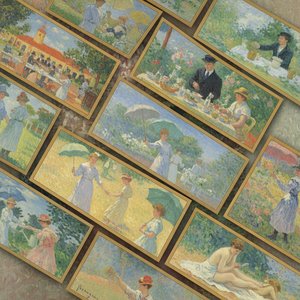
Pierre-Auguste Renoiri 25 parimat teost: Impressiooni ja ilu meistriteosed kodus
Avastage Pierre-Auguste Renoiri 25 parimat teost! Sukelduge impressioonismi maailma, nautides valgusrikkaid maale ja romantikat. Kunstiteosed kodu sisustuseks – eksklusiivne kollektsioon AllPaintingsStore.com'is. Vaata kohe!

Ajaülese interjööri loomine: Renessansi elegantsi ja impressionistliku valguse sümbioos kaasaegses kodus
Avastage Renessansi elegantsi ja Impressionismi valguse sümbioos kaasaegses kodus! Eksperthinnangud, sisustuskonsultatsioonid ja kvaliteetsed maalid AllPaintingsStore.com-ist. Luksuslik interjöör Teie jaoks.

Briti Muuseumi 25 Kunstiteost: Ajaloo ja Ilu Hingehaiged Kollektsioonid | AllPaintingsStore
Avastage Briti muuseumi 25 kõige ikoonilisemat kunstiteost! Lugege lugusid maalikunstnike, ajalooliste stiilide ja tehnika meistriteostest. Leidke inspiratsiooni kodukaunistamiseks või ostke kvaliteetseid kunstireprodutsioone AllPaintingsStore.com-is. Avastage kogu kollektsioon online!

The Enduring Allure of the Nude: A Historical & Artistic Exploration of the Human Form
Explore the captivating history of nude art! Discover iconic paintings & artists from classical to modern eras. Uncover symbolism, techniques & find museum-quality reproductions at AllPaintingsStore.

