


 Vaata sisu
 Jaga teost
 Jaga
Jaga
 Detailid
 Õppekate juhend

 Laadi alla
 Sarnased teosed
 Röntgenuuring
 Slaidietendus
 Statistika
Kristus
 Tempera paneelil
- Proto-Renaissance
 1287
1287- Hilinen keskaeg
 448.0 x 390.0 cm
 Museo dell'Opera di Santa Croce
 Loe lähemalt
Giclée / Kunstiprint
Muuseumikvaliteediga giclée- või kangasprint kiire tootmisega ja paindlikud viimistlusvõimalused. ( Telli käsitsi maalitud reproduktsioon Ülemineku digitaalse pildi müügi kanalisse)




P118B €10

P118H €10

P118W €10

P438Z €10

P508JH €12

P508YH €12

P805H €10

P805Z €10

P919BZ €10

P919G €10

P919XJ €10

P959ZH €10

P968JZ €12

W106C €8

W218G €10

W218JH €8

W218Y €10

W307PJ €10

W316G €10

W316PJ €8

W316Y €10

W398PJ €8

W4111J €10

W500HY €15

W500JH €15

W692G €12

W849H €8

W940BG €15

W953PJ €8




Vali meie eelmääratud suurused, mis vastavad teose algupärastele proportsioonidele.

Sisestage vajalik laius ja kõrgus, et see sobiks teie raamile või seinale. Trükki saab ainult lõigata, seda ei saa kunagi pildist suuremaks teha, seega ka differentse vormiga suurus kaotab osa pildist. Enne trükkimist saadame teile kinnitamiseks digitaalse näidisprojektsiooni. Sellel lehel näidatud pilt ei kujuta reaalset lõiget — seda näitab ainult näidisprojekttsioon.
Ülemaailmne tarne () 2 nädala jooksul, tavalise 4/5 nädala asemel. (24 oktoober)

Tasuta ekspresssaatmine üle maailma

Kõrgekvaliteediline lina-kangastest muld

Täielik transpordikindlustus

Tollimaksude tagastamise garantii

Värvitoime täpsuse garantii

100 päeva tagastusõigus (ainult defektide korral)

100% raha tagasi garantii

Hulgusoodustus
 Klaasivalik on saadaval ainult kuni 110 cm suuruses teostes

Kristus
Giclée / Kunstiprint
Reproduktsiooni mõõtmed
-


Lõppsumma
€ 56
Bütsantini mõjutuste meistriteos
Cimabue "Ristilinei" seisab monumentaalsete 13. sajandi lõpu teostena, kehastades üleminekut bütsantinlikust ikonograafiast varajasse renessanslikku realismi. Umbes aastal 1287 valminud see suuremõõtmeline risti teos on tõend Cimabue innovaatilisest lähenemisviisist, ühendades traditsioonilise religioosuse sümbolika ulevnevate kunstitehnikatega, mis avasid tee tulevatele meistritele nagu Giotto.Teema ja kompositsioon
Teos kujistab Jeesus Kristuse ristilinei tegemist, mis on kristliku kunsti keskne teema. Kompositsioon järgib traditsioonilist risti kujule, kus Jeesuse figuur on prominentne ja asub keskel. Risti mõlemal pool on kaks kurbust väljendavat inimest, kes tõenäoliselt esindavad Neitsi Mariat ja Jüdaevangelist Johnit, lisades kogu stseenile emotsionaalset sügavust.Stiil ja tehnika
Cimabue stiili iseloomustab bütsantini mõjudude ja varajaste renessanssi uuenduste kooskõlu. Sügavate sineste, punaste ja kuldsete toonide kasutamine tekitab püüdluse pühaduse ja jumaliku tunnet. Võrreldes varasema keskaegse kunstiga on kujudgi joonistatud elulikumate proportsioonidega ja sofisteerse varjustusega, mis viitab maapinnale ja sügavusele. Teos on valmistatud temperaga puitpaneelile, mis oli selle ajastu levinud tehnika. Kuldlehe aktsendid lisavad valguslikku kvaliteeti, rõhutades stsenet pühadust. Detailide hoolikas jäljeldamine inimeste naha ja riietuste juures näitab Cimabue'i täiskasvu ja meistriklassi.Ajalooline kontekst
Cimabue, kes sündis umbes aastal 1240 Firenzes, oli Itaalia kunsti arengus võtmefigureer. Tema töö märkis olulist kõrvalekaldet bütsantini maali pimedat ja skemaatilist meetodit, tuues kaasa realismi ja emotsionaalse avalduse elemente, mis said hiljem renessanssi üks tunnustusi. "Risti" on üks Cimabue'i varasemaid attribuutseeritud teoseid, mille tellimiseks tegi Dominikaanide kord Arezzo San Domenico'i basilika jaoks. See tellimus rõhutab religioosuse tähtsust keskaegses ühiskonnas ja kunstnike nagu Cimabue rolli vaimsete kogemuste vormimisel läbi visuaalse jutustamise.Sümbolika ja emotsionaalne mõju
Ristilinei stseen on rikkundatud sümbolitega, sealhulgas ristiga endaga, mis sümboliseerib ohrit ja päästmist, ning haalistega inimeste pea ümber, mis tähistavad nende püehälust. Kummalgi pool risti asuvad kurbust väljendavad isikud edastavad valu ja kurbust, lisades teosele emotsionaalse dimensiooni. Cimabule kujustus Kristuse kehas, mida on kasutatud varjustust ja plastilisust, annab sügavalt karedat tunde kannatust ja inimlikkust. See eemaldumine bütsantini jäigetest risti Kristuse kujunditest ennustab ekspressiivseid ja loomulikke esitusi, mis määrasid hiljem renessanssi kunsti.Miks seda teost koguda või näidata
Kunstihuvilistele, kogujatele ja interjööri disaineritele pakub Cimabue "Risti" unikaalset ajaloolise tähtsuse ja kunstilise briljantsuse segu. Selle rikkalik värvipalett, keerulised detailid ja emotsionaalne sügavus teevad sellest vapustava lisanduse igale kogumusele. Kvaliteetse reproduktsiona tähindina võib see teos toimida silmapaistva keskpunktina nii traditsioonsetes kui ka kaasaegsetes interjöörides. Selle ajatusteta teemad ja meistriline tä困te tagavad, et see jääb väärtustatud teoseks põlgedeks. Kogete Cimabue "Risti" sügavust ja vaimset resonanssi – meistriteost, mis ühendab keskaaja ja renessanssi ajastu ning toob teie ruumi pühaduse puudutuse.Küsimused ja vastused
Milline meeleolu ja emotsioon koosnevad teoses "Kristus"?
Teose „Kristus“, autor Kimmabe edastatud meeleolu on Rahu ja sereniteit ning selle emotsionaalne toon on Vaimne.
Kas teose „Kristus“, autor Kimmabe autoriõigused lubavad selle reproduktsiooni?
Teos „Kristus“, autor Kimmabe, mis asub Museo dell'Opera di Santa Croce kogumuses, kuulub lubaõigusliku ala kategoria avalikus õiguses – selle autoriõigud onหมดunud. See staatus määravad, kas teose reproduktsioone on lubatud valmistada.
Kes tegi teose "Kristus" ja millal?
Sarnased teosed


Kunstniku elulugu
Giovanni Cimabue: Pioneer of Italian Painting
Giovanni Cimabue, born Cenni di Pepo around 1240 in Florence, stands as a monumental figure—a bridge between the established artistic traditions of the Byzantine world and the burgeoning innovations that would define the Italian Renaissance. His life, though partially obscured by time and romanticized accounts – most notably those penned by Giorgio Vasari centuries later – marks an undeniable turning point in Western art history. Cimabue wasn’t simply a painter; he was a courageous innovator who dared to subtly challenge artistic conventions, laying the groundwork for the revolutionary changes that would soon sweep across Italy. Even his nickname, believed to mean “bull-headed,” hints at a strong will and perhaps a rebellious spirit—qualities demonstrably present in his willingness to experiment with form and expression. He represents a crucial moment where art began to shift from being solely devotional imagery towards something more humanistic and emotionally resonant.Early Influences and Artistic Development
Initially immersed in the Italo-Byzantine style prevalent throughout Florence, Cimabue’s early work adhered closely to established aesthetic principles: flattened figures adorned with shimmering gold leaf, symbolic rather than realistic depictions of space, and a profound focus on religious iconography. However, even within these constraints, a nascent desire for naturalism began to emerge. He wasn't content merely replicating existing forms; he sought to imbue his paintings with a greater sense of life and emotional depth. While the precise nature of his early training remains debated, it’s likely he honed his skills within Florentine workshops, absorbing the techniques and influences of the time while simultaneously developing his own unique artistic voice. The Byzantine style, characterized by its formality and spiritual focus, provided him with a solid foundation, but Cimabue began to subtly introduce elements that would foreshadow the coming Renaissance—a greater attention to volume, more expressive facial features, and a nascent understanding of spatial relationships. This wasn’t a sudden break from tradition, but rather a gradual evolution, a delicate balancing act between honoring the past and embracing new possibilities.Masterpieces and Artistic Innovations
Cimabue's legacy is cemented through a series of breathtaking works that showcase his evolving style. The Maestà (Louvre), originally created for the Church of San Francesco in Pisa, stands as one of his most celebrated masterpieces. This monumental altarpiece exemplifies his mastery of composition and use of color, while simultaneously hinting at the shift away from rigid Byzantine conventions. The figures, though still possessing a degree of formality, exhibit a newfound sense of volume and presence. The Crucifixion (San Domenico, Arezzo), dating around 1270, is particularly significant as an early demonstration of his departure from strict Byzantine norms. Here, the proportions are more realistic, and the emotional weight of the scene is palpable—a stark contrast to the often-distant depictions found in earlier religious art. Further evidence of Cimabue’s innovative spirit can be seen in works like the Flagellation of Christ (Frick Collection), generally attributed to his workshop. This complex composition reveals an evolving understanding of perspective and spatial relationships, showcasing a growing interest in creating more immersive and believable scenes. His contributions weren't limited to panel paintings; Cimabue also excelled as a mosaicist, contributing significantly to the decoration of the Baptistery of Florence—though these mosaics have unfortunately suffered from deterioration over time.A Pivotal Teacher: Giotto and Beyond
Perhaps Cimabue’s most enduring legacy lies in his role as the teacher of Giotto di Bondone. While historical accounts vary regarding the exact nature of their relationship, it is widely accepted that Giotto received crucial training under Cimabue's guidance. However, Giotto would ultimately surpass his master, revolutionizing Italian painting with an even more radical embrace of naturalism and emotional realism. It’s a testament to Cimabue’s skill as a teacher that he fostered such talent, even knowing it might eclipse his own achievements. The story, often recounted by Vasari, of Giotto playfully painting a fly on Cimabue's face speaks volumes about the dynamic between master and pupil—a playful rivalry that ultimately pushed both artists to greater heights. Cimabue’s influence extended beyond Giotto, impacting numerous other artists of the period. He challenged the artistic norms of his time, demonstrating that art could be more than just religious symbolism; it could also reflect human emotion and experience. His willingness to experiment with form, proportion, and expression paved the way for the innovations of the Renaissance, establishing him as a crucial transitional figure in the history of Western art.Enduring Significance
Cimabue passed away in 1302 in Pisa, leaving behind a body of work that continues to captivate and inspire. Despite his significant contributions, details surrounding his later life remain scarce. However, Cimabue’s artistic legacy resonates powerfully through the works of his students and the evolution of Italian art. He represents a crucial step in the development of Western painting, moving away from the stylized conventions of the Byzantine era towards a more humanistic and naturalistic approach. His paintings are not merely historical artifacts; they are windows into a pivotal moment in artistic history—a time when artists began to question established norms and explore new possibilities. He was a pioneer, a visionary who dared to challenge the status quo and lay the foundations for the artistic brilliance that would define the Renaissance. Cimabue’s work reminds us that even within tradition, there is always room for innovation, and that true artistry lies in the courage to push boundaries and explore new horizons.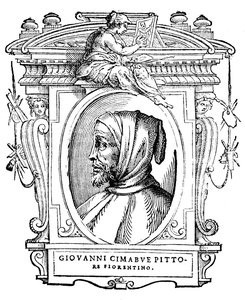
Kimmabe
1240 - 1302 , Itaalia
Lühikest infot
- Artistic Movement Or Style: Byzantine & Renaissance
- Artists Or Movements Influenced By This Artist: ['Giotto']
- Artists Who Influenced This Artist:
- Giunta Pisano
- Coppo di Marcovaldo
- Date Of Birth: c. 1240
- Date Of Death: 1302
- Full Name: Giovanni Cimabue
- Nationality: Italian
- Notable Artworks:
- Maestà
- Crucifixion
- Flagellation of Christ
- Place Of Birth: Florence, Italy
Sarnased artiklid

Late Medieval Masterpieces: 10 Artworks That Defined an Era | AllPaintingsStore
Journey through 10 defining Late Medieval masterpieces – from Giotto's frescoes to Jan van Eyck’s realism. Explore the stories, techniques & vibrant colors of Gothic art. Find museum-quality reproductions and elevate your home decor with AllPaintingsStore.com! Discover all masterpieces on AllPaintingsStore.com

Proto-Renaissance Masters: 10 Artworks That Changed History | AllPaintingsStore
Journey back to the dawn of Renaissance art! Explore 10 iconic Proto-Renaissance masterpieces by Giotto, Cimabue & Duccio. Discover their stories, techniques & lasting impact. Find museum-quality reproductions for your home at AllPaintingsStore.com

High Medieval Art: 10 Masterpieces That Shaped an Era | AllPaintingsStore
Journey through High Medieval Art! Explore 10 iconic masterpieces – from Giotto's frescoes to stunning Gothic cathedrals. Discover the stories behind these timeless paintings, sculptures & illuminated manuscripts. Find museum-quality art reproductions at AllPaintingsStore.com.

Illuminating Faith & Power: A Journey Through Medieval Art (c. 500 – c. 1500)
Explore the rich history of Medieval Art (c. 500 – c. 1500) with AllPaintingsStore. Discover Byzantine mosaics, Gothic cathedrals & Renaissance masterpieces. Expert insights & museum-quality reproductions.

Illuminating Eternity: A Comprehensive Exploration of Byzantine Art's Legacy
Explore the rich history & stunning artistry of the Byzantine Empire! Discover iconic mosaics, profound symbolism, and lasting influence on Western art. A comprehensive guide for history lovers.


