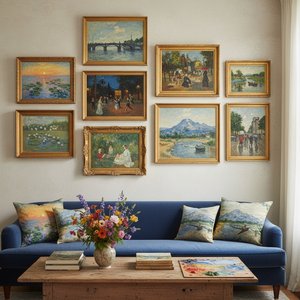
Acrylic On Canvas.

§ 1Kataloogandmed

§ 2Abstraktne
Kogumisobjekti kirjeldus
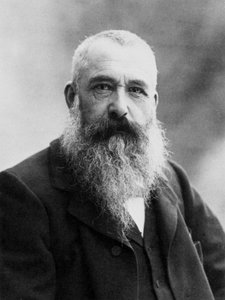
A striking close-up portrait by Claude Monet in his signature Impressionistic style. Explore this textured oil painting of an elderly man, embodying wisdom & aging.
 Loe lähemalt
Kunstniku elulugu
Avastage impressionismi suurmeister Claude Moneti maailm, kes jäädvustas ikoonilistes maastikudes nagu Veeputked ja Høistud hävetava valguse ja värvi.
§ 3Kommentaar
A Window into Impressionism: Claude Monet’s “Untitled” (3222)
Claude Monet's "Untitled" (3222), a striking close-up oil painting portrait, transcends mere representation; it embodies the very essence of Impressionist philosophy—capturing fleeting moments and prioritizing sensory experience over meticulous detail. Executed in a loose, expressive style, this artwork offers viewers an intimate glimpse into the artist’s vision of aging and wisdom.
Technical Brilliance: Impasto and Light
The painting's technique is undeniably masterful. Monet employs thick impasto—applying paint heavily to the canvas—creating a tactile surface that vibrates with texture. Visible brushstrokes dominate, defining contours and conveying movement. Lines are primarily gestural, mirroring the artist’s emotional response to his subject. The diffused lighting suggests an indoor setting, highlighting the delicate wrinkles and textures of the elderly man's face, demonstrating Monet’s dedication to portraying light as it transforms throughout the day.
Symbolism of Age and Experience
More than just a likeness, “Untitled” (3222) speaks volumes about the artist’s contemplation of time. The prominent white beard symbolizes wisdom accumulated through years of life experience—a recurring motif in Monet's oeuvre. The weathered features convey resilience and acceptance, reflecting the profound beauty inherent in aging. Monet deliberately eschewed traditional perspective techniques, favoring instead a flattened composition that emphasizes emotional resonance.
Context Within Impressionism
This piece firmly establishes itself within the broader context of Impressionism, spearheaded by Monet himself. Emerging in the 1870s as a rebellion against academic conventions, Impressionism sought to depict nature as perceived by the eye—a subjective experience rather than an objective observation. Influenced by Eugène Boudin’s advocacy for plein air painting, Monet meticulously documented the changing light conditions on familiar subjects like Rouen Cathedral and Water Lilies.
Emotional Resonance: A Masterpiece of Texture
"Untitled" (3222) isn't merely a visual record; it’s an emotional journey. Monet’s masterful use of color—primarily muted tones—creates a serene atmosphere, inviting contemplation. The painting’s textural richness elevates it beyond mere representation, transforming it into an immersive experience that captures the spirit of Impressionism and its enduring fascination with capturing beauty in everyday life.
Korduvad küsimused
Mis on teose „untitled (3222)“, autor Claude Monet domineeriv väritoon?
Teose „untitled (3222)“, autor Claude Monet domineeriv toon on Green to Violet Spectrum. See toon on paleti alusvärv.
Millist kintust ja intensiivsust „untitled (3222)“, autor Claude Monet näitab?
Teose „untitled (3222)“, autor Claude Monet värvid on Subtle Color kütkusega ja Balanced intensiivsusega.
Kes on teose "untitled (3222)" autor ja millises stiilis see on kujutatud?
Claude Monet lõi teose "untitled (3222)" Impressionism suunaga.


 Lülita trükkitoodetele


 Kunstiteoste või reproduktsioonide puhul, mille üks külg on üle 105 cm (umbikmolt 41 tolli), saadetakse raam kirjal asendis, la Dismantlitud komplektina. See meetod tagab ohutuse kohaletoimetamisel ja väldib transpordil tekkivaid kahjustusi.