Rahatagastus garantii · 100 päeva Tasuta kohaletoimetamine üle maailma
449587teosed 30613kunstnikud 4660muuseumid 32keeled
Valuta
    Keel
      Ateljee · Asutatud 2015 · Pariis, Prantsusmaa
      AllPaintingsStore
      allpaintingsstore.com
      Catalogue entry

      Study for

      1870. Acrylic On Canvas. William Morris Gallery.

      Fig. 1. Dante Gabriel Rossetti, Study for, 1870. Shown as the reproduction you are specifying: , .

      § 1Catalogue data

      § 2Abstract

      Kogumisobjekti kirjeldus

      Explore Dante Rossetti’s haunting ‘Study for,’ a Pre-Raphaelite chalk sketch depicting medieval magic & love. Discover its symbolism, technique & cultural significance at the William Morris Gallery.

      Kunstniku elulugu

      Dante Gabriel Rossetti oli suur romantik ja Pre-rafaeliitide liikme üks juhtiv mõtleja, kes kujundas viktoriaani kunstimaailma. Tema töö keskendus looduse täielikule tõelisele maalimisele ning sügavale emotsionaalsele väljendusele – oluline osa estetismi ja simbolismi liikmete maailmast.

      § 3Commentary

      A Glimpse into Rossetti’s Mystical World: “Study for”

      This captivating chalk study by Dante Gabriel Rossetti, created in 1870 and currently housed at the William Morris Gallery in Walthamstow, United Kingdom, offers a rare window into the creative process of one of the Pre-Raphaelite Brotherhood’s most enigmatic figures. More than just a preparatory sketch, it is a work of art in its own right, brimming with symbolism and emotional resonance.

      Subject & Narrative

      The composition depicts a scene steeped in medieval lore: Michael Scott, a Scottish magician and astronomer, bestowing a ring upon a young girl. Jane Morris, the iconic muse and wife of William Morris, occupies the central position with serene composure. A winged figure representing Love gazes upwards, seemingly detached from the earthly exchange, while a draped woman adds a dynamic element, intersecting the scene and creating visual tension. The work was intended as a study for an oil painting commissioned in 1871 that unfortunately remained unfinished.

      Style & Technique

      Rossetti’s masterful use of chalk allows for an extraordinary level of delicacy and expressiveness. The subtle gradations of tone, achieved through shading and layering, create a remarkable sense of depth and texture despite the monochromatic palette. The flowing lines define forms with graceful contours, characteristic of Rossetti's aesthetic. This study exemplifies his ability to capture not just physical likeness but also the *inner life* of his subjects.

      Historical & Artistic Context

      As a founding member of the Pre-Raphaelite Brotherhood, Rossetti rejected the academic conventions of his time, seeking inspiration in the art and literature of the early Italian Renaissance – before Raphael. This movement championed beauty, detail, and emotional intensity. “Study for” embodies these principles, reflecting a fascination with medieval themes, mysticism, and a rejection of industrialization’s impact on artistic expression. The Pre-Raphaelites sought to return to what they perceived as a more authentic and spiritually resonant form of art.

      Symbolism & Interpretation

      The symbolism within the work is rich and layered. Jane Morris, frequently depicted in Rossetti's works, embodies an idealized beauty and often represents unattainable desire or tragic fate. The ring itself could symbolize betrothal, enchantment, or a binding agreement. The winged figure of Love’s upward gaze suggests a longing for the divine or a detachment from earthly concerns. The draped woman introduces an element of mystery and perhaps foreshadowing. It is believed that Rossetti drew inspiration from sources like *The Divine Comedy* by Dante Alighieri, adding another layer of intellectual depth to the piece.

      Emotional Impact & Aesthetic Appeal

      “Study for” evokes a mood of quiet contemplation and melancholic beauty. The subdued tones and delicate lines create an atmosphere of intimacy and mystery. It’s a work that invites viewers to lose themselves in its intricate details and ponder its symbolic meaning. The piece resonates with a timeless quality, appealing to those who appreciate both artistic skill and intellectual depth.

      For Collectors & Designers

      This study is not merely a historical artifact; it’s a powerful statement of aesthetic vision. A high-quality reproduction would serve as a stunning focal point in any interior, adding a touch of Pre-Raphaelite elegance and intrigue. Its muted palette complements a variety of décor styles, from traditional to contemporary. The artwork's themes of love, magic, and the passage of time make it a conversation starter and a source of enduring inspiration.
      • Style: Pre-Raphaelite
      • Medium: Chalk on paper
      • Date: 1870
      • Location: William Morris Gallery, London, UK

      Korduvad küsimused

      Kas „Study for“, autor Dante Gabriel Rossetti on maalid, joonis või etsing?

      "Study for" on WallArt teos.

      Mis on teose „Study for“, autor Dante Gabriel Rossetti domineeriv väritoon?

      "Study for" on kallutunud Golden Yellow Range toonile.

      Kes on teose "Study for" autor ja millal see on loodud?

      Dante Gabriel Rossetti loob teose "Study for" aastal 1870.
      § 4The artist

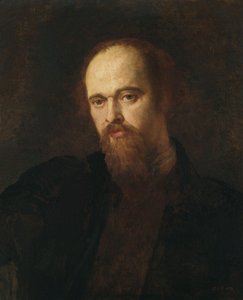
      Dante Gabriel Rossetti

      Dante Gabriel Rossetti

      1828 - 1882, Ühenduvaimiriik

      Quick facts about Dante Gabriel Rossetti

      • Artistic Movement Or Style: Pre-Raphaelite
      • Artists Who Influenced This Artist:
        • John Keats
        • William Blake
      • Date Of Birth: May 12, 1828
      • Date Of Death: April 9, 1882
      • Full Name: Dante Gabriel Rossetti
      • Nationality: British
      • Notable Artworks:
        • Proserpine
        • Joan of Arc
        • King Rene's Honeymoon
      • Place Of Birth: London, UK

      Kunstniku elulugu

      A Life Immersed in Beauty: The World of Dante Gabriel Rossetti

      Dante Gabriel Rossetti, born Gabriel Charles Dante Rossetti in 1828 London, was a figure profoundly shaped by the currents of his time—a Romantic spirit blossoming into the Victorian era. His lineage itself hinted at the artistic destiny that awaited him; his father, an Italian political refugee and scholar of Dante Alighieri, instilled within young Gabriel a deep reverence for literature and the arts. This early exposure, coupled with a mother who nurtured his intellectual curiosity, laid the foundation for a life dedicated to creative expression. Though initially considering a clerical career, Rossetti’s true calling lay in the realm of aesthetics—a path he would forge as a poet, illustrator, and, most notably, a painter whose works continue to captivate audiences today. His formative years were steeped in the literary giants of his age – Shakespeare, Dickens, Scott, Byron – all contributing to a rich imaginative landscape that would later define his artistic vision.

      Early Life and Artistic Beginnings

      Gabriel Charles Dante Rossetti’s childhood was marked by intellectual stimulation and familial connections to the arts. His father, Gabriele Pasquale Giuseppe Rossetti, fled Italy after witnessing political upheaval—a refugee driven by convictions rooted in Dante Alighieri's humanist ideals. This heritage instilled within Gabriel a lifelong fascination with Italian literature and culture. Simultaneously, his mother, Frances Mary Lavinia Polidori, possessed a keen interest in the sciences and fostered Gabriel’s inquisitive spirit. He received a comprehensive education at King’s College School, where he honed his skills in German and immersed himself in classical texts—a formative experience that would shape his artistic sensibilities. Recognizing his innate talent for drawing from an early age, Rossetti pursued formal training at Sass's Drawing School, mastering techniques vital to the Pre-Raphaelite movement. This dedication to observation and meticulous craftsmanship became a hallmark of his artistic practice throughout his career.

      The Pre-Raphaelite Rebellion: A Return to Ideal Beauty

      Dante Gabriel Rossetti’s artistic trajectory took an irreversible turn with the founding of the Pre-Raphaelite Brotherhood in 1848 alongside William Holman Hunt and John Everett Millais. Dissatisfied with the prevailing academic style—characterized by idealized forms and artificial colors—the Brotherhood sought inspiration from Italian and Flemish art *before* the High Renaissance, rejecting the conventions of the Royal Academy. This rebellious impulse stemmed from a shared conviction that true beauty resided in faithful representation of nature and spiritual truth. Rossetti’s early works exemplify this ethos, showcasing an astonishing level of detail alongside symbolic imagery drawn from religious texts—a testament to his unwavering commitment to artistic integrity. *The Girlhood of Mary Virgin*, arguably his most celebrated masterpiece, embodies the Brotherhood's aesthetic principles perfectly: luminous colors, precise draughtsmanship, and evocative symbolism convey a profound sense of serenity and contemplation. The painting’s meticulous depiction of Mary’s youthful innocence reflects Rossetti’s belief in the transformative power of beauty—a conviction that underpinned his entire artistic worldview.

      Poetry and Symbolism: Integrating Art and Literature

      Beyond his visual art, Dante Gabriel Rossetti cultivated a prolific poetic career—producing volumes of verse infused with Romantic sensibilities and exploring themes of love, loss, and spiritual longing. His poems often served as companions to his paintings, creating a unified artistic experience that engaged both the eye and the mind—a characteristic feature of Pre-Raphaelite art. Rossetti’s stylistic evolution mirrored broader trends in Victorian culture—embracing psychological depth and delving into the complexities of human emotion. Influenced by poets like Keats and Blake, he experimented with unconventional forms and imagery, pushing boundaries of artistic expression. His masterful use of language—characterized by lyrical beauty and evocative symbolism—established him as one of the foremost lyric poets of his era. Poems such as *Goblin Market* and *The Blessed Damozel* exemplify Rossetti’s poetic genius—capturing moments of sublime wonder and conveying profound spiritual insights.

      Legacy and Influence: Shaping Aesthetic Vision

      Dante Gabriel Rossetti's artistic legacy extends far beyond his own lifetime, profoundly impacting subsequent generations of artists and writers. He championed the Pre-Raphaelite movement’s pursuit of beauty and truth—challenging Victorian societal norms and advocating for a more imaginative approach to artmaking. His unwavering devotion to symbolism and emotional intensity paved the way for movements like Symbolism and Aestheticism—influences that resonate powerfully in contemporary artistic practice. Artists such as William Morris and Edward Burne-Jones drew inspiration from Rossetti’s aesthetic principles, incorporating them into their distinctive styles—a testament to his enduring influence on British art history. Dante Gabriel Rossetti remains an important figure in understanding not only the history of art but also the broader cultural context in which it was created—a period marked by intellectual ferment and a yearning for spiritual renewal. His unwavering belief in beauty’s transformative power continues to inspire artists and audiences alike, securing his place as one of the most significant voices in Victorian artistic culture.

      § 5Comparanda

      § 6Questions

      Teave teose kohta

      • style: Symbolism
      • medium: chalk
      • year: 1870
      • title: Study for
      • influences: Medieval themes, mysticism, early Italian Renaissance

      Kunstiteaduse kvartett

      Iga küsimuse kohta on ainult üks õige vastus.

      Küsimus 1:
      To which artistic movement does Dante Gabriel Rossetti's 'Study for' belong?
      Küsimus 2:
      What medium did Rossetti primarily use to create this study?
      Küsimus 3:
      The artwork depicts a scene based on what kind of narrative?
      Küsimus 4:
      Who is the central female figure prominently featured in 'Study for'?
      Küsimus 5:
      What is a key characteristic of the style evident in this artwork, as described in the provided information?

      § 7Cite this entry

      AllPaintingsStore.com, “Dante Gabriel Rossetti, Study for (1870)”, https://allpaintingsstore.com/et/art/dante-gabriel-rossetti-study-for-D4K48V-en/ArtistReproduction/ (accessed 3 oktoober 2026).

      § 8The reproduction

      Käsitsi valmistatud õlimaalireproduktsioon

      Meie kunstnike poolt tellimusel valmistatud käsitsi maalitud õli-kainaste teos teie soovitud suuruses ja raamis. ( Lülita trükkitoodetele Lülita digitaalse pildi juurde)

      It is specified on the order sheet in the margin; the present state of that sheet reads as follows.

      Study for

      Reproduktsiooni tehnika

      Reproduktsiooni suurus

      -

      Eelistatud tippkunstnik

      Rohkem detaile, peenust ja lisatootmisaega

      -

      Reproduktsiooni raamivalikud

      -

      -

      Kunstiteoste või reproduktsioonide puhul, mille üks külg on üle 105 cm (umbikmolt 41 tolli), saadetakse raam kirjal asendis, la Dismantlitud komplektina. See meetod tagab ohutuse kohaletoimetamisel ja väldib transpordil tekkivaid kahjustusi.

      Vajalik professionaalne kokkupanek – see ei ole isetegevusega valmistamiseks mõeldud toode.
      Komplekt tuleb kokku panna ja lõvet pingutada kogemusega professionaalse raamija, kasutades puiduliim (ei kuulu komplekti), lõvetpingi ja klempe, et hoida raami kande mustad õigena liimi kuivamisaja jooksul. Vale kokkupanek või ebaühtlane lõvetping võib kunstiteost püsivalt kahjustada ning seda ei katta meie garantii.

      • Kaasatud on kõik tahked puidust liistud, täpselt lõigatud vastavaks suuruseks.

      • Kokku panemiseks kasutatakse lisatud kruvisid ning nurkade liimamiseks vajalikku puuliima, mida ei ole komplektis ja mida peab raamivalmistaja ise hankima.

      • Vajalik on kasutada professionaalseid tööriistu, mis ei kuulu komplekti: lõvetelapide pingist (pingutaja) ja klambreid, et hoida raami puidu nurgas õigena liimi kuivamisaja jooksul.

      Oluline:
      Nurgaliimamiseks on vaja puiduliim, liimimine peab toimuma klempide all kuni liim on täielikult kuivanud ning kokku monteeritud raami kanga pingutamiseks on vajalik kanga pingutustang. Kumbki neist ei kuulu komplekti. Palun veenduge enne selle suuruse tellimist, et teil on saadaval kogenud professionaalne raamistaja.

      Nimesildikiri

      -

      -

      Kaitsevärnitsus

      Läikiv lakk (muudab värvid elavamaks ning kaitseb valgust ja niiskust eest)

      -

      Kohanda oma teost

      Näiteid muudatuste kohta: Asenda nägu kliendi fotoga; Lisa lemmikloom (nt asenda kass koeraga); Lisa taustale peidetud sõnum; Muuda tausta maastikku või elemente.

      -

      Kiire tarne

      Ülemaailmne tarne riiki 3–4 nädalaga tavalise 5 nädala asemel. (31 oktoober). Kvaliteedis kompromisse ei tehta.

      -

      Kiirsaatmine

      Ülemaailmne tarne () 5 nädala jooksul. (7 november).

      Sisse kuuluv

      Koguhind

      € 340

      Included with every order

      • Tasuta ekspresssaatmine üle maailma
      • Kõrgekvaliteediline lina-kangas
      • Täielik transpordikindlustus
      • Tollimaksude tagastamise garantii
      • Värvitoime täpsuse garantii
      • 100 päeva tagastusõigus (ainult valmistusdefektide korral)
      • 100% raha tagasi garantii
      • Hulgusoodustus
      Order sheet