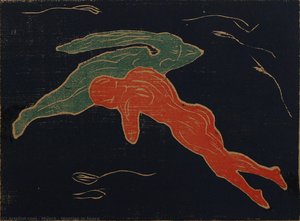
Acrylic On Canvas.

§ 1Kataloogandmed

§ 2Abstraktne
Kogumisobjekti kirjeldus
 Loe lähemalt
Kunstniku elulugu
Avasta Edvard Munch (1863-1944), ekspressionismi pioneer! Tutvu "Karjega" ja kunstiga, mis käsitleb ärevust, suremist, armastust ning psühholoogilisi teemasid. Põhjamaa kunsti ikoon!
§ 3Kommentaar
A Moment Frozen in Reflection: Unpacking Edvard Munch’s Untitled (1330)
Edvard Munch's *Untitled (1330)*, a deceptively simple portrait rendered in muted hues against a textured brick wall backdrop, transcends mere representation; it embodies the profound anxieties and psychological explorations characteristic of Munch’s oeuvre. Painted circa 1892-93 during his formative years as an Expressionist artist, this piece offers a glimpse into Munch's inner world—a realm grappling with themes of isolation, vulnerability, and the inescapable awareness of mortality.
- Subject Matter: The central figure is depicted seated on the ground, her hands clasped before her face in an act of profound contemplation. Her gaze directs inward, suggesting a preoccupation with internal thoughts and emotions rather than external stimuli.
- Style & Technique: Munch’s masterful use of color—primarily ochre, brown, and grey—creates a palpable sense of melancholy and unease. The brushstrokes are loose and expressive, conveying movement and capturing the immediacy of feeling. This technique aligns perfectly with Expressionism's goal of portraying subjective experience rather than objective reality.
- Historical Context: Created during Munch’s period of intense artistic experimentation, *Untitled (1330)* reflects the broader intellectual climate of late 19th-century Europe—a time marked by burgeoning anxieties about societal change and a growing fascination with psychological phenomena. It stands alongside other works exploring themes of trauma and existential dread, cementing Munch's position as a pioneer in conveying emotional depth.
Symbolism & Emotional Impact: The brick wall serves as more than just a compositional element; it symbolizes confinement and repression—a visual representation of the psychological barriers confronting the woman within. Scattered books around her suggest intellectual pursuits, yet simultaneously underscore the futility of seeking solace in knowledge when confronted with fundamental anxieties about existence. Munch’s deliberate avoidance of idealized beauty underscores his commitment to portraying raw emotion, inviting viewers to confront their own vulnerabilities and grapple with questions of identity and suffering.
- Color Palette: The subdued color palette contributes significantly to the painting's emotional resonance. Ochre and brown evoke feelings of warmth and earthiness, juxtaposed against the coolness of grey—creating a visual tension that mirrors the internal turmoil depicted.
- Composition: Munch’s careful arrangement of elements—the woman in isolation, the brick wall as backdrop, and the books as symbols—guides the viewer's eye inward, fostering contemplation on themes of introspection and psychological vulnerability.
*Untitled (1330)* remains a powerfully evocative artwork, demonstrating Munch’s unparalleled ability to translate inner experience into visual form. Its enduring appeal lies in its capacity to resonate with audiences across generations—a testament to the universality of human emotions and the transformative power of art.
Korduvad küsimused
Mis on Edvard Munch pseudonüümid või alternatiivsed nimed?
Teised Edvard Munch jaoks kirjutatud nimed, teose "untitled (1330)" looja, hõlmavad ka Edvard Munck.
Milline on teose „untitled (1330)“, autor Edvard Munch visuaalne heledus?
Üldiselt on teose "untitled (1330)" heledus registreeritud väärtusega balanced. Perseeitud heledus kirjeldab, kui valguse või tumeda tundub teos olevat.
Mis tüüpi teos on "untitled (1330)"?
"untitled (1330)" on WallArt teos.


 Lülita trükkitoodetele


 Kunstiteoste või reproduktsioonide puhul, mille üks külg on üle 105 cm (umbikmolt 41 tolli), saadetakse raam kirjal asendis, la Dismantlitud komplektina. See meetod tagab ohutuse kohaletoimetamisel ja väldib transpordil tekkivaid kahjustusi.