

Cubist Modernity · 1940
Composition (Fernand Léger, 1940)
Composition on Fernand Léger (1881–1955) teos. See on pärinev 1940 aastast. See kuulub Cubist Modernity suuntrime. See on valmistatud materjalist Acrylic On Canvas.
- 1940
- Acrylic On Canvas

 Eelvaade

 Trükk
 Saada
 Jaga
 Teosest infokaart


 Laadi alla
 Sarnased teosed
 Röntgenuuring
 Slaidietendus
 KÜSIMUSED JA VASTUSID

 Statistika
Composition: peamised üksdetails
- Pealkiri
- Composition
- Kunstnik
- Fernand Léger (1881–1955)
- Kunstniku sünnukoht
- Argentan, Prantsusmaa
- Kuupäev
- 1940
- Materjalid
- Acrylic On Canvas
- Liikumine
- Cubist Modernity
- Aeglkond
- Modern
- Teema
- fish painting, marine life, color field, geometric forms, léger style, abstract fish
Mida teos Composition kujutab?
A Symphony of Form and Color: Exploring Fernand Léger’s “Composition”
Fernand Léger's "Composition," painted in 1940, offers a captivating glimpse into the artist’s revolutionary approach to depicting the modern world. This vibrant canvas, dominated by the bold interplay of red, yellow, and blue, immediately draws the viewer into a dynamic aquatic scene teeming with life – a far cry from the traditional landscapes favored by many of his contemporaries. Léger, born Joseph Fernand Henri Léger in 1881 in Argentan, Normandy, was a pivotal figure in the transition between early modernism and later abstract movements. His work reflects a profound engagement with the industrial age, translating its geometric forms and mechanical rhythms into a uniquely expressive visual language.
The Machine Age Made Beautiful
Created during a period of rapid technological advancement, “Composition” embodies Léger’s fascination with machines and their impact on human experience. He wasn't simply painting *of* machines; he was attempting to capture their essence – their power, their precision, and their inherent dynamism. The fish themselves become stylized representations of these mechanical forms, rendered in bold, angular shapes and vibrant colors that evoke the energy of a factory floor or the movement of a locomotive. This approach aligns with Léger’s broader artistic philosophy, which sought to integrate modernity into art, rejecting purely abstract notions while retaining a strong connection to observable reality.
Technique and Color – A Bold Statement
Léger's technique is characterized by a deliberate flatness of picture plane and a rejection of traditional perspective. He employed a thick impasto application of paint, building up layers of color that create a tactile surface and enhance the sense of movement within the composition. The use of primary colors – red, yellow, and blue – is particularly striking, reflecting Léger’s desire to convey raw energy and emotion. The varying sizes and hues of the fish contribute to a visual richness, creating depth through scale and color gradation rather than relying on conventional spatial illusion. This technique was revolutionary for its time, pushing the boundaries of representational painting.
Symbolism and Emotional Resonance
Beyond its formal qualities, “Composition” carries a subtle symbolic weight. The aquatic setting can be interpreted as representing both the natural world – a realm Léger sought to reconcile with industrial progress – and the subconscious depths of human experience. The multitude of fish suggests an interconnectedness, mirroring Léger’s belief in the unity of form and function. The painting's emotional impact is one of vibrant energy and optimistic dynamism; it’s a celebration of modern life, albeit viewed through the lens of a unique artistic vision.
A Legacy of Innovation
“Composition,” painted in 1940, stands as a testament to Fernand Léger's enduring legacy as one of the most innovative and influential artists of the 20th century. Its bold colors, dynamic forms, and engagement with the machine age continue to resonate with viewers today. A hand-painted reproduction offers an unparalleled opportunity to experience the full impact of this remarkable work, bringing its energy and vision into any space.
Composition: pildifailid
Kasutatud meie andmebaasist suurema resolutsiooniga pilti, mitte veebis olevat pilti: minimaalselt 300 DPI. Värvid on kontrollitud originaaliga ning faili on retušeerinud digitaalekspert.
Osta kõrge resolutsiooniga piltFernand Léger, Composition (1940).
Fernand Léger (1881–1955), Composition, 1940, acrylic on canvas. Avalik omaniklik õigus Pilt: AllPaintingsStore.com.
Küsimused teemal Composition
Millal loodi teos "Composition"?
Teos „Composition“, autor Fernand Léger loodi aastal 1940.
Millist tehnikat teose „Composition“, autor Fernand Léger valmistamisel kasutati?
Teose "Composition" loomisel kasutas Fernand Léger Acrylic On Canvas tehnikat. See tehnika määrab originaalteose materjalilise olemuse.
Mille kohta teos "Composition" on?
Teemad, mis teoses „Composition“, autor Fernand Léger esinevad, hõlmavad fish painting, marine life, color field, geometric forms, léger style, abstract fish, modern art. Koos need kokkuvõtavad teose sisu.
Kas teose „Composition“, autor Fernand Léger pilt on vabalt reproduseeritav?
Autoriõiguse teave teose „Composition“, autor Fernand Léger kohta: teos kuulub luba ala avalik && copyright on aegunud. See määrab, kas kujundist on lubatud vabadelt reproduktsioone teha.
Millisele kunstnikule on teos "Composition" atribuutseeritud?
Teose "Composition" autoriks on mõeldud Fernand Léger.
Millisse kunstisuuna kuulub teos „Composition“, autor Fernand Léger?
Teosest „Composition“, autor Fernand Léger tuntud kunstisuuna on Cubist Modernity. See klassifikatsioon aitab teost paigutada sarnaste kunstnike ja teoste hulka.
Millissele perioodile Fernand Léger karjäärist kuulub teos "Composition"?
Teos "Composition" esindab kunstniku Fernand Léger loovperioodi Cubist Maturity.
Mis vanuses loos Fernand Léger teose "Composition"?
Fernand Léger oli 59 aastane, kui ta teosest "Composition" aastal 1940 lõi. Vanus on arvutatud kunstniku sünnaaasta põhjal, 1881.
Kas Fernand Léger teos "Composition" kuulub avalikku omandisse ja miks?
Fernand Léger teos "Composition" on avalik && copyright on aegunud. Autoriõiguse kaitseajad arvutatakse alates kunstniku surmaõigustest ning Fernand Léger suri aastal 1955.
Kunstnik Fernand Léger kohta
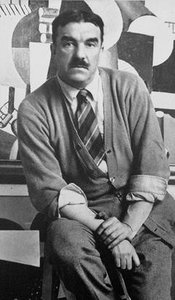
1881–1955, Prantsusmaa
Fernand Léger
Fernand Léger'i elu Fernand Léger'i lugu algab Argentani külas, mis asub Madrõun-Normandie piirkonnas Orne ängis. Ta tuli homma valgama 4. veebruaril 1881 aastal kui ainukein poeg. Tema varajased aastad said vormistada Prantsuse maapiirkonna vaiksuse ja tema ema, Marie-Adèle Daunou, kohalolun mõju all.
Iga Fernand Léger teos koos suuruse ja hinna infoga → Kunstniku profiil Fernand Léger kuulsumad teosed
Muud teosed kunstniku Fernand Léger eest
 Linn1919
 Mehaanik1920
 Kolm naist1921
 Naised metsas1910
Artiklid teemal Composition
 Steel & Soul: 10 Powerful Artworks That Capture the Industrial VibeAndy Warhol’s 1982 Crosses uses thirteen varying shapes to mirror mass production. Compare this to the rhythmic pulse of Fernand Léger’s Th…
 10 Iconic Masterpieces That Defined Geometric AbstractionAmidst the radical global transformations of the early 20th century, artists moved beyond representation to find the mathematical heartbeat…
 Mastering the Machine Age: The Top 25 Fernand Léger Artworks1919 saw the birth of The City, where Léger replaced organic textures with the rhythmic, mechanical symphony of the industrial machine age.…