


 Vaata sisu
 Jaga teost
 Jaga
Jaga
 Detailid
 Õppekate juhend

 Laadi alla
 Sarnased teosed
 Röntgenuuring
 Slaidietendus
 Statistika
James Clitherow (1731–1805)
 Oil On Canvas
- WallArt
- Neoclassicism
 1780
1780- Early Modern
 73.0 x 61.0 cm
 Boston Manor House
 Loe lähemalt
Giclée / Kunstiprint
Muuseumikvaliteediga giclée- või kangasprint kiire tootmisega ja paindlikud viimistlusvõimalused. ( Telli käsitsi maalitud reproduktsioon Ülemineku digitaalse pildi müügi kanalisse)




P118B €10

P118H €10

P118W €10

P438Z €10

P508JH €12

P508YH €12

P805H €10

P805Z €10

P919BZ €10

P919G €10

P919XJ €10

P959ZH €10

P968JZ €12

W106C €8

W218G €10

W218JH €8

W218Y €10

W307PJ €10

W316G €10

W316PJ €8

W316Y €10

W398PJ €8

W4111J €10

W500HY €15

W500JH €15

W692G €12

W849H €8

W940BG €15

W953PJ €8




Vali meie eelmääratud suurused, mis vastavad teose algupärastele proportsioonidele.

Sisestage vajalik laius ja kõrgus, et see sobiks teie raamile või seinale. Trükki saab ainult lõigata, seda ei saa kunagi pildist suuremaks teha, seega ka differentse vormiga suurus kaotab osa pildist. Enne trükkimist saadame teile kinnitamiseks digitaalse näidisprojektsiooni. Sellel lehel näidatud pilt ei kujuta reaalset lõiget — seda näitab ainult näidisprojekttsioon.
Ülemaailmne tarne () 2 nädala jooksul, tavalise 4/5 nädala asemel. (27 oktoober)

Tasuta ekspresssaatmine üle maailma

Kõrgekvaliteediline lina-kangastest muld

Täielik transpordikindlustus

Tollimaksude tagastamise garantii

Värvitoime täpsuse garantii

100 päeva tagastusõigus (ainult defektide korral)

100% raha tagasi garantii

Hulgusoodustus
 Klaasivalik on saadaval ainult kuni 110 cm suuruses teostes

James Clitherow (1731–1805)
Giclée / Kunstiprint
Reproduktsiooni mõõtmed
-


Lõppsumma
€ 56
A Glimpse into Georgian Elegance
In the quiet, commanding presence of George Romney’s “James Clitherow” (1780), we find more than just a mere likeness; we encounter the very soul of eighteenth-century British high society. This exquisite portrait serves as a window into an era defined by refined grace and social distinction. As the viewer’s eye meets the subject, there is an immediate sense of being transported to a time of candlelight and ceremony. Clitherow, a respected barrister and landowner, is captured not merely as a man of status, but as a figure of profound dignity. The painting breathes with a certain psychological intimacy, where the subtle tilt of his head and a gaze directed slightly off-canvas suggest a mind engaged in deep, quiet contemplation.
The mastery of Romney lies in his ability to balance the formal requirements of a commissioned portrait with an almost tender humanity. While the painting serves to commemorate Clitherow’s accomplishments, it avoids the stiffness often found in contemporary works. Instead, there is a soft, luminous quality to the skin and fabric that invites the observer to linger, making it an ideal centerpiece for those seeking to infuse a room with a sense of historical weight and sophisticated calm.
The Artistry of Light and Line
Technically, “James Clitherow” is a triumph of the Rococo style, blended seamlessly with the emerging sensibilities of classical British portraiture. Romney employs a masterful one-point perspective, a deliberate compositional choice that pulls the viewer’s focus directly toward the subject's face and upper torso. The artist utilizes a subdued, sophisticated palette—dominated by deep blacks, rich browns, and creamy whites—to create an atmosphere of understated luxury. This tonal restraint allows the play of light to become the true protagonist of the work.
Upon closer inspection, the brilliance of Romney’s technique becomes even more apparent. The artist uses delicate yet confident brushstrokes to layer oil paints on canvas, achieving a surface finish that seems to glow from within. There is a beautiful tension between the linear precision used to define the crisp edges of the wig, collar, and buttons, and the organic, flowing curves found in the drapery. This interplay of geometric structure and soft, atmospheric shading creates a remarkable sense of three-dimensional depth, lending the portrait a realism that feels both timeless and tactile.
A Legacy for the Discerning Collector
For the art lover or interior designer, this piece offers much more than aesthetic beauty; it offers a narrative of permanence. To hang a reproduction of such a work is to introduce an element of historical prestige into a modern space. The painting’s emotional impact—a blend of seriousness tempered by a hint of a smile—provides a balanced energy that can anchor a room, whether in a formal study, a grand hallway, or a curated gallery wall.
Owning a piece that evokes the era of George Romney is an invitation to celebrate the virtues of intellect and composure. As we look upon Clitherow, we are reminded of the enduring power of portraiture to capture the essence of character. This artwork remains a profound testament to the skill of one of England's most fashionable painters, making it a timeless acquisition for any collection dedicated to the elegance of the classical tradition.
Küsimused ja vastused
Millisesse ruumi on „James Clitherow (1731–1805)“, autor George Romney soovituslik paigutada?
Soovitatav paik „James Clitherow (1731–1805)“, autor George Romney jaoks on Living Room. See soovituse võib muidugi oma interjööri vajadust mööda kohandada.
Kui harmoniliselt on teoses „James Clitherow (1731–1805)“, autor George Romney värvid ühendatud?
Teose "James Clitherow (1731–1805)" värviharmonia on Strong Color Unity.
Kas teose „James Clitherow (1731–1805)“, autor George Romney värvid on eraldavad või pehmed?
Teose „James Clitherow (1731–1805)“, autor George Romney värvitoit on Muted kütkusega ja Monochromatic intensiivsusega.
Sarnased teosed


Kunstniku elulugu
A Life in Portraiture: The World of George Romney
Born in the picturesque landscape of Dalton-in-Furness, Lancashire, on December 15th, 1734, George Romney ascended to become one of the most sought-after portrait painters of his era. His journey from a cabinet maker’s son to the favored artist of British high society is a compelling narrative of innate talent and unwavering ambition. Early life offered little indication of the artistic path he would forge; initially apprenticed to his father, it was an inherent inclination towards drawing and craftsmanship that led him to Christopher Steele, a local portraitist who had studied in Paris. This apprenticeship proved pivotal, providing Romney with foundational skills and an introduction to European artistic traditions. He quickly surpassed his master, however, demonstrating a precocious talent demanding further cultivation. A brief, unhappy marriage and subsequent separation propelled him towards London in 1762, a city brimming with opportunity but also fierce competition.Establishing a Reputation: Style and Technique
London proved to be a crucible for Romney’s artistic development. He swiftly established himself as a formidable portraitist, challenging the dominance of artists like Thomas Gainsborough and Sir Joshua Reynolds. While he never sought membership in the Royal Academy – a decision that perhaps limited his access to certain patronage – his success was undeniable. Romney's style evolved over time, initially reflecting the influence of Steele and his Parisian training, but soon blossomed into something distinctly his own. He possessed an exceptional ability to capture not merely the likeness, but also the personality and social standing of his sitters. His portraits are characterized by elegant poses, a refined use of light and shadow, and a subtle psychological insight that set him apart. Romney’s technique was marked by a delicate touch and a preference for flowing lines, often drawing inspiration from classical sculpture. He skillfully employed color to convey texture and depth, creating portraits that were both visually striking and emotionally resonant. His ability to flatter his subjects while maintaining artistic integrity earned him the loyalty of an elite clientele. He understood the power of suggestion, hinting at character rather than explicitly defining it, a quality that appealed to those who valued discretion and refinement. Romney’s meticulous attention to detail—from the subtle folds of fabric to the expressive gaze of his subjects—became a hallmark of his oeuvre.The Muse and Her Influence: Emma Hamilton
Romney’s life took a dramatic turn with his encounter with Emma Hart, later known as Lady Hamilton, in 1782. She became not only his most celebrated model but also his muse, profoundly influencing his artistic output. Emma's beauty, intelligence, and theatrical flair captivated Romney, inspiring a series of portraits that explored themes of classical mythology, dramatic narrative, and feminine grace. He depicted her in various roles – as a spinner, as the tragic Miranda from Shakespeare’s *The Tempest*, and in numerous allegorical scenes that showcased her expressive range. These works demonstrate Romney's willingness to experiment with composition and symbolism, moving beyond conventional portraiture into more imaginative territory. The Tempest series, in particular, reveals a Romantic sensibility at play, anticipating the emotional intensity of later artists. The relationship was intense and all-consuming for Romney, though ultimately unfulfilled romantically; Emma eventually became the mistress of Lord Nelson, a union that cemented her place in history. Nevertheless, their artistic collaboration left an indelible mark on both their lives and produced some of Romney’s most enduring masterpieces. He painted over 80 portraits of her, each revealing a different facet of her captivating personality. The dynamism of Emma Hamilton's presence—captured with remarkable sensitivity—became central to Romney’s artistic vision.Major Achievements and Legacy
George Romney achieved considerable renown during his lifetime, securing commissions from prominent figures across British society. His portraits graced the homes of aristocrats, statesmen, and writers alike, establishing him as one of the foremost artists of his generation. Beyond his prolific output, Romney's contribution to artistic discourse was significant. He championed a style that prioritized psychological realism and emotional expression—a departure from the more formal conventions of earlier portraiture. His influence extended beyond his immediate contemporaries, inspiring subsequent generations of painters who sought to emulate his mastery of technique and his ability to convey human character with profound insight. Romney’s legacy resides not only in the beauty of his paintings but also in their enduring relevance as representations of a pivotal moment in British cultural history—the Romantic era. His work continues to be studied and admired for its elegance, subtlety, and emotional depth. He remains a testament to the transformative power of artistic talent and ambition.Concluding Thoughts
Romney’s artistic journey exemplifies the pursuit of excellence and the unwavering belief in one's own creative potential. From humble beginnings to international acclaim, his life story is an inspiration for artists and art lovers alike. His portraits stand as enduring symbols of beauty, grace, and psychological complexity—a lasting testament to George Romney’s genius and a cornerstone of British artistic heritage.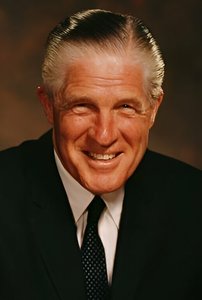
George Romney
1734 - 1802 , Ühenditud kuningriik
Lühikest infot
- Artistic Movement Or Style: Portraiture, Romanticism
- Artists Who Influenced This Artist:
- Christopher Steele
- Carle Vanloo
- Raphael
- Titian
- Correggio
- Date Of Birth: Dec 15, 1734
- Date Of Death: Nov 15, 1802
- Full Name: George Romney
- Nationality: British
- Notable Artworks:
- Peter and James Romney
- Portrait of G. Cowper
- The Death of General Wolfe
- Place Of Birth: Dalton-in-Furness, UK
Sarnased artiklid
Georges Braque: 25 meistriteost, mis muutsid kunsti – AllPaintingsStore.com
Avastage Georges Braque 25 ikoonilist teost! Sukeldu kubismi maailma, modernse kunsti geomeetrilistesse vormidesse ja värvikates maalidess. Leia inspiratsiooni interjööri kujunduseks AllPaintingsStore.com-is. Kunstikollektsioonid ja kvaliteetsed reproduktsioonid.

George Romney: Portraiture, Patronage & the Shaping of Georgian Society
Explore the life & art of George Romney, leading portraitist of Georgian England. Discover his style, famous patrons like Emma Hamilton, and legacy in British society. Expert insights for collectors.

Georges Seurat: 25 meistriteost valgusest ja värvist | AllPaintingsStore
Avastage Georges Seurat' 25 ikoonilist teost! Sukeldume pointillismi, valgusest ja värvist täis maailma. Leidke inspiratsiooni interjööri kujundamiseks AllPaintingsStore.com-is – kvaliteetsed reproduktsioonid ja kunstikollektsioonid ootavad!
Sir Alfred Munnings' Masterpieces: 25 Paintings That Define Equine Art | AllPaintingsStore
Explore 25 iconic Sir Alfred Munnings paintings! Discover the beauty of British Impressionism, equine art & rural England. Find museum-quality reproductions and elevate your home decor with AllPaintingsStore. Explore the full collection online.
James Abbott McNeill Whistler: 25 meistriteost kunstikollektsioonis | AllPaintingsStore.com
Avastage James Abbott McNeill Whistler'i 25 võrratut meistriteost! Sukelduge esteetilisse kunstimaailma, õppige tema maalitehnikatest ja leidke täiuslik seina kaunistus AllPaintingsStore.com-ist. Kunstikollektsioonid & reprodutsioonid.


