


 Eelvaade
 Saada
Saada Jaga
Jaga
 Teave teose kohta
 Juhend

 Laadi alla
 Sarnased teosed
 Röntgenuuring
 Slaidietendus
 Q&A
Q&A Statistika
William Henry Cavendish Bentinck

 Loe lähemalt
Giclée / Kunstiprint
Muuseumikvaliteediga giclée- või kangasprint kiire tootmisega ja paindlikud viimistlusvõimalused. ( Osta käsitsi maalatud teos Lülita digitaalse pildi juurde)




P118B €10

P118H €10

P118W €10

P438Z €10

P508JH €12

P508YH €12

P805H €10

P805Z €10

P919BZ €10

P919G €10

P919XJ €10

P959ZH €10

P968JZ €12

W106C €8

W218G €10

W218JH €8

W218Y €10

W307PJ €10

W316G €10

W316PJ €8

W316Y €10

W398PJ €8

W4111J €10

W500HY €15

W500JH €15

W692G €12

W849H €8

W940BG €15

W953PJ €8




Vali meie eelmääratud suurused, mis vastavad teose algupärastele proportsioonidele.

Sisestage vajalik laius ja kõrgus, et see sobiks teie raamile või seinale. Trükki saab ainult lõigata, seda ei saa kunagi pildist suuremaks teha, seega ka erineva mustega suurus kaotab osa pildist. Enne trükkimist saadame teile kinnitamiseks digitaalse näidisprojektsiooni. Sellel lehel näidatud pilt ei kujuta reaalset lõiget — seda näitab ainult näidisprojektsioon.
Ülemaailmne tarne () 2 nädala jooksul, tavalise 4/5 nädala asemel. (30 oktoober)

Tasuta ekspresssaatmine üle maailma

Kõrgekvaliteediline lina-kangas

Täielik transpordikindlustus

Tollimaksude tagastamise garantii

Värvitoime täpsuse garantii

100 päeva tagastusõigus (ainult valmistusdefektide korral)

100% raha tagasi garantii

Hulgusoodustus
 Klaasivalik on saadaval ainult kuni 110 cm suuruses teostes

William Henry Cavendish Bentinck
Giclée / Kunstiprint
Reproduktsiooni suurus
-


Koguhind
€ 56
William Henry Cavendish Bentinck: Een Portret van Macht en Digniteit door George Romney
Deze prachtige reproductie vangt een essentieel moment in de Britse kunstgeschiedenis vast: het portret van William Henry Cavendish Bentinck (1738–1809), de 3e Hertog van Portland, geschilderd door George Romney rond 1799. Romney’s werk is een bewijs van het neoclassicisme en een prachtige illustratie van hoe kunstenaars de macht en status van hun tijd konden weergeven. Het beeld staat centraal tegen een donkere achtergrond die zijn persoonlijkheid isoleert en benadrukt, waardoor een dramatische lichtinval ontstaat die zijn gezicht en kleding verlicht en het geheel omringt met schaduw. Een klassieke compositie, zoals gebruikelijk voor het tijdperk, zorgt ervoor dat Bentinck’s figuur centraal staat en een licht gekantelde houding suggereert, wat dynamiek en controle uitdraagt. Romney gebruikte een combinatie van zorgvuldige observatie en technische vaardigheid om een beeld te creëren dat zowel realistisch als emotioneel aangrijpend is. Zijn stijl werd sterk beïnvloed door de werken van kunstenaars zoals Nicolas Pocock en Antoniozzi, waarbij hij een hoog niveau van detail nastreeft en aandacht schenkt aan het weergeven van verschillende texturen – van de gladde huidtinten tot de rijke stof van Bentinck’s kostuum. Een belangrijke techniek was het gebruik van olie op doek, waarbij Romney laag voor laag kleur gebruikte om een diepte en dimensie te creëren die typerend zijn voor het neoclassicisme. Hij besteedde bijzondere aandacht aan het licht, dat vanuit links komt en Bentinck’s gezicht en kleding verlicht terwijl het achtergrond in schaduw laat liggen – een stijlvolle keuze die de ernst en autoriteit van het onderwerp onderstreept. Het portret draagt een rijke symboliek bij zich dragen die verder gaat dan alleen een afbeelding van een persoonlijkheid. De koninklijke kroon boven Bentinck’s hoofd is een directe verwijzing naar zijn noble status en verbinding met de monarchie, terwijl zijn uitgebreide kleding – inclusief een rode jas met gouden borduurwerk en een sash – zijn welvaart en sociale positie binnen het Britse Georgië tijdperk onderstreept. Romney wilde niet alleen Bentinck’s fysieke verschijning vastleggen maar ook een gevoel van waardigheid en zelfvertrouwen overbrengen, wat perfect wordt weergegeven in de houding en expressie van de hertog. Een kunstwerk dat een prachtige combinatie biedt van historische nauwkeurigheid en artistieke schoonheid. Deze reproductie biedt een unieke kans om het briljante werk van George Romney te bewonderen en een stuk Britse kunstgeschiedenis naar huis te halen. Laat je inspireren door de stijlvolle eenvoud en de emotionele kracht van dit iconische beeld – een prachtige aanvulling op elke kunstcollectie. Een investering in kunst die zowel esthetisch als historisch waardevol is.Korduvad küsimused
Millisesse ruumi on „William Henry Cavendish Bentinck“, autor George Romney soovituslik paigutada?
Soovitatav paik teosele „William Henry Cavendish Bentinck“, autor George Romney on Elutuba. See soovituse võib muidugi oma interjööri vajadust mööda kohandada.
Miks on teose "William Henry Cavendish Bentinck" autoriõiguste staatus selline, nagu see on?
Teose "William Henry Cavendish Bentinck" autoriõiguste staatus - avalikus õiguses – selle autoriõigud onหมดunud - tuleneb kunstniku surma aastast 1802.
Kuidas kunstiliikumine ja ajastu kohtuvad teoses „William Henry Cavendish Bentinck“, autor George Romney?
Teos "William Henry Cavendish Bentinck" kuulub Georgian Portraiture suunale ning selle looja tegutses Varajärgne modernne ajastu ajastul.
Sarnased teosed


Kunstniku elulugu
A Life in Portraiture: The World of George Romney
Born in the picturesque landscape of Dalton-in-Furness, Lancashire, on December 15th, 1734, George Romney ascended to become one of the most sought-after portrait painters of his era. His journey from a cabinet maker’s son to the favored artist of British high society is a compelling narrative of innate talent and unwavering ambition. Early life offered little indication of the artistic path he would forge; initially apprenticed to his father, it was an inherent inclination towards drawing and craftsmanship that led him to Christopher Steele, a local portraitist who had studied in Paris. This apprenticeship proved pivotal, providing Romney with foundational skills and an introduction to European artistic traditions. He quickly surpassed his master, however, demonstrating a precocious talent demanding further cultivation. A brief, unhappy marriage and subsequent separation propelled him towards London in 1762, a city brimming with opportunity but also fierce competition.Establishing a Reputation: Style and Technique
London proved to be a crucible for Romney’s artistic development. He swiftly established himself as a formidable portraitist, challenging the dominance of artists like Thomas Gainsborough and Sir Joshua Reynolds. While he never sought membership in the Royal Academy – a decision that perhaps limited his access to certain patronage – his success was undeniable. Romney's style evolved over time, initially reflecting the influence of Steele and his Parisian training, but soon blossomed into something distinctly his own. He possessed an exceptional ability to capture not merely the likeness, but also the personality and social standing of his sitters. His portraits are characterized by elegant poses, a refined use of light and shadow, and a subtle psychological insight that set him apart. Romney’s technique was marked by a delicate touch and a preference for flowing lines, often drawing inspiration from classical sculpture. He skillfully employed color to convey texture and depth, creating portraits that were both visually striking and emotionally resonant. His ability to flatter his subjects while maintaining artistic integrity earned him the loyalty of an elite clientele. He understood the power of suggestion, hinting at character rather than explicitly defining it, a quality that appealed to those who valued discretion and refinement. Romney’s meticulous attention to detail—from the subtle folds of fabric to the expressive gaze of his subjects—became a hallmark of his oeuvre.The Muse and Her Influence: Emma Hamilton
Romney’s life took a dramatic turn with his encounter with Emma Hart, later known as Lady Hamilton, in 1782. She became not only his most celebrated model but also his muse, profoundly influencing his artistic output. Emma's beauty, intelligence, and theatrical flair captivated Romney, inspiring a series of portraits that explored themes of classical mythology, dramatic narrative, and feminine grace. He depicted her in various roles – as a spinner, as the tragic Miranda from Shakespeare’s *The Tempest*, and in numerous allegorical scenes that showcased her expressive range. These works demonstrate Romney's willingness to experiment with composition and symbolism, moving beyond conventional portraiture into more imaginative territory. The Tempest series, in particular, reveals a Romantic sensibility at play, anticipating the emotional intensity of later artists. The relationship was intense and all-consuming for Romney, though ultimately unfulfilled romantically; Emma eventually became the mistress of Lord Nelson, a union that cemented her place in history. Nevertheless, their artistic collaboration left an indelible mark on both their lives and produced some of Romney’s most enduring masterpieces. He painted over 80 portraits of her, each revealing a different facet of her captivating personality. The dynamism of Emma Hamilton's presence—captured with remarkable sensitivity—became central to Romney’s artistic vision.Major Achievements and Legacy
George Romney achieved considerable renown during his lifetime, securing commissions from prominent figures across British society. His portraits graced the homes of aristocrats, statesmen, and writers alike, establishing him as one of the foremost artists of his generation. Beyond his prolific output, Romney's contribution to artistic discourse was significant. He championed a style that prioritized psychological realism and emotional expression—a departure from the more formal conventions of earlier portraiture. His influence extended beyond his immediate contemporaries, inspiring subsequent generations of painters who sought to emulate his mastery of technique and his ability to convey human character with profound insight. Romney’s legacy resides not only in the beauty of his paintings but also in their enduring relevance as representations of a pivotal moment in British cultural history—the Romantic era. His work continues to be studied and admired for its elegance, subtlety, and emotional depth. He remains a testament to the transformative power of artistic talent and ambition.Concluding Thoughts
Romney’s artistic journey exemplifies the pursuit of excellence and the unwavering belief in one's own creative potential. From humble beginnings to international acclaim, his life story is an inspiration for artists and art lovers alike. His portraits stand as enduring symbols of beauty, grace, and psychological complexity—a lasting testament to George Romney’s genius and a cornerstone of British artistic heritage.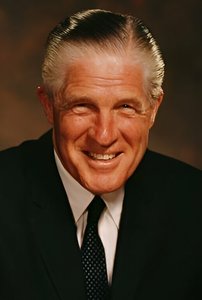
George Romney
1734 - 1802 , Ühenditud kuningriik
Lühikest infot
- Artistic Movement Or Style: Portraiture, Romanticism
- Artists Who Influenced This Artist:
- Christopher Steele
- Carle Vanloo
- Raphael
- Titian
- Correggio
- Date Of Birth: Dec 15, 1734
- Date Of Death: Nov 15, 1802
- Full Name: George Romney
- Nationality: British
- Notable Artworks:
- Peter and James Romney
- Portrait of G. Cowper
- The Death of General Wolfe
- Place Of Birth: Dalton-in-Furness, UK
Sarnased artiklid

George Romney: Portraiture, Patronage & the Shaping of Georgian Society
Explore the life & art of George Romney, leading portraitist of Georgian England. Discover his style, famous patrons like Emma Hamilton, and legacy in British society. Expert insights for collectors.

Sir George Clausen: Capturing Edwardian Life & British Impressionism's Nuances
Explore the luminous world of Sir George Clausen, a leading British Impressionist painter. Discover his captivating scenes of Edwardian life, rural England & poignant war art. Learn about his legacy and find high-quality reproductions at AllPaintingsStore.

Georges Seurat: 25 meistriteost valgusest ja värvist | AllPaintingsStore
Avastage Georges Seurat' 25 ikoonilist teost! Sukeldume pointillismi, valgusest ja värvist täis maailma. Leidke inspiratsiooni interjööri kujundamiseks AllPaintingsStore.com-is – kvaliteetsed reproduktsioonid ja kunstikollektsioonid ootavad!
Georges Braque: 25 meistriteost, mis muutsid kunsti – AllPaintingsStore.com
Avastage Georges Braque 25 ikoonilist teost! Sukeldu kubismi maailma, modernse kunsti geomeetrilistesse vormidesse ja värvikates maalidess. Leia inspiratsiooni interjööri kujunduseks AllPaintingsStore.com-is. Kunstikollektsioonid ja kvaliteetsed reproduktsioonid.
George Stubbs: Anatomical Precision & Romantic Vision in 18th-Century British Art
Explore the captivating world of George Stubbs, the 18th-century master renowned for his anatomical precision & Romantic animal paintings. Discover his legacy and investment potential.


