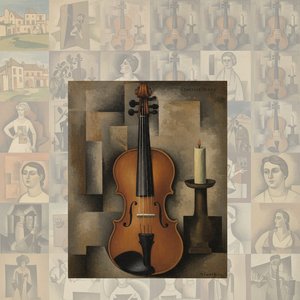
1913. Acrylic On Canvas, 62.0 x 46.0 cm.

§ 1Catalogue data
 Acrylic On Canvas
- WallArt
- Cubist Analytical
 1913
1913- Modern
 62.0 x 46.0 cm
See teos on autoriõigusega kaitstud
Sellel lehel kuvatav kunstiteos on kaitstud autoriõigusega, mis tähendab, et meil ei ole seaduslikku õigust luua või müüa identset reproduktsiooni. Seda kaitset rakendatakse rahvusvaheliste kokkulepete alusel, nagu näiteks Berne konventsioon ning riiklike seadustega, sealhulgas nendega, mida on sätestatud USA autoriõiguse seadus – 17. peatükk.
Austasena ja seaduslikuna alternatiivina pakume originaalist inspireeritud, käsitsi maalitud isikupärastatud teoseid. Meie osutavad ja professionalsed kunstnikud uurivad hoolikalt originaali stiili, meelemoi ja kunstilist olemust, et luua uus, ainulaadne teos, mis tekitab sama tunnet – olles samal ajal omaette originaalne looming.
See meetod järgib täielikult autoriõiguse reegleid, kuna see ei põhine kaitstud kunstiteose kopeerimisel või dupliteerimisel. Selle asemel on tegu loova reinterpreetatsiooniga – uue maaldisega, mis on algteosest inspireeritud, kuid ei ole sellest identiline.
 Loe lähemalt
§ 2Abstract
Kogumisobjekti kirjeldus
Georges Braque’s 1913 ‘Aria de Bach’ presents a striking black and white drawing of a guitar amidst musical instruments, embodying the artist's early Cubist explorations. Discover this unique artwork and bring its timeless beauty into your space.
Kunstniku elulugu
Georges Braque oli kubismi üks rajajaid ja fauvismiga tuntud kunstnik. Tema suurimad teosed hõivatakse L’Estaque maja maalidega ning tänu koostöösele Pablo Picasso'ga jäi ta kunstiloo tähtsamaks esindajaks.
§ 3Commentary
Georges Braque's "Aria de Bach" – A Fragment of Musical Reverie
This evocative black and white drawing, titled “Aria de Bach,” offers a poignant glimpse into the artistic explorations of Georges Braque during 1913. Measuring 62 x 46 cm, this seemingly simple composition—a guitar encircled by instruments of musical mastery—holds within it the complex tensions and groundbreaking innovations that defined Braque’s pivotal role in the birth of Cubism. The image isn't merely a depiction of musical instruments; it’s a carefully constructed fragment, an attempt to capture not just their appearance but also the *essence* of music itself – its structure, its emotion, its very spirit.
- Subject Matter: The central focus is a guitar, immediately associating the artwork with musical expression.
- Surrounding Instruments: A violin and cello are strategically placed, reinforcing the theme of harmony and musical arrangement.
- Added Elements: Scattered books introduce an intellectual dimension, suggesting contemplation and the pursuit of knowledge – key aspects of Braque’s artistic process.
The Birth of Cubism and Braque's Pioneering Role
Created in 1913, “Aria de Bach” sits squarely within the burgeoning movement of Cubism, a style pioneered by Braque and Pablo Picasso. At this time, traditional representational art was undergoing a radical transformation. Artists like Braque were rejecting single viewpoints and instead sought to depict objects from multiple perspectives simultaneously. This is evident in the fragmented forms of the instruments, presented as if seen through various angles at once – a technique central to Cubism’s challenge to conventional perception. The drawing's stark black and white palette further emphasizes this fractured reality, stripping away any illusion of depth or traditional perspective.
Symbolic Resonance: Music and Deconstruction
The choice of musical instruments is profoundly symbolic. Braque was deeply interested in the underlying structures of music, believing that its formal elements – rhythm, harmony, and structure – could be translated into visual form. The guitar, a cornerstone of Western music, represents this connection directly. However, the deconstructed presentation of the instrument—its fragmented outlines and multiple viewpoints—reflects Braque’s core Cubist strategy: to dismantle traditional forms and rebuild them according to his own conceptual understanding. This isn't simply a drawing of instruments; it’s an *interpretation* of music through the lens of Cubism.
Historical Context & Artistic Legacy
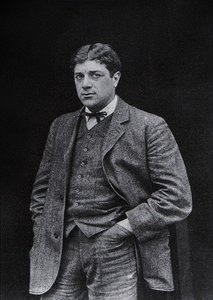
Born in Argenteuil, France, in 1882, Georges Braque’s early life was shaped by his family's profession as house painters and decorators. This experience instilled a deep understanding of form, color, and material – skills that would later inform his revolutionary approach to painting. “Aria de Bach” exemplifies this fusion of technical skill with artistic vision. It represents a crucial moment in Braque’s development, solidifying his position as one of the most important figures in early 20th-century art. This drawing is not just a beautiful object; it's a tangible link to a pivotal period in art history – a testament to Braque’s daring experimentation and enduring legacy.
Korduvad küsimused
Kuidas teose "Aria de Bach" stiil seotub selle looja ajaga?
Teoses „Aria de Bach“, autor Georges Braque kohtuvad Cubist Analytical suunad ja Modernism ajastu.
Millist reproduktsiooni suurust soovitatakse teosele „Aria de Bach“, autor Georges Braque?
Teosele „Aria de Bach“, autor Georges Braque on soovitatav printida suuruses Medium. Suurust saab muuta, säilitades samal ajal proportsioonid.
Kui palju valgust tundub teose "Aria de Bach" värvid peegeldavat?
Teose "Aria de Bach" värvid näitavad Bright Balance luminantsi.


 Lülita trükkitoodetele


 Kunstiteoste või reproduktsioonide puhul, mille üks külg on üle 105 cm (umbikmolt 41 tolli), saadetakse raam kirjal asendis, la Dismantlitud komplektina. See meetod tagab ohutuse kohaletoimetamisel ja väldib transpordil tekkivaid kahjustusi.