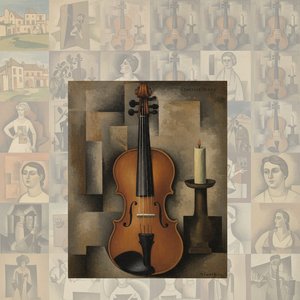
1950. Wood, 22.0 x 31.0 cm.

§ 1Catalogue data
 Wood
Wood- Sculpture
- Cubist Still Life
 1950
1950- Modern
 22.0 x 31.0 cm
See teos on autoriõigusega kaitstud
Sellel lehel kuvatav kunstiteos on kaitstud autoriõigusega, mis tähendab, et meil ei ole seaduslikku õigust luua või müüa identset reproduktsiooni. Seda kaitset rakendatakse rahvusvaheliste kokkulepete alusel, nagu näiteks Berne konventsioon ning riiklike seadustega, sealhulgas nendega, mida on sätestatud USA autoriõiguse seadus – 17. peatükk.
Austasena ja seaduslikuna alternatiivina pakume originaalist inspireeritud, käsitsi maalitud isikupärastatud teoseid. Meie osutavad ja professionalsed kunstnikud uurivad hoolikalt originaali stiili, meelemoi ja kunstilist olemust, et luua uus, ainulaadne teos, mis tekitab sama tunnet – olles samal ajal omaette originaalne looming.
See meetod järgib täielikult autoriõiguse reegleid, kuna see ei põhine kaitstud kunstiteose kopeerimisel või dupliteerimisel. Selle asemel on tegu loova reinterpreetatsiooniga – uue maaldisega, mis on algteosest inspireeritud, kuid ei ole sellest identiline.
 Loe lähemalt
§ 2Abstract
Kogumisobjekti kirjeldus
Georges Braque’s evocative oyster still life embodies Fauvist color palettes and textural wood grain—a masterful depiction of quiet contemplation within a dimly lit interior. Explore this captivating piece by Picasso's collaborator and immerse yourself in the beauty of 1950s art.
Kunstniku elulugu
Georges Braque oli kubismi üks rajajaid ja fauvismiga tuntud kunstnik. Tema suurimad teosed hõivatakse L’Estaque maja maalidega ning tänu koostöösele Pablo Picasso'ga jäi ta kunstiloo tähtsamaks esindajaks.
§ 3Commentary
A Moment Frozen in Darkness: The Soul of Braque’s Oysters
In the quietude of 1950, Georges Braque captured a scene that transcends the simple boundaries of a still life, offering instead a profound meditation on texture and stillness. "Oysters" is not merely a depiction of shellfish upon a plate; it is an evocative exploration of materiality and perception. Executed on wood—a deliberate choice by the artist to embrace the tactile grain of his medium—the work presents two oysters nestled in a somber arrangement, accompanied by a solitary cup. The composition is anchored by a muted palette of deep blues, earthy browns, and shadowy tones, creating an atmosphere of contemplative silence that invites the viewer into a world far removed from the frenetic pace of modern life.
The painting serves as a masterful bridge between the vibrant energy of Braque’s earlier years and a more mature, introspective period. While his roots are deeply embedded in the Fauvist movement—a style characterized by bold, expressive color—"Oysters" demonstrates a refined restraint. Here, the artist employs a reductive technique, flattening the surface of the wood panel to emphasize the relationship between form and light. The brushstrokes, though visible, are controlled with a precision that lends a sense of solidity to the objects. For the collector or interior designer, this piece offers a sophisticated anchor for a room, providing a sense of groundedness and historical weight through its understated dynamism.
Symbolism and the Beauty of the Unseen
Beyond its visual composition, "Oysters" carries a heavy layer of symbolic resonance. The oyster itself has long been a symbol of fertility, abundance, and the hidden beauty that resides beneath an unassuming or even rugged exterior. By placing these elements within a dark, atmospheric setting, Braque intensifies their visual impact, forcing the eye to search through the shadows to find the light. This interplay between the visible and the obscured mirrors the broader themes of the post-World War II era—a time of profound uncertainty where artists sought to rediscover meaning amidst the ruins of tradition.
The choice of a dark background acts as a dramatic foil, pushing the muted tones of the plate and shells toward the foreground. This creates a sense of intimacy, as if the viewer has stumbled upon a private, late-night moment caught in a flash of moonlight. For those seeking to curate an environment of elegance and mystery, this artwork provides an unparalleled emotional depth. It is a piece that does not shout for attention but rather commands it through its quiet, persistent presence, making it an ideal selection for spaces designed for reflection, study, or sophisticated repose.
Korduvad küsimused
Kui hele on teos "Oysters" üldiselt?
Üldiselt on teose "Oysters" heledus registreeritud väärtusega deep_shadow. Perseeitud heledus kirjeldab, kui valguse või tumeda tundub teos olevat.
Milline on „Oysters“, autor Georges Braque koht kunstiloos?
Teos „Oysters“, autor Georges Braque kuulub Cubist Still Life suunale, mis on osa Modern ajastust. Koos annavad need teosele selle koha kunstiajas.
Kust kohalt Georges Braque korduvad teemad teoses "Oysters" ilmumisel?
Georges Braque korduvad teemad hõlmavad fauvist style, formal composition, symbolic imagery, braque legacy, cubist innovation; teos "Oysters" keskendub oysters, plate, cup, dark room, texture, painting, braque.



 Lülita trükkitoodetele


 Kunstiteoste või reproduktsioonide puhul, mille üks külg on üle 105 cm (umbikmolt 41 tolli), saadetakse raam kirjal asendis, la Dismantlitud komplektina. See meetod tagab ohutuse kohaletoimetamisel ja väldib transpordil tekkivaid kahjustusi.