

Acrylic On Canvas.

§ 1Kataloogandmed


See teos on autoriõigusega kaitstud
Sellel lehel kuvatav kunstiteos on kaitstud autoriõigusega, mis tähendab, et meil ei ole seaduslikku õigust luua või müüa identset reproduktsiooni. Seda kaitset rakendatakse rahvusvaheliste kokkulepete alusel, nagu näiteks Berne konventsioon ning riiklike seadustega, sealhulgas nendega, mida on sätestatud USA autoriõiguse seadus – 17. peatükk.
Austasena ja seaduslikuna alternatiivina pakume originaalist inspireeritud, käsitsi maalitud isikupärastatud teoseid. Meie osutavad ja professionalsed kunstnikud uurivad hoolikalt originaali stiili, meelemoi ja kunstilist olemust, et luua uus, ainulaadne teos, mis tekitab sama tunnet – olles samal ajal omaette originaalne looming.
See meetod järgib täielikult autoriõiguse reegleid, kuna see ei põhine kaitstud kunstiteose kopeerimisel või dupliteerimisel. Selle asemel on tegu loova reinterpreetatsiooniga – uue maaldisega, mis on algteosest inspireeritud, kuid ei ole sellest identiline.
 Loe lähemalt
§ 2Abstraktne
Kogumisobjekti kirjeldus
Explore Georges Braque’s ‘untitled (1705)’ – a striking Cubist sketch of a cello & Bach aria. Geometric abstraction, raw lines, and minimalist design. A unique artwork for collectors.
Kunstniku elulugu
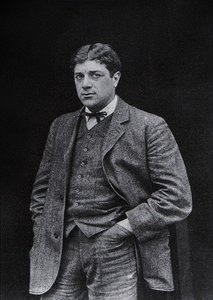
Georges Braque oli kubismi üks rajajaid ja fauvismiga tuntud kunstnik. Tema suurimad teosed hõivatakse L’Estaque maja maalidega ning tänu koostöösele Pablo Picasso'ga jäi ta kunstiloo tähtsamaks esindajaks.
§ 3Kommentaar
A Glimpse into Genesis: Deconstructing Form with Braque’s Untitled Cello (c. 1705)
Georges Braque's untitled sketch of around 1705 isn’t merely a study; it is a pivotal moment captured on paper, a visual articulation of the seismic shift occurring within the artist’s mind and, consequently, in the trajectory of modern art. It exists as a powerful precursor to Cubism, a delicate balance between representation and abstraction where the familiar forms of a cello and sheet music are dissected and re-presented through a lens of geometric inquiry. The work doesn't offer the comforting illusion of reality; instead, it presents us with fragments, planes, and lines that demand intellectual engagement rather than passive observation.
The Language of Lines and Planes
The composition is strikingly austere. A cello, dominating the upper left quadrant, isn’t rendered as a sensuous, organic form but as an assembly of angular shapes defined by rich red-brown tones. The strings are suggested not through texture or shading, but with precise, parallel lines—a deliberate emphasis on linearity over tactile sensation. Below it, a pale cream rectangle bearing the inscription ‘Aria de Bach’ overlaps with the cello's structure, creating a dynamic interplay of positive and negative space that disrupts traditional depth perception. This overlapping isn’t accidental; it is a key element in Braque’s dismantling of conventional pictorial space. The neutral grey background serves not as an environment but as an isolating force, intensifying the visual impact of these fragmented forms. Executed with visible pencil strokes, the sketch possesses a raw, unfinished quality that underscores its exploratory nature. This isn't a preparatory drawing *for* something else; it *is* the exploration itself—a rapid unfolding of thought manifested in line and plane.
Braque’s Intellectual Journey & The Dawn of Cubism
Born into a family of painters, Braque initially followed a traditional path before seeking a more intellectually rigorous approach to art. His early work flirted with Fauvism's bold colors, but he quickly moved beyond its purely emotional expression, drawn instead towards the structural foundations of painting. This untitled cello sketch falls squarely within this transitional period, preceding his full immersion into Cubism alongside Pablo Picasso. It demonstrates a growing fascination with reducing objects to their essential geometric components—an idea that would become central to the Cubist revolution. The choice of a cello and Bach’s music is significant; both represent order, structure, and intellectual discipline. By deconstructing these symbols, Braque seems to be questioning the very nature of harmony and representation itself. He isn't attempting to capture the joy of music or the beauty of an instrument but rather to analyze their underlying forms and challenge our perceptions.
A Statement for Modern Spaces
For collectors and designers, this piece—or a meticulously crafted reproduction—offers a sophisticated statement. Its monochromatic palette and geometric abstraction lend themselves seamlessly to modern and minimalist interiors. Beyond its aesthetic appeal, the artwork’s historical significance and intellectual depth make it a compelling conversation starter, appealing to those who appreciate art history and the evolution of abstract thought. It is a work that rewards close observation and contemplation—a testament to Braque's enduring legacy as a pioneer who dared to dismantle convention and forge a new visual language.
Korduvad küsimused
Millist kintust ja intensiivsust „untitled (1705)“, autor Georges Braque näitab?
Teose „untitled (1705)“, autor Georges Braque värvitoit on Subtle Color kütkusega ja Monochromatic intensiivsusega.
Kas „untitled (1705)“, autor Georges Braque on maalid, joonis või etsing?
„untitled (1705)“, autor Georges Braque on klassifitseeritud kui WallArt. See kategooria kirjeldab originaalteose kunstivormi.
Milline on teose „untitled (1705)“, autor Georges Braque värvitoit?
Teose "untitled (1705)" värvipalett on koonuse方面 Subtle Color.


 Lülita trükkitoodetele


 Kunstiteoste või reproduktsioonide puhul, mille üks külg on üle 105 cm (umbikmolt 41 tolli), saadetakse raam kirjal asendis, la Dismantlitud komplektina. See meetod tagab ohutuse kohaletoimetamisel ja väldib transpordil tekkivaid kahjustusi.


