


 Vaata sisu
 Jaga teost
 Jaga
Jaga
 Detailid
 Õppekate juhend

 Laadi alla
 Sarnased teosed
 Röntgenuuring
 Slaidietendus
 Statistika
Townscape Madrid


 Loe lähemalt
Sellel lehel kuvatav kunstiteos on kaitstud autoriõigusega, mis tähendab, et meil ei ole seaduslikku õigust luua või müüa identset reproduktsiooni. Seda kaitset rakendatakse rahvusvaheliste kokkulepete alusel, nagu näiteks Berne konventsioon ning riiklike seadustega, sealhulgas nendega, mida on sätestatud USA autoriõiguse seadus – 17. peatükk.
See meetod järgib täielikult autoriõiguse reegleid, kuna see ei põhine kaitstud kunstiteose kopeerimisel või dupliteerimisel. Selle asemel on tegu loova reinterpreetatsiooniga – uue maaldisega, mis on algteosest inspireeritud, kuid ei ole sellest identiline.
Giclée / Kunstiprint
Muuseumikvaliteediga giclée- või kangasprint kiire tootmisega ja paindlikud viimistlusvõimalused. ( Telli käsitsi maalitud reproduktsioon Ülemineku digitaalse pildi müügi kanalisse)




P118B €10

P118H €10

P118W €10

P438Z €10

P508JH €12

P508YH €12

P805H €10

P805Z €10

P919BZ €10

P919G €10

P919XJ €10

P959ZH €10

P968JZ €12

W106C €8

W218G €10

W218JH €8

W218Y €10

W307PJ €10

W316G €10

W316PJ €8

W316Y €10

W398PJ €8

W4111J €10

W500HY €15

W500JH €15

W692G €12

W849H €8

W940BG €15

W953PJ €8




Vali meie eelmääratud suurused, mis vastavad teose algupärastele proportsioonidele.

Sisestage vajalik laius ja kõrgus, et see sobiks teie raamile või seinale. Trükki saab ainult lõigata, seda ei saa kunagi pildist suuremaks teha, seega ka differentse vormiga suurus kaotab osa pildist. Enne trükkimist saadame teile kinnitamiseks digitaalse näidisprojektsiooni. Sellel lehel näidatud pilt ei kujuta reaalset lõiget — seda näitab ainult näidisprojekttsioon.
Ülemaailmne tarne () 2 nädala jooksul, tavalise 4/5 nädala asemel. (27 oktoober)

Tasuta ekspresssaatmine üle maailma

Kõrgekvaliteediline lina-kangastest muld

Täielik transpordikindlustus

Tollimaksude tagastamise garantii

Värvitoime täpsuse garantii

100 päeva tagastusõigus (ainult defektide korral)

100% raha tagasi garantii

Hulgusoodustus
 Klaasivalik on saadaval ainult kuni 110 cm suuruses teostes

Townscape Madrid
Giclée / Kunstiprint
Reproduktsiooni mõõtmed
-


Lõppsumma
€ 56
A Silent Symphony of Concrete and Gray: Exploring Gerhard Richter’s Townscape Madrid
Gerhard Richter, a titan amongst contemporary artists, continues to captivate audiences with his singular approach—a masterful fusion of photorealism and abstraction that defies easy categorization. Among his seminal works stands “Townscape Madrid,” painted in 1968, an unassuming black and white canvas that belies its profound depth and invites contemplation on the essence of urban existence. This piece isn’t merely a depiction of a cityscape; it's an embodiment of Richter’s artistic philosophy—a questioning gaze at reality itself.Composition and Technique: Capturing Atmosphere Through Gesture
Richter’s “Townscape Madrid” exemplifies his signature technique, characterized by loose brushstrokes that imbue the image with palpable texture and movement despite its monochrome palette. The absence of vibrant hues forces the viewer to focus on the intricate details of architectural forms—buildings rising against a hazy sky—creating an illusion of depth that transcends mere representation. Unlike traditional landscapes striving for visual splendor, Richter prioritizes capturing the mood and atmosphere of the urban environment. The photograph served as his starting point, prompting him to transform it into something more than just a mirror image; he actively reshaped it through artistic intervention.Historical Context: Echoes of Postwar Anxiety
Painted in the aftermath of World War II, “Townscape Madrid” resonates with the anxieties and uncertainties of its time. Richter’s stylistic choices—the muted tones, the fragmented composition—reflect a broader trend within New European Painting, which sought to grapple with the trauma of history while simultaneously rejecting representational conventions. The painting subtly references aerial photographs taken during the war years, hinting at the devastation endured by cities across Europe. This deliberate allusion underscores Richter’s fascination with capturing not just what is seen but also what is felt—the unspoken emotions embedded within a visual scene.Symbolism: Absence Speaks Volumes
The stark simplicity of “Townscape Madrid” is itself laden with symbolic significance. The deserted streets, illuminated by traffic lights, represent the quietude and solitude that can characterize urban life, even amidst activity. Richter’s masterful use of grayscale amplifies this sense of melancholy, inviting viewers to consider themes of isolation and contemplation. Furthermore, the buildings depicted—varied in size and shape—symbolize the complexity and dynamism of architectural heritage—a reminder of past glories juxtaposed against the present moment.Emotional Impact: A Meditation on Perception
Ultimately, “Townscape Madrid” transcends mere visual description; it’s an invitation to engage in a dialogue with the viewer's own perceptions. Richter’s technique deliberately obscures boundaries between photography and painting, questioning the very notion of originality while highlighting the transformative power of artistic expression. Like many of his works, this piece encourages introspection—a consideration of how we interpret what we see and how art can illuminate hidden truths about our experience of the world. It's a testament to Richter’s enduring legacy as an artist who dares to challenge conventions and explore the profound connections between reality and representation.Küsimused ja vastused
Millisse hegemoonias ja millises ajastus에는 „Townscape Madrid“, autor Gerhard Richter kuulub?
Teoses „Townscape Madrid“, autor Gerhard Richter kohtuvad Contemporary Realism suunad ja Modernism ajastu.
Kes lõi teose "Townscape Madrid" ja millises stiilis see on?
Teose "Townscape Madrid" taga on Gerhard Richter ja Contemporary Realism suunad.
Kui tuntud on Gerhard Richter teos "Townscape Madrid"?
Teose „Townscape Madrid“, autor Gerhard Richter registreeritud populaarsusaste on Iconic.
Sarnased teosed


Kunstniku elulugu
A Life Shaped by Division: The Early Years and Artistic Formation of Gerhard Richter
Gerhard Richter’s artistic journey began amidst the turbulent backdrop of postwar Germany, a nation scarred by war and grappling with the ideological divisions of the Cold War. Born in Dresden in 1932, his formative years were profoundly impacted by the rise of Nazism and the subsequent devastation inflicted upon his hometown during World War II. This early exposure to conflict instilled within him an inherent skepticism—a questioning spirit that would become a cornerstone of his artistic worldview for decades to come. His father, Wilhelm Richter, was a schoolteacher who navigated the challenges of life under Nazi rule with quiet resilience, while his mother, Gisela Richter, nurtured a love for literature and music within their family home – fostering an environment rich in cultural stimulation. These familial influences subtly shaped Richter’s artistic sensibilities, contributing to his distinctive blend of pragmatism and intellectual curiosity. Initially trained in socialist realism at the Dresden Academy of Fine Arts—a stylistic mandate imposed by the East German state—Richter quickly recognized the limitations inherent in adhering rigidly to ideological dogma. Even within this constrained environment, however, a yearning for artistic freedom persisted, fueled by a growing dissatisfaction with prescribed aesthetic conventions and an ardent desire to explore more expansive creative horizons. This burgeoning discontent propelled him toward experimentation—a deliberate dismantling of stylistic boundaries that would define his formative years. He sought inspiration from artists who challenged established norms, embracing dissonance as a catalyst for innovation. Pablo Picasso’s fragmented imagery and Jean Arp’s geometric abstractions served as crucial touchstones during this period, shaping Richter's evolving artistic vocabulary.Escaping Constraints: Düsseldorf and the Exploration of Style
The pivotal moment arrived in 1961 when Richter made the courageous decision to abandon East Germany—seeking refuge in the vibrant art scene of Düsseldorf. This relocation represented a radical transformation in his artistic trajectory, liberating him from the constraints of socialist realism and immersing him in an environment brimming with intellectual ferment. Düsseldorf’s artistic community welcomed Richter's arrival with open arms, fostering an atmosphere conducive to experimentation and challenging conventional artistic perspectives. Recognizing the need for stylistic independence—a rejection of prescribed aesthetic formulas—Richter embarked on a period of intense exploration that would solidify his early mature work. He swiftly dismantled socialist realism’s rigid conventions, embracing diverse approaches simultaneously. Photorealism—characterized by meticulous replication of photographic images with astonishing precision—stood alongside abstract compositions infused with bold colors and dynamic brushstrokes. This duality wasn't about finding *a* style; it was about questioning the very notion of stylistic coherence, accepting contradiction as a fundamental principle. His collaboration with Sigmar Polke yielded the provocative term ‘Capitalist Realism,’ encapsulating their shared critique of artistic institutions and their appropriation of imagery from advertising and mass media. This period wasn’t merely about stylistic innovation; it was about confronting broader societal anxieties—a reflection of the anxieties prevalent during the Cold War era. Richter's technique evolved dramatically, incorporating innovative methods like squeegee printing—a process utilizing tools typically employed for window cleaning—to manipulate paint on canvas in unpredictable ways. This embrace of chance and spontaneity underscored his artistic philosophy—allowing him to relinquish control and invite unforeseen outcomes. He meticulously studied the work of Picasso and Arp, absorbing their stylistic innovations and integrating them into his own evolving visual language.Blurring Boundaries: Photorealism, Abstraction, and the Power of Chance
Richter’s artistic repertoire expanded throughout the 1960s and beyond—embracing a remarkable spectrum of techniques and thematic concerns. His photorealistic paintings—based on family photographs or newspaper images—were not mere reproductions; they were investigations into perception and representation. By rendering these images with clinical detachment, he compelled viewers to confront the inherent ambiguity of photographic truth—a deliberate provocation designed to unsettle conventional assumptions about visual reality. Simultaneously, Richter pursued abstraction—creating canvases layered with vibrant hues and gestural marks—often utilizing squeegee printing to manipulate paint on canvas in ways that defied control. This embrace of spontaneity mirrored his artistic ethos—yielding unexpected results while rejecting stylistic rigidity. His ‘Color Charts,’ systematic arrangements of colored squares—challenged the notion of painting as purely decorative expression—examining color’s organizational potential and questioning its role in artistic communication. His influence extended far beyond Düsseldorf, inspiring countless artists who adopted his innovative methods and embraced his unwavering commitment to artistic exploration. Richter's legacy transcends stylistic trends; it resides in his profound engagement with historical and political themes—a reflection of the anxieties inherent in navigating a fragmented world. He didn’t offer definitive answers but posed compelling questions—prompting viewers to scrutinize their own preconceptions and engage in critical dialogue. Richter’s art continues to resonate today, demonstrating the enduring power of artistic experimentation and intellectual rigor. His unwavering dedication to pushing boundaries solidified his position as one of Germany's most celebrated artists—a figure whose work remains a testament to the transformative potential of creative vision.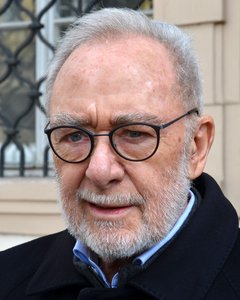
Gerhard Richter
1932 - , Saksa
Lühikest infot
- Artistic Movement Or Style:
- Фотореализм
- Абстракция
- Artists Who Influenced This Artist:
- Жан Арп
- Пабло Пикассо
- Date Of Birth: 9 февраля 1932 г.
- Full Name: Gerhard Richter
- Nationality: Немецкий
- Notable Artworks:
- Жилет
- С. с ребенком
- Октябрь 18, 1977
- Place Of Birth: Дрезден, Германия
Sarnased artiklid

Gerhard Richter: A Retrospective on Abstraction, Memory & the Photographic Source
Explore the profound world of Gerhard Richter's abstract paintings. Discover his techniques, influences, and lasting impact on contemporary art – a guide for discerning collectors.
Monochrome Visions: Exploring the Aesthetic & Historical Significance of Black & White Photography
Explore the rich history & artistic power of black and white photography. From early techniques to iconic masters like Ansel Adams, discover why monochrome continues to captivate art lovers today. Expert insights for collectors.
Museo Prado meistriteosed: 25 kunstihelmi Madridi südames | AllPaintingsStore
Avastage Museo Prado 25 ikoonilist meistriteost! Velázquez, Goya ja El Greco – lugematu ajaloolise maali lood ning barokk-kunst. Leidke täiuslik kunstireprodutsioon kodukaunistamiseks AllPaintingsStore.com-is.

Grahame Sydney: Evoking Otago's Soul Through Light & Landscape
Explore the captivating landscapes of Sir Grahame Sydney, a leading New Zealand artist renowned for his magic realism & evocative depictions of Otago's beauty. Discover key works and delve into his artistic legacy.

The Subtleties of Shade: Exploring Monochrome's Enduring Power in Art History & Contemporary Practice
Explore the captivating world of monochrome painting! Discover its rich history, from Renaissance chiaroscuro to contemporary minimalism. Uncover the emotional power and artistic techniques behind this enduring art form.


