


 Vaata sisu
 Jaga teost
 Jaga
Jaga
 Detailid
 Õppekate juhend

 Laadi alla
 Sarnased teosed
 Röntgenuuring
 Slaidietendus
 Statistika
Apollo Victorious over Python

 Loe lähemalt
Ostke kõrglahutusel ja täiustatud digitaalne pilt, mis on oluliselt parem kui veebilehel näidatud eelvaade.
Iga fail on meie spetsialistide poolt hoolikalt ette valmistatud, kasutades kaasaegseid tööriistu ja professionaalset käsitsi retušeerimist. Tagame, et igal pildil on erakordne selgus, täpne värvitäpsus ja peen detail.
Lõplik fail saadetakse e-posti teel 72 tunni jooksul ning on optimeeritud koheseks kasutamiseks professionaalsetes, toimetuslikes ja trüki keskkondades. See on sama kvaliteet, mida usaldavad tipptasemel disainistuudiod, kirjastused ja galeriid.
Digitaalne pilt
Laadi alla kõrge resolutsiooniga fail isiklikuks vaatamiseks, trükkimiseks ja loomingulisteks projektideks. ( Lülita trükkitoodetele Telli käsitsi maalitud reproduktsioon)
Sisse kuulub iga digitaalse pildi tellimusega
Professionaalne digitaalne kohaletoimetamine, garanteeritud
Valides AllPaintingsStore.com, ei saa sa lihtsalt pilti – saad professionaalselt parandatud digitaalse teose, mida on valmistatud täpsusega ja mis on toetatud rahuldamatusgarantiiga. Siin on kõik, mis sinu tellimusega automaatselt kaasneb:

Kiire e-posti edastus
Teie kõrge resolutsiooniga digitaalne pildifail saadetakse teile e-posti 72 tunni jooksul pärast tellimist – kohe kasutamiseks valmis.

Tehisintellektiga täiustatud digitaalne fail
Teie teos on professionaalselt optimeeritud arenenud tehisintellekti tööriistade ja käsitsi redigeerimise abil, tagades maksimaalse detailitaseme, selguse ja värvitäpsuse.

Tasuta eluaegne uuesti saatmine
Kas kustutasid faili kogukalu unustamisel või kustutamisel? Puudub mure – saad selle uuesti igal ajal ilma lisatasuta.

Puuduvad importimaksud – alati
Nautige oma teoseid koheselt ilma tolli-, maksude või tarnimaskuludeta – digiletchargused on alati maksuvabadud.

Värvitäpsuse garantii
Me tagame, et teie digitaalne pilt kajastaks originaali värve professionaalsete tööriistade ja värvihalduse abil võimalikult täpselt.

100 päeva rahuldamatuse garantii
Kui te ei ole oma digitaalse pildi eest rahul, siis me parandame seda või tagastame 100% summast 100 päeva jooksul – küsimusteta.

100% raha tagastamise garantii
Ei ole rahul? Saate täielise tagastaja 100 päeva jooksul pärast digitaalse faili kättesaamist – ilma küsimusteta.

Suurema tellimuse soodustused
Osta 3 pilti, säästa 10% - Osta 5, säästa 15% - Osta 10+, säästa 20%. Sobib suurepäraselt loomingulisteks projektideks, galeriideks ja agentuurideks.
A Vision of Triumph: Gustave Moreau’s Apollo Victorious Over Python
Moreau's "Apollo Victorious over Python" isn’t merely a depiction of a mythological narrative; it’s an immersive experience into the heart of Symbolist aesthetics—a movement that prioritized emotion and imagination above factual representation. Painted around 1890, this monumental canvas embodies Moreau’s unwavering commitment to exploring the subconscious mind and conveying profound spiritual truths through meticulously crafted imagery. The artwork transports viewers back to a time when artists wrestled with questions of faith, beauty, and the human condition, rejecting the materialism of the Industrial Revolution in favor of a return to antiquity and its rich tapestry of myths and legends.- Subject Matter: The painting centers on the iconic confrontation between Apollo, god of light and music, and Python, the serpent representing darkness and evil—a tale recounted in Homer’s Iliad and Virgil's Aeneid. Moreau elevates this familiar myth into a dramatic tableau, capturing the decisive moment of Apollo’s victory.
- Style: Symbolist art distinguishes itself from its predecessors through its deliberate avoidance of realism. Instead, Moreau employs flattened perspectives, muted color palettes dominated by golds and blues, and stylized figures imbued with an otherworldly luminescence. This stylistic choice aims to evoke a sense of dreamlike beauty and psychological depth.
Technique: Layers Upon Layers of Detail
Moreau’s mastery lies in his painstaking application of technique—a hallmark of Symbolist painting. He began with an underpainting executed in grisaille, establishing a foundational tonal structure that would guide the subsequent layering process. Subsequent coats of pigment were applied using glazing techniques—thin washes of translucent color meticulously blended over thicker layers—creating a shimmering surface texture and enhancing the luminosity of the composition. The artist’s meticulous attention to detail is evident in every brushstroke, capturing the textures of stone, drapery, and skin with astonishing accuracy. Moreau skillfully utilized tempera and oil paints combined, resulting in an unparalleled richness of color and depth.- Color Palette: The dominant hues—gold, azure blue, and ivory—are deliberately chosen to convey spiritual significance. Gold symbolizes divine radiance and immortality, while azure represents serenity and contemplation. These colors are juxtaposed against darker tones to heighten the dramatic tension of the scene.
- Composition: Moreau’s compositional strategy is equally deliberate. The central figure of Apollo dominates the canvas, positioned prominently in the upper register, bathed in radiant light. Python coils beneath him, creating a dynamic interplay between opposing forces—light and darkness, order and chaos. Angels flank the scene on either side, reinforcing the narrative's spiritual dimension.
Symbolism: Echoes of Antiquity and Spiritual Revelation
“Apollo Victorious Over Python” overflows with symbolic imagery rooted in classical mythology and Christian iconography. Apollo’s triumphant pose embodies divine victory over evil, mirroring the biblical narrative of Christ overcoming Satan. The cave setting symbolizes the womb of creation—a space of darkness transformed into light by divine grace. Moreau incorporates elements from Egyptian art—particularly depictions of gods—further enriching the artwork's symbolic vocabulary. Ultimately, the painting serves as a meditation on themes of redemption and spiritual enlightenment, inviting viewers to contemplate the eternal struggle between good and evil.Emotional Impact: A Profound Sense of Wonder
Moreau’s intention wasn’t simply to depict an event; he sought to evoke an emotional response—a feeling of awe and reverence. The luminous colors, combined with the stylized figures and dramatic composition, create a visual experience that transcends mere representation. “Apollo Victorious Over Python” captures the sublime beauty of Symbolist art—its ability to transport viewers into realms beyond the everyday world and inspire contemplation on profound spiritual questions. It remains a testament to Moreau’s artistic genius and his enduring legacy as one of the most influential figures in late 19th-century European painting.Küsimused ja vastused
Kas teose "Apollo Victorious over Python" autoriõigused on kaitse all?')
Autoriõiguse teave teose „Apollo Victorious over Python“, autor Gustav Morelau kohta: teos kuulub luba ala avalikus õiguses – selle autoriõigud onหมดunud. See määrab, kas kujundist on lubatud vabadelt reproduktsioone teha.
Millist reproduktsiooni suurust soovitatakse teosele „Apollo Victorious over Python“, autor Gustav Morelau?
Soovitatav trükimõõt teosele „Apollo Victorious over Python“, autor Gustav Morelau on Large.
Kas on "Apollo Victorious over Python" kuulus Symbolist Painting suunaga teos?
Teos "Apollo Victorious over Python" on kataloogis Symbolist Painting suunaga teoste seas registreeritud kui Recognized.
Sarnased teosed


Kunstniku biograafia
A Dream Weaver of Symbolism: The Life and Art of Gustave Moreau
Gustave Moreau, a name synonymous with the ethereal beauty and enigmatic depths of Symbolist painting, emerged from 19th-century Paris as a singular artistic voice. Born in 1826 into a bourgeois family—his father an architect and archivist—Moreau’s early life was steeped in intellectual curiosity and aesthetic sensibility. From a young age, he displayed a remarkable gift for drawing, nurtured through traditional academic training at the École des Beaux-Arts under figures like François-Édouard Picot. However, Moreau's artistic path would diverge sharply from the prevailing Realist and Impressionist currents of his time. He wasn’t interested in capturing fleeting moments or objective reality; instead, he sought to unlock the hidden realms of myth, religion, and the human psyche through a deeply personal and symbolic visual language. His journey was one of inward exploration, translating subjective emotions and spiritual yearnings onto canvas with an obsessive attention to detail and a vibrant, often opulent palette.The Forge of Imagination: Influences and Artistic Development
Moreau’s artistic development wasn't born in a vacuum. While rejecting the dominant trends of his era, he drew inspiration from diverse sources. The dramatic use of color and exotic subject matter found in the works of Eugène Delacroix resonated deeply with him, igniting a passion for narrative painting imbued with emotional intensity. He also held Renaissance masters like Michelangelo and Leonardo da Vinci in high esteem, admiring their mastery of composition, anatomy, and psychological insight. Yet, Moreau wasn’t merely imitating these artists; he was synthesizing their influences into something entirely new. His travels to Italy in the 1850s proved pivotal, immersing him in the art of antiquity and the Renaissance, providing a wealth of motifs and stylistic cues that would populate his future works. He meticulously copied Old Master paintings, not as an exercise in replication, but as a means of absorbing their techniques and unlocking their secrets. This dedication to craft, combined with his burgeoning interest in mythology and literature, laid the foundation for his unique artistic vision. Moreau’s formative years were marked by a profound engagement with intellectual currents shaping European thought. He devoured texts on philosophy, psychology, and mythology—particularly those exploring Jungian archetypes and Freud's psychoanalytic theories—influencing his artistic explorations into the subconscious mind. His fascination with Dante Alighieri’s *Inferno* fueled his imaginative depictions of hellish landscapes and tormented figures, reflecting a preoccupation with confronting existential anxieties. Simultaneously, he cultivated an admiration for the grandeur and spiritual solemnity of Byzantine art, absorbing its stylistic conventions—particularly the use of gold leaf and stylized iconography—which would become hallmarks of his own oeuvre.A World of Symbols: Themes and Techniques
Moreau’s paintings are not simply illustrations of myths or biblical stories; they are complex allegories that invite contemplation and interpretation. He delved into narratives like those of Salome, Orpheus, Jupiter and Semele, and countless others, not to retell them literally, but to explore their underlying psychological and spiritual truths. His canvases teem with symbolic imagery—serpents representing temptation, jewels signifying earthly desires, and figures embodying abstract concepts like grief, loss, or redemption. He masterfully created a dreamlike atmosphere through intricate detail, rich textures, and an often unsettling juxtaposition of light and shadow. Moreau’s technique was characterized by meticulous layering of paint, creating surfaces that shimmer with iridescent colors and evoke a sense of otherworldly beauty. His use of gold leaf further enhanced this effect, lending his works a Byzantine quality that underscored their spiritual dimension. He wasn't concerned with capturing realistic textures or perspectives; instead, he prioritized the expressive power of color and form to convey mood and meaning. Moreau’s artistic output spanned decades, producing over 15,000 paintings, watercolors and drawings—a staggering testament to his unwavering commitment to creative endeavor. His stylistic evolution mirrored broader shifts in artistic sensibilities throughout the Victorian era, transitioning from early academic realism toward a more expressive Symbolist style characterized by flattened perspectives and stylized forms. Recurring motifs included biblical figures—particularly Mary Magdalene—and mythological subjects—drawing heavily on Greco-Roman mythology and folklore—reflecting his enduring fascination with timeless narratives and archetypal imagery. Notable artworks include *Salome Dancing before Herod*, *Jupiter and Semele*, *Orpheus*, *The Apparition*, and *Desdemona*, each embodying Moreau’s distinctive visual language and conveying profound psychological insights.Legacy and Influence: The Enduring Power of Symbolism
Though initially met with mixed reactions, Moreau became a central figure in the burgeoning Symbolist movement during the 1890s. Unlike some of his contemporaries who actively sought public attention, he remained somewhat reclusive, preferring to work independently and avoid artistic debates. However, his influence was undeniable. In 1893, he accepted a professorship at the École des Beaux-Arts, where he profoundly impacted generations of artists, including Henri Matisse and Georges Rouault. He encouraged his students to embrace imagination, symbolism, and individual expression, urging them to break free from conventional artistic norms. While Symbolism eventually waned in popularity after Moreau’s death in 1898, his work experienced a significant reevaluation in the latter half of the 20th century. Today, he is widely regarded as one of the most important figures in the movement and a precursor to modern art. The Musée Gustave Moreau, housed in his former studio and home in Paris, stands as a testament to his enduring legacy—a sanctuary where visitors can immerse themselves in the captivating world of this extraordinary artist. His paintings continue to resonate with audiences today, offering glimpses into the hidden depths of the human soul and reminding us of the power of art to transcend the boundaries of reality.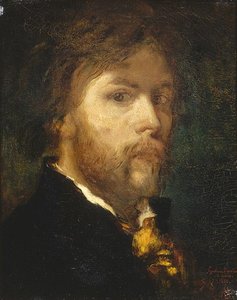
Gustav Morelau
1826 - 1898 , Prantsusmaa
Kiired faktid
- Artistic Movement Or Style: Symbolism
- Artists Who Influenced This Artist:
- Eugène Delacroix
- Michelangelo
- Leonardo da Vinci
- Date Of Birth: 6. aprill 1826
- Date Of Death: 18. aprill 1898
- Full Name: Gustave Moreau
- Nationality: Prantslased
- Notable Artworks:
- Salome Dancing before Herod
- Jupiter and Semele
- Orpheus
- Place Of Birth: Pariis, Prantsuda

