Rahatagastus garantii · 100 päeva Tasuta kohaletoimetamine üle maailma
449587teosed 30613kunstnikud 4660muuseumid 32keeled
Valuta
    Keel
      Ateljee · Asutatud 2015 · Pariis, Prantsusmaa
      AllPaintingsStore
      allpaintingsstore.com
      Catalogue entry

      The Sphinx

      1864. Acrylic On Canvas, 105.0 x 206.0 cm.

      Fig. 1. Gustav Morelau, The Sphinx, 1864. Shown as the reproduction you are specifying: , .

      § 1Catalogue data

      § 2Abstract

      Kogumisobjekti kirjeldus

      Gustave Moreau's 'The Sphinx' is a mesmerizing Symbolist masterpiece blending myth and mystery. Explore its intricate composition, vibrant colors, and profound symbolism – a captivating journey into the artist’s dreamlike world.

      Kunstniku elulugu

      Gustave Moreau oli üks mõjukasid Symbolismi suurimest kunstnike maailmas, kes tundmatu ilu ja müstilise sügavuse saavutamiseks kasutas kujutavat keelt. Tema töö keskendus legendidele ja Piibli lugudele ning oli täis värvilist jõudu ja sügavat psühholoogilist mõju. Moreau maalid olid täis sümboleid ja pakkusid vaatajatele palju küsimusi. Lisaks sellele oli tema stiil omanäoline ja oli mõjukas hilje

      § 3Commentary

      A Dream Weaver’s Vision: Introducing The Sphinx

      Gustave Moreau's The Sphinx, painted in 1864, isn’t merely a depiction of the legendary creature; it’s an immersion into a realm of potent myth and deeply personal symbolism. This captivating work, housed within the Clemens-Sels-Museum in Neuss, Germany, stands as a cornerstone of the Symbolist movement – a period defined by its rejection of realism in favor of exploring the hidden depths of the human psyche and the power of allegory. Moreau, a master of evocative imagery and layered meaning, invites us into a world where gods and mortals intertwine, and mysteries linger just beyond our grasp.

      The Sphinx by Gustave Moreau

      Decoding the Symbol: The Sphinx as Guardian

      Moreau’s Sphinx isn't a straightforward representation of the ancient Greek beast; it’s a carefully constructed embodiment of enigma and protection. Seated atop a rugged, almost primordial cliff face overlooking an endless expanse of ocean, she embodies a watchful guardianship. Her wings, reminiscent of both angels and birds of prey, suggest a connection to the divine yet also hint at a predatory instinct. The figures surrounding her – angelic forms and other mythological creatures – aren’t merely decorative; they contribute to the painting's atmosphere of otherworldly wonder and underscore the Sphinx’s role as a gatekeeper between realms.

      The central mystery lies in what she guards. While the exact nature of this secret remains deliberately obscured, it speaks to the core themes of Moreau’s Symbolist work: the pursuit of hidden knowledge, the confrontation with the unknown, and the inherent ambiguity of existence. The composition itself is meticulously crafted – a deliberate layering of visual cues designed to stimulate interpretation and contemplation.

      A Masterclass in Symbolism: Technique and Influence

      Moreau’s technique is as captivating as his subject matter. Executed in oil on canvas, the painting showcases his mastery of rich color palettes—deep blues, ochres, and greens—and intricate brushwork that creates a palpable sense of texture and depth. He employs a technique reminiscent of Renaissance masters like Mantegna, imbuing the scene with an archaic quality while simultaneously forging a distinctly modern Symbolist aesthetic. The use of muted tones and carefully placed highlights draws the viewer’s eye to key elements, guiding their gaze through the complex composition.

      The Sphinx profoundly influenced subsequent generations of artists, including Matisse and Rouault, who were drawn to Moreau's ability to infuse everyday subjects with symbolic weight. It stands as a testament to his pioneering role in shaping the Symbolist movement and his enduring legacy as a visionary artist.

      Beyond the Canvas: Context and Legacy

      Considered one of Moreau’s earlier works, The Sphinx foreshadows the more elaborate and intensely personal symbolism that would characterize his later paintings. It's important to note that Moreau was deeply influenced by mythology, religion, and literature—particularly the works of Dante and Shakespeare—and these influences permeate his art. His fascination with the darker aspects of human experience – loss, despair, and the struggle for meaning – is powerfully conveyed through this evocative image.

      Today, reproductions of The Sphinx offer a unique opportunity to bring Moreau’s dreamlike world into your home or office. AllPaintingsStore offers meticulously hand-painted reproductions that capture the painting's original beauty and symbolic depth, allowing you to experience the power of this iconic artwork firsthand.

      Korduvad küsimused

      Kuidas teos „The Sphinx“, autor Gustav Morelau seob Symbolist Painting kunstniku kodumaaga?

      Teos "The Sphinx" ühendab oma looja sünneloolise piirkonna ja Prantsusmaa läbi Symbolist Painting suunaga.

      Millist emotsiooni „The Sphinx“, autor Gustav Morelau edastab?

      Teos "The Sphinx" on seotud Mysterious tundega. Emotsionaalne toon kirjeldab teose tekitavat muljet.

      Mis on originaalteose „The Sphinx“, autor Gustav Morelau tehnika ja suurus?

      Teos "The Sphinx" on valmistatud tehnikas Acrylic On Canvas ja mõõdud on algses vormis 105 x 206 cm.
      § 4The artist

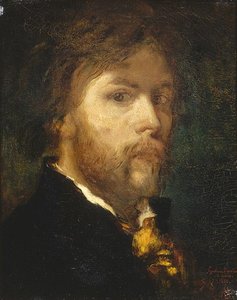
      Gustav Morelau

      Gustav Morelau

      1826 - 1898, Prantsusmaa

      Quick facts about Gustav Morelau

      • Artistic Movement Or Style: Symbolism
      • Artists Who Influenced This Artist:
        • Eugène Delacroix
        • Michelangelo
        • Leonardo da Vinci
      • Date Of Birth: 6. aprill 1826
      • Date Of Death: 18. aprill 1898
      • Full Name: Gustave Moreau
      • Nationality: Prantslased
      • Notable Artworks:
        • Salome Dancing before Herod
        • Jupiter and Semele
        • Orpheus
      • Place Of Birth: Pariis, Prantsuda

      Kunstniku elulugu

      A Dream Weaver of Symbolism: The Life and Art of Gustave Moreau

      Gustave Moreau, a name synonymous with the ethereal beauty and enigmatic depths of Symbolist painting, emerged from 19th-century Paris as a singular artistic voice. Born in 1826 into a bourgeois family—his father an architect and archivist—Moreau’s early life was steeped in intellectual curiosity and aesthetic sensibility. From a young age, he displayed a remarkable gift for drawing, nurtured through traditional academic training at the École des Beaux-Arts under figures like François-Édouard Picot. However, Moreau's artistic path would diverge sharply from the prevailing Realist and Impressionist currents of his time. He wasn’t interested in capturing fleeting moments or objective reality; instead, he sought to unlock the hidden realms of myth, religion, and the human psyche through a deeply personal and symbolic visual language. His journey was one of inward exploration, translating subjective emotions and spiritual yearnings onto canvas with an obsessive attention to detail and a vibrant, often opulent palette.

      The Forge of Imagination: Influences and Artistic Development

      Moreau’s artistic development wasn't born in a vacuum. While rejecting the dominant trends of his era, he drew inspiration from diverse sources. The dramatic use of color and exotic subject matter found in the works of Eugène Delacroix resonated deeply with him, igniting a passion for narrative painting imbued with emotional intensity. He also held Renaissance masters like Michelangelo and Leonardo da Vinci in high esteem, admiring their mastery of composition, anatomy, and psychological insight. Yet, Moreau wasn’t merely imitating these artists; he was synthesizing their influences into something entirely new. His travels to Italy in the 1850s proved pivotal, immersing him in the art of antiquity and the Renaissance, providing a wealth of motifs and stylistic cues that would populate his future works. He meticulously copied Old Master paintings, not as an exercise in replication, but as a means of absorbing their techniques and unlocking their secrets. This dedication to craft, combined with his burgeoning interest in mythology and literature, laid the foundation for his unique artistic vision. Moreau’s formative years were marked by a profound engagement with intellectual currents shaping European thought. He devoured texts on philosophy, psychology, and mythology—particularly those exploring Jungian archetypes and Freud's psychoanalytic theories—influencing his artistic explorations into the subconscious mind. His fascination with Dante Alighieri’s *Inferno* fueled his imaginative depictions of hellish landscapes and tormented figures, reflecting a preoccupation with confronting existential anxieties. Simultaneously, he cultivated an admiration for the grandeur and spiritual solemnity of Byzantine art, absorbing its stylistic conventions—particularly the use of gold leaf and stylized iconography—which would become hallmarks of his own oeuvre.

      A World of Symbols: Themes and Techniques

      Moreau’s paintings are not simply illustrations of myths or biblical stories; they are complex allegories that invite contemplation and interpretation. He delved into narratives like those of Salome, Orpheus, Jupiter and Semele, and countless others, not to retell them literally, but to explore their underlying psychological and spiritual truths. His canvases teem with symbolic imagery—serpents representing temptation, jewels signifying earthly desires, and figures embodying abstract concepts like grief, loss, or redemption. He masterfully created a dreamlike atmosphere through intricate detail, rich textures, and an often unsettling juxtaposition of light and shadow. Moreau’s technique was characterized by meticulous layering of paint, creating surfaces that shimmer with iridescent colors and evoke a sense of otherworldly beauty. His use of gold leaf further enhanced this effect, lending his works a Byzantine quality that underscored their spiritual dimension. He wasn't concerned with capturing realistic textures or perspectives; instead, he prioritized the expressive power of color and form to convey mood and meaning. Moreau’s artistic output spanned decades, producing over 15,000 paintings, watercolors and drawings—a staggering testament to his unwavering commitment to creative endeavor. His stylistic evolution mirrored broader shifts in artistic sensibilities throughout the Victorian era, transitioning from early academic realism toward a more expressive Symbolist style characterized by flattened perspectives and stylized forms. Recurring motifs included biblical figures—particularly Mary Magdalene—and mythological subjects—drawing heavily on Greco-Roman mythology and folklore—reflecting his enduring fascination with timeless narratives and archetypal imagery. Notable artworks include *Salome Dancing before Herod*, *Jupiter and Semele*, *Orpheus*, *The Apparition*, and *Desdemona*, each embodying Moreau’s distinctive visual language and conveying profound psychological insights.

      Legacy and Influence: The Enduring Power of Symbolism

      Though initially met with mixed reactions, Moreau became a central figure in the burgeoning Symbolist movement during the 1890s. Unlike some of his contemporaries who actively sought public attention, he remained somewhat reclusive, preferring to work independently and avoid artistic debates. However, his influence was undeniable. In 1893, he accepted a professorship at the École des Beaux-Arts, where he profoundly impacted generations of artists, including Henri Matisse and Georges Rouault. He encouraged his students to embrace imagination, symbolism, and individual expression, urging them to break free from conventional artistic norms. While Symbolism eventually waned in popularity after Moreau’s death in 1898, his work experienced a significant reevaluation in the latter half of the 20th century. Today, he is widely regarded as one of the most important figures in the movement and a precursor to modern art. The Musée Gustave Moreau, housed in his former studio and home in Paris, stands as a testament to his enduring legacy—a sanctuary where visitors can immerse themselves in the captivating world of this extraordinary artist. His paintings continue to resonate with audiences today, offering glimpses into the hidden depths of the human soul and reminding us of the power of art to transcend the boundaries of reality.

      § 5Comparanda

      § 6Questions

      Teave teose kohta

      • Dimensions: 105 x 206 cm
      • Location: Neuss, Germany (Clemens-Sels-Museum)
      • Title: The Sphinx
      • Subject or theme: Mystery, intrigue
      • Year: 1864
      • Artistic style: Dreamlike, allegorical

      Kunstiteaduse kvartett

      Iga küsimuse kohta on ainult üks õige vastus.

      Küsimus 1:
      What is the primary symbolic representation depicted in Gustave Moreau’s ‘The Sphinx’?
      Küsimus 2:
      In what artistic movement is Gustave Moreau primarily associated?
      Küsimus 3:
      What material was the Sphinx depicted in ‘The Sphinx’ primarily created from?
      Küsimus 4:
      According to the description, what is the Sphinx's posture and location within the painting?
      Küsimus 5:
      The painting ‘The Sphinx’ was created in which year?

      § 7Cite this entry

      AllPaintingsStore.com, “Gustav Morelau, The Sphinx (1864)”, https://allpaintingsstore.com/et/art/gustave-moreau-the-sphinx-8EWHUS-en/ArtistReproduction/ (accessed 1 oktoober 2026).

      § 8The reproduction

      Käsitsi valmistatud õlimaalireproduktsioon

      Meie kunstnike poolt tellimusel valmistatud käsitsi maalitud õli-kainaste teos teie soovitud suuruses ja raamis. ( Lülita trükkitoodetele Lülita digitaalse pildi juurde)

      It is specified on the order sheet in the margin; the present state of that sheet reads as follows.

      The Sphinx

      Reproduktsiooni tehnika

      Reproduktsiooni suurus

      -

      Eelistatud tippkunstnik

      Rohkem detaile, peenust ja lisatootmisaega

      -

      Reproduktsiooni raamivalikud

      -

      -

      Kunstiteoste või reproduktsioonide puhul, mille üks külg on üle 105 cm (umbikmolt 41 tolli), saadetakse raam kirjal asendis, la Dismantlitud komplektina. See meetod tagab ohutuse kohaletoimetamisel ja väldib transpordil tekkivaid kahjustusi.

      Vajalik professionaalne kokkupanek – see ei ole isetegevusega valmistamiseks mõeldud toode.
      Komplekt tuleb kokku panna ja lõvet pingutada kogemusega professionaalse raamija, kasutades puiduliim (ei kuulu komplekti), lõvetpingi ja klempe, et hoida raami kande mustad õigena liimi kuivamisaja jooksul. Vale kokkupanek või ebaühtlane lõvetping võib kunstiteost püsivalt kahjustada ning seda ei katta meie garantii.

      • Kaasatud on kõik tahked puidust liistud, täpselt lõigatud vastavaks suuruseks.

      • Kokku panemiseks kasutatakse lisatud kruvisid ning nurkade liimamiseks vajalikku puuliima, mida ei ole komplektis ja mida peab raamivalmistaja ise hankima.

      • Vajalik on kasutada professionaalseid tööriistu, mis ei kuulu komplekti: lõvetelapide pingist (pingutaja) ja klambreid, et hoida raami puidu nurgas õigena liimi kuivamisaja jooksul.

      Oluline:
      Nurgaliimamiseks on vaja puiduliim, liimimine peab toimuma klempide all kuni liim on täielikult kuivanud ning kokku monteeritud raami kanga pingutamiseks on vajalik kanga pingutustang. Kumbki neist ei kuulu komplekti. Palun veenduge enne selle suuruse tellimist, et teil on saadaval kogenud professionaalne raamistaja.

      Nimesildikiri

      -

      -

      Kaitsevärnitsus

      Läikiv lakk (muudab värvid elavamaks ning kaitseb valgust ja niiskust eest)

      -

      Kohanda oma teost

      Näiteid muudatuste kohta: Asenda nägu kliendi fotoga; Lisa lemmikloom (nt asenda kass koeraga); Lisa taustale peidetud sõnum; Muuda tausta maastikku või elemente.

      -

      Kiire tarne

      Ülemaailmne tarne riiki 3–4 nädalaga tavalise 5 nädala asemel. (29 oktoober). Kvaliteedis kompromisse ei tehta.

      -

      Kiirsaatmine

      Ülemaailmne tarne () 5 nädala jooksul. (5 november).

      Sisse kuuluv

      Koguhind

      € 227

      Included with every order

      • Tasuta ekspresssaatmine üle maailma
      • Kõrgekvaliteediline lina-kangas
      • Täielik transpordikindlustus
      • Tollimaksude tagastamise garantii
      • Värvitoime täpsuse garantii
      • 100 päeva tagastusõigus (ainult valmistusdefektide korral)
      • 100% raha tagasi garantii
      • Hulgusoodustus
      Order sheet