

Acrylic On Canvas, 205.0 x 263.0 cm. Louvre'i muuseum.

§ 1Catalogue data
 Acrylic On Canvas
- WallArt
- Northern Renaissance
 205.0 x 263.0 cm
 Louvre'i muuseum
§ 2Abstract
Kogumisobjekti kirjeldus
 Loe lähemalt
Kunstniku elulugu
Hieronymus Bosch oli hollandi renessansilooja kes keskhollandi kunstnikul oli suur mõju surrealismi ja simbolismile. Tema ikonilised maalid käsitlevad religioosseid teemasid ning pakkuvad häiriva kujundusega maailmakujundusi – tema töö on jätkuv mõju kunstiajaloo kohta.
§ 3Commentary
Studies
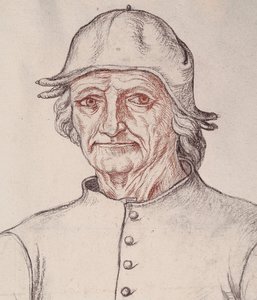
Hieronymus Bosch’s “Studies,” executed around 1490, stands as an arresting testament to the artist's singular vision—a realm where meticulous detail dances with unsettling fantasy, firmly rooted in the anxieties of late medieval Europe yet radiating a timeless resonance. This drawing, rendered in graphite on paper, isn’t merely a depiction; it’s an invitation into Bosch’s mindscape, a glimpse behind the curtain of his creative process.Composition and Technique
The artwork immediately captivates with its densely populated scene—a chaotic tapestry woven from figures, animals, and architectural elements. Bosch eschewed traditional compositional hierarchies, opting instead for a deliberately jarring arrangement that reflects the turbulent intellectual currents of his time. Lines dominate the surface, executed with remarkable precision using hatching and crosshatching techniques to sculpt volume and texture. These lines aren’t simply delineating forms; they convey an emotional intensity—a palpable sense of unease and disorientation mirroring the psychological landscape of Bosch's era. The artist’s masterful control over line weight contributes significantly to the overall impression of depth, creating a visual experience that transcends mere representation.Historical Context and Symbolism
Bosch’s “Studies” emerged during a period marked by profound religious upheaval—the Hussite Reformation challenging papal authority and fueling debates about salvation. This intellectual ferment permeated artistic circles, fostering experimentation with symbolism and allegory. The figures depicted – grotesque creatures alongside human forms – embody anxieties surrounding mortality, sin, and divine judgment. Bosch's fascination with biblical narratives and folklore is evident in the fantastical imagery; he draws upon medieval bestiaries and moral treatises to explore themes of temptation, repentance, and redemption. The meticulous rendering of anatomical detail underscores a humanist interest in understanding the human body—a burgeoning trend that contrasted sharply with prevailing scholastic dogma.Emotional Impact and Artistic Legacy
“Studies” possesses an undeniable emotional power—a disconcerting blend of beauty and horror that compels contemplation. Bosch’s unsettling vision anticipates Surrealism, demonstrating his profound sensitivity to psychological states and his ability to convey complex ideas through deceptively simple visual forms. The drawing's enduring appeal lies in its refusal to offer easy answers or comforting illusions; instead, it confronts viewers with the darker aspects of human experience—a challenge that continues to resonate across centuries. It’s a work that invites us to confront our own fears and desires, reminding us that art can serve as a conduit for exploring the deepest recesses of consciousness. Bosch's influence extends far beyond his immediate contemporaries, shaping the artistic sensibilities of subsequent generations and cementing his place as one of the most influential figures in Northern Renaissance painting.Korduvad küsimused
Mille teiste nimetega on Joen Van Aken tuntud?
Joen Van Aken tuntub ära ka nime all Hieronymus Bosch, Jheronimus Van Aken.
Mis on teose „Studies“, autor Joen Van Aken domineeriv värv?
Teose "Studies" kõige silmapaistvam värv on Putty (#e2e2e2). Dominantne värv on kasulik teose sobitamisel interjööriga.
Kuidas teose „Studies“, autor Joen Van Aken meeleolu on kirjeldatud?
Teose „Studies“, autor Joen Van Aken üldine meeleolu on Mystical. See meeleolu kirjeldab teose üldist atmosfääri.


 Lülita trükkitoodetele


 Kunstiteoste või reproduktsioonide puhul, mille üks külg on üle 105 cm (umbikmolt 41 tolli), saadetakse raam kirjal asendis, la Dismantlitud komplektina. See meetod tagab ohutuse kohaletoimetamisel ja väldib transpordil tekkivaid kahjustusi.


