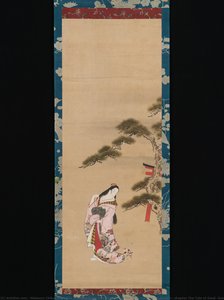
1795. Ink, 108.0 x 39.0 cm.

§ 1Kataloogandmed

- 108.0 x 39.0 cm


§ 2Abstraktne
Kogumisobjekti kirjeldus
Experience the serene elegance of these two cranes in a snowy landscape by Edo period master Itō Jakuchū, a breathtaking example of Japanese ink wash painting that invites you to bring tranquility into your home.
 Loe lähemalt
Kunstniku elulugu
Avastage Ito Jakuchu (1716-1800), Edo perioodi revolutsionaalne Jaapani maalari. Tuntud oma vibrantsete linnu- ja lillemaalide, unikaalse perspektiivi ning Zen-budistliku mõjusega, on ta Jaapani kunsti uuesti kujundanud meister.
§ 3Kommentaar
A Serene Encounter in the Snow
In the quietude of a winter landscape, two cranes stand as silent sentinels amidst a soft, dusting of snow. This exquisite work by the Edo-period master Itō Jakuchū captures a moment of profound stillness, inviting the viewer into a world where nature and spirit converge. The composition is elegantly elongated, drawing the eye upward along the slender, graceful necks of the birds, which seem to reach toward an unseen horizon. There is a rhythmic simplicity to the scene; the heavy, textured snowdrift at the base provides a grounded, earthy foundation that contrasts beautifully with the ethereal, almost weightless quality of the cranes' presence. It is a painting that does not merely depict a scene but evokes an atmosphere of deep, meditative peace.
The artistry of Jakuchū is revealed through his masterful command of the sumi-e tradition, blended with a unique, individualistic flair that set him apart from his contemporaries. Using ink and pigment on what was likely silk or fine paper, the artist employs a delicate range of tonal variations to breathe life into the subjects. The brushwork is both fluid and intentional; subtle, sweeping strokes define the contours of the birds' plumage, while more diffused, watery applications of ink create the soft, powdery texture of the snow. This technique allows for a sense of organic movement within a static moment, as if a light breeze might stir the feathers or disturb the frozen landscape at any second.
Symbolism and the Spirit of Japan
Beyond its visual elegance, this artwork is steeped in the rich symbolic language of Japanese culture. The crane, a central figure in East Asian iconography, is far more than a mere biological subject; it is a potent symbol of longevity, fidelity, and good fortune. By placing these two birds together within a desolate yet beautiful landscape, Jakuchū evokes themes of harmony and enduring companionship. The muted, earthy palette—dominated by shades of beige, grey, and soft brown—complements this spiritual depth, avoiding the distraction of vibrant color to focus instead on the essential essence of the subjects. A singular touch of red from the artist’s seal serves as a poignant reminder of the human hand behind the divine natural observation.
For the discerning collector or interior designer, this piece offers a timeless sophistication that transcends eras. Its understated elegance makes it an ideal centerpiece for spaces designed for contemplation, such as a library, a minimalist study, or a serene wellness retreat. The artwork’s ability to command attention through subtlety rather than spectacle ensures it remains a focal point of quiet strength. Whether viewed as a historical masterpiece of the Kyoto school or as a contemporary element of Zen-inspired decor, Two Cranes continues to resonate with anyone who finds beauty in the delicate balance between the ephemeral and the eternal.
Korduvad küsimused
Kas teose "Two Cranes" allalaadimine on võimalik?
Teose „Two Cranes“, autor Itō Jakuchū digitaalset pilti saab alla laadida selle teose Laadi alla lehelt: kõrge resolutsiooniga digitaalse pildi allalaadimine.
Kuidas seda teost „Two Cranes“, autor Itō Jakuchū saab kasutada kodukujunduses?
Teost "Two Cranes" on soovitatav kasutada Theme jaoks ning selleks soovitellav ruum on Hallway.
Kuidas teose „Two Cranes“, autor Itō Jakuchū värvikompositsioon on üles ehitatud?
Teoses "Two Cranes" on Statement kontrast koos Unified Palette harmooniasusega.




 Lülita trükkitoodetele


 Kunstiteoste või reproduktsioonide puhul, mille üks külg on üle 105 cm (umbikmolt 41 tolli), saadetakse raam kirjal asendis, la Dismantlitud komplektina. See meetod tagab ohutuse kohaletoimetamisel ja väldib transpordil tekkivaid kahjustusi.