


 Eelvaade
 Saada
Saada Jaga
Jaga
 Teave teose kohta
 Juhend

 Laadi alla
 Sarnased teosed
 Röntgenuuring
 Slaidietendus
 KÜSIMUSED JA VASTUSID
 Statistika
Dumpy level


 Loe lähemalt
Giclée / Kunstiprint
Muuseumikvaliteediga giclée- või kangasprint kiire tootmisega ja paindlikud viimistlusvõimalused. ( Osta käsitsi maalatud teos Lülita digitaalse pildi juurde)




P118B €10

P118H €10

P118W €10

P438Z €10

P508JH €12

P508YH €12

P805H €10

P805Z €10

P919BZ €10

P919G €10

P919XJ €10

P959ZH €10

P968JZ €12

W106C €8

W218G €10

W218JH €8

W218Y €10

W307PJ €10

W316G €10

W316PJ €8

W316Y €10

W398PJ €8

W4111J €10

W500HY €15

W500JH €15

W692G €12

W849H €8

W940BG €15

W953PJ €8




Vali meie eelmääratud suurused, mis vastavad teose algupärastele proportsioonidele.

Sisestage vajalik laius ja kõrgus, et see sobiks teie raamile või seinale. Trükki saab ainult lõigata, seda ei saa kunagi pildist suuremaks teha, seega ka erineva mustega suurus kaotab osa pildist. Enne trükkimist saadame teile kinnitamiseks digitaalse näidisprojektsiooni. Sellel lehel näidatud pilt ei kujuta reaalset lõiget — seda näitab ainult näidisprojektsioon.
Ülemaailmne tarne () 2 nädala jooksul, tavalise 4/5 nädala asemel. (3 november)

Tasuta ekspresssaatmine üle maailma

Kõrgekvaliteediline lina-kangas

Täielik transpordikindlustus

Tollimaksude tagastamise garantii

Värvitoime täpsuse garantii

100 päeva tagastusõigus (ainult valmistusdefektide korral)

100% raha tagasi garantii

Hulgusoodustus
 Klaasivalik on saadaval ainult kuni 110 cm suuruses teostes

Dumpy level
Giclée / Kunstiprint
Reproduktsiooni suurus
-


Koguhind
€ 58
Korduvad küsimused
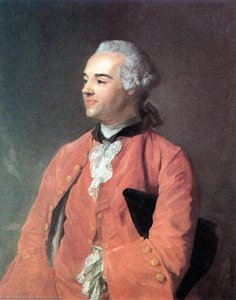
Mis on teose „Dumpy level“, autor Jacques Canivet orientatsioon?
Teose „Dumpy level“, autor Jacques Canivet vorm on Tall. See vorm kirjeldab kompositsiooni proportsioone.
Millal teos "Dumpy level" loodi ja millesse kunstisuuna see kuulub?
Teos "Dumpy level" loodi aastal 1733 ning see kuulub Neoclassicism suunasse. Aasta ja stiil anavad teosele kunstiajalist konteksti.
Kes müüb teose "„Dumpy level“, autor Jacques Canivet" käsitsi maaldatud koopiaid?
Teose „Dumpy level“, autor Jacques Canivet käsitsi maaldatud reproduktsiooni saab tellada otse selle Käsitsi maalatud reproduktsioon lehelt: käsitsi maalatud õlireproduktsioon linaelapale, valmistatud tellimusest.
Sarnased teosed




Kunstniku elulugu
Jacques Canivet: The Silent Maker of Parisian Instruments
Jacques Canivet (1714-1773) remains a figure shrouded in scholarly curiosity, largely absent from the popular narrative of 18th-century France. Yet, his contribution to scientific instrumentation—a legacy quietly shaping the intellectual landscape of Paris—is undeniable. Born into a family steeped in craftsmanship and tradition, Canivet’s path diverged from the grand salons of Versailles, finding its focus instead within the workshops of Lordelle and Jean Chapotot, where he honed his skills alongside Claude Langlois, establishing himself as a pivotal figure in the burgeoning field of scientific measurement.- Early Life & Apprenticeship: Canivet’s formative years were spent mastering the art of instrument making—a craft passed down through generations—laying the groundwork for his future endeavors. His association with Langlois, a celebrated maker known for his meticulous attention to detail and innovative designs, proved invaluable in shaping his artistic sensibilities.
- The Workshop Legacy: Following Langlois’s death in 1756, Canivet assumed leadership of the workshop, inheriting not only expertise but also a reputation for excellence. This continuity ensured that the traditions of precision and artistry persisted—a testament to the enduring power of familial craftmanship.
- Instrument Production & Innovation: Canivet’s output spanned an impressive array of instruments – compasses, graphometers, astronomical quadrants, transit instruments, drawing instruments, and even parallactic machines. These creations weren't merely tools; they were embodiments of Enlightenment ideals—instruments designed to unlock the secrets of the cosmos and advance scientific understanding.
A Patron of Science & Artistic Vision
Canivet’s involvement extended beyond mere fabrication. He served as supplier of instruments to the Académie Royale des Sciences in Paris, actively collaborating with leading thinkers and scientists of his time. This engagement fostered a symbiotic relationship between artistic skill and intellectual pursuit—a hallmark of the era—demonstrating that beauty could be found within the realm of mathematics and observation.- Commissioned Artwork: Notably, Canivet was entrusted with crafting instruments for Napoleon Bonaparte’s expedition to Egypt. These commissions demanded not only technical proficiency but also an understanding of artistic symbolism—a reflection of Napoleon's ambition to elevate France as a beacon of enlightenment.
- Influence & Legacy: Canivet’s meticulous craftsmanship and dedication to accuracy established him as a benchmark for instrument makers, influencing subsequent generations. His work exemplifies the spirit of the Enlightenment—a commitment to empirical observation and reasoned inquiry that continues to resonate today.
Notable Instruments & Artistic Style
Canivet’s instruments are characterized by their exceptional quality and aesthetic refinement. He prioritized precision, utilizing techniques honed over years of experience—resulting in creations that were both functional and visually striking. His designs incorporated elegant curves and subtle ornamentation—reflecting the prevailing stylistic trends of the period while upholding the highest standards of craftsmanship.- Compasses & Graphometers: Canivet’s compasses and graphometers stand out for their meticulous construction and graceful proportions—testaments to his mastery of geometric principles and artistic sensibilities.
- Astronomical Quadrants: His astronomical quadrants exemplify the pursuit of scientific knowledge through visual observation—incorporating innovative designs that maximized accuracy and clarity.
Concluding Reflections
Jacques Canivet’s contribution to French science and art deserves greater recognition. Though he remained largely outside the spotlight of aristocratic circles, his unwavering dedication to craftsmanship and innovation cemented his place as a pivotal figure in shaping the intellectual landscape of Paris during the Enlightenment—a silent maker whose instruments continue to inspire awe and admiration.
Jacques Canivet
1714 - 1773 , France
Lühikest infot
- Full Name: Jacques Canivet
- Nationality: French
- Date Of Birth: 1714
- Date Of Death: 1773
- Place Of Birth: France
- Notable Artworks:
- The Death of Marat
- Portrait of Madame Vigée Le Brun
- Artistic Movement Or Style: Neoclassical
- Artists Who Influenced This Artist: ['Claude Langlois']
- Artists Or Movements Influenced By This Artist: ['Classical Art']
Sarnased artiklid

18th Century Masters: 10 Artworks That Define an Era | AllPaintingsStore
Journey through 18th century art! Explore 10 iconic paintings – from Rococo elegance to Neoclassical grandeur. Discover Fragonard, David & more. Find museum-quality reproductions and elevate your home decor on AllPaintingsStore.com.

Illuminating the Enlightenment: A Comprehensive Exploration of 18th-Century Painting
Explore the captivating world of 18th-century painting! Discover Rococo's playful elegance & Neoclassicism’s Enlightenment ideals with expert insights into Fragonard, David, and more. A comprehensive guide for art enthusiasts.

Iconic Art of the 18th & 19th Centuries: Masterpieces for Your Home | AllPaintingsStore
Journey through 18th & 19th century art! Explore iconic masterpieces by Monet, Van Gogh & more. Discover the stories behind these timeless paintings and find museum-quality reproductions for your home at AllPaintingsStore.com.

Reflections of an Age: Social Commentary & Artistic Representation in 18th-Century Society
Explore the social commentary & artistic representation of 18th-century society. Discover Rococo masterpieces, portraiture's power, and shifting historical perspectives. Expert insights for art lovers.

Illuminating the Enlightenment: Art & Sociopolitical Context of the 18th Century
Explore the art of the Enlightenment! Discover Rococo's elegance, Neoclassicism’s virtue, & David’s revolutionary masterpieces. Uncover the sociopolitical context shaping 18th-century European painting.