


 Eelvaade
 Saada
Saada Jaga
Jaga
 Teave teose kohta
 Juhend

 Laadi alla
 Sarnased teosed
 Röntgenuuring
 Slaidietendus
 Q&A
Q&A Statistika
Christ Tormented by Demons

 Loe lähemalt
Hankige trükiivaldatav fail, mis on kvaliteedilt palju parem kui veebilehel näidatud eelvaade. Kõik meie müüdavad digitaalsed pildid pärinevad meie arhiivist kõrge resolutsiooniga originaalfailidest — tavaliselt 5000 kuni 15 000 pikslit laiust — nii et saate julgelt trükida suurematsat, lüüdist teha või detailset sisu reproduktsiooni teha.
Meie stuudiost ei lahtu ükski fail puutumatuna. Digiekpert võrdleb värve algsest maalistimusega ja vajadusel korrigeerib neid, seejärel parandab selgust ja detaile professionaalsete retušimisvahendite abil — püüdes alati jääda truudeks kunstniku pintoonile ja stiilile. Tulemuseks on pilt, mis näeb välja nagu maali, mitte nagu filtreeritud skann.
Teet kinnituse enne lõplikku valmimist: meie ekspert saadab pildi 72 tunni jooksul e-posti ülevaatamiseks. Ei ole rahul? Paluge parandusi või korrektsioone ning kui kvaliteet ei vasta ootustele, võite paluda tagastamist.
See on kvaliteet, millele tuguvad väljaandjad, disainistuudiod, galeriid ja trükikojad.
Digitaalne kunstiteos
Laadi alla kõrge resolutsiooniga fail isiklikuks vaatamiseks, trükkimiseks ja loomingulisteks projektideks. ( Lülita trükkitoodetele Osta käsitsi maalatud teos)
Sisse kuulub iga digitaalse pildi tellimusega
Eksperdi digitaalne kohaletoimetamine, garanteeritud
Valides AllPaintingsStore.com, ei saa sa lihtsalt pilti – saad professionaalselt parandatud digitaalse teose, mida on valmistatud täpsusega ja mis on toetatud rahuldamatusgarantiiga. Siin on kõik, mis sinu tellimusega automaatselt kaasneb:

Kiire digitaalne edastus
Teie kõrge resolutsiooniga digitaalne pildifail saadetakse teile e-posti 72 tunni jooksul pärast tellimist – kohe kasutamiseks valmis.

Tehisintellektiga täiustatud digitaalne fail
Teie teos on professionaalselt optimeeritud arenenud tehisintellekti tööriistade ja käsitsi redigeerimise abil, tagades maksimaalse detailitaseme, selguse ja värvitäpsuse.

Tasuta eluaegne uuesti saatmine
Kas kustutasid faili kogukalu unustamisel või kustutamisel? Puudub mure – saad selle uuesti igal ajal ilma lisatasuta.

Puuduvad importimaksud – alati
Nautige oma teoseid koheselt ilma tolli-, maksude või tarnimaskuludeta – digiletchargused on alati maksuvabadud.

Värvitäpsuse garantii
Me tagame, et teie digitaalne pilt kajastaks originaali värve professionaalsete tööriistade ja värvihalduse abil võimalikult täpselt.

100 päeva rahuldamatuse garantii
Kui te ei ole oma digitaalse pildi eest rahul, siis me parandame seda või tagastame 100% summast 100 päeva jooksul – küsimusteta.

100% raha tagastamise garantii
Ei ole rahul? Saate täielise tagastaja 100 päeva jooksul pärast digitaalse faili kättesaamist – ilma küsimusteta.

Suurema tellimuse soodustused
Osta 3 pilti, säästa 10% - Osta 5, säästa 15% - Osta 10+, säästa 20%. Sobib suurepäraselt loomingulisteks projektideks, galeriideks ja agentuurideks.
James Ensor’s Disturbing Vision of Suffering
James Ensor (1860 – 1949), a Belgian artist whose career spanned over eight decades, remains an enigmatic figure in the annals of Expressionism. Born in Ostend, a coastal town steeped in maritime tradition and cultural exchange between England and Belgium, Ensor’s formative years instilled within him a profound appreciation for theatricality and visual spectacle—influences that would irrevocably shape his artistic output.
- Subject Matter: The painting depicts Christ crucified, a familiar motif of Christian iconography but rendered with unsettling realism. However, Ensor doesn’t portray Jesus as a serene martyr; instead, he presents him as tormented by demonic forces, capturing the visceral horror of crucifixion in a manner strikingly unconventional for its time.
- Style: Ensor's style is undeniably Expressionist, prioritizing emotional intensity over meticulous representation. He eschewed academic conventions, favoring bold brushstrokes and jarring color palettes to convey psychological states rather than objective observation. This deliberate rejection of traditional aesthetics aligns him firmly with the burgeoning avant-garde movement that sought to express inner turmoil and societal anxieties.
- Technique: Ensor employed oil paint on canvas, utilizing a technique characterized by thick impasto—a layering of pigment onto the surface that creates palpable texture. The artist’s deliberate manipulation of brushstrokes contributes significantly to the painting's dramatic effect, emphasizing movement and conveying a sense of unease.
Historical Context: A Reflection of Anxiety
Created in 1895, “Christ Tormented by Demons” emerged during a period marked by intellectual ferment and social upheaval. The Symbolist movement was gaining momentum, challenging prevailing Victorian ideals with explorations of subconsciousness and mythic narratives. Simultaneously, anxieties surrounding spiritual decline and the encroaching influence of materialism fueled artistic responses that mirrored these concerns. Ensor’s depiction of Christ embodies this spirit—a confrontation with suffering not merely as a theological concept but as an inescapable human experience.
- Symbolism: The painting overflows with symbolic imagery. The cross itself represents Christian faith, yet it is overlaid with grotesque demons symbolizing evil and despair. The surrounding figures – angels and men – further complicate the narrative, suggesting conflicting interpretations of morality and redemption.
- Emotional Impact: Ensor’s masterful use of color—primarily muted reds and yellows—intensifies the painting's emotional impact. These hues evoke feelings of pain, fear, and vulnerability, mirroring the psychological torment experienced by Christ. The artist compels viewers to confront uncomfortable truths about human suffering and the pervasive presence of darkness within the human psyche.
A Legacy of Unease
"Christ Tormented by Demons" stands as a testament to Ensor’s unwavering commitment to artistic innovation and his willingness to challenge societal norms. It remains a powerfully disturbing image, prompting ongoing debate about its interpretation and enduring relevance. Its influence can be seen in subsequent Expressionist artists who similarly sought to depict the darker side of human existence with uncompromising honesty.
- Contemporary Relevance: Ensor’s exploration of psychological torment continues to resonate with audiences today, reminding us that art possesses the capacity to confront uncomfortable realities and provoke profound introspection.
- Interior Design Inspiration: The painting's dramatic palette and textural surface can serve as inspiration for creating spaces imbued with mood and atmosphere—particularly those aiming for a gothic or unsettling aesthetic.
Korduvad küsimused
Kust saan osta teose „Christ Tormented by Demons“, autor James Ensor käsitsi maalatud reproduktsiooni?
Teose „Christ Tormented by Demons“, autor James Ensor käsitsi maalatud koopiaid müüakse saidil see veebileht: käsitsi maalatud õlireproduktsioon linaelapale, neid saab tellida selle lehelt Käsitsi maalatud reproduktsioon.
Milline kunstnik ja milline stiil seisavad teose "Christ Tormented by Demons" taga?
Teose "Christ Tormented by Demons" taga on kunstnik James Ensor ja Expressionistic Horror suundumus.
Millist tunnet edastab „Christ Tormented by Demons“, autor James Ensor?
Teoses "Christ Tormented by Demons" on Dramatic meeleolu koos Dramatic emotsiooniga.
Sarnased teosed


Kunstniku elulugu
James Ensor: A Pioneer of Modernism
James Sidney Edouard, Baron Ensor (Ostend, 13 April 1860 – 19 November 1949) was a Flemish-Belgian painter and printmaker, an important influence on expressionism and surrealism who lived in Ostend for almost his entire life. He was associated with the artistic group Les XX.
Early Life and Artistic Training
James Ensor’s father, James Frederic Ensor, born in Brussels to English parents, was a cultivated man who studied engineering in England and Germany. Ensor's mother, Maria Catharina Haegheman, was Belgian. Ensor himself lacked interest in academic study and left school at the age of fifteen to begin his artistic training with two local painters. From 1876, he attended drawing lessons at the College of the Blessed Virgin in Ostend.
The Impressionist Influence and Initial Works
Ensor’s early paintings reflected a more traditional approach, depicting scenes of everyday life rendered in somber tones. Works like *Russian Music* (1881) and *The Drunkards* (1883) reveal a nascent talent grappling with realism, but even within these early pieces, hints of the unsettling imagery to come are present. A pivotal shift occurred as Ensor’s palette brightened and his subject matter grew increasingly bizarre. He began to populate his canvases with carnivals, skeletons, puppets, and allegorical figures—a world steeped in fantasy and often bordering on the grotesque. This wasn't merely a stylistic change; it was a deliberate exploration of the darker aspects of human existence, a rejection of societal norms, and an embrace of the irrational.
Les XX and Artistic Innovation
In 1883 Ensor, along with a few older students of the Brussels‘ academy, would take leave of the artists‘ association *L'Essor*. They established the artists‘ association* Les Vingt*. This will play an important role in the dissemination of various international *avant-garde* movements. Ensor’s father’s shop in Ostend was a main purveyor of carnival paraphernalia, and this fascination would permeate his artwork.
Major Paintings and Recurring Themes
Throughout his career, Ensor produced a series of works that continue to shock and fascinate audiences today. *The Scandalized Masks* (1883) stands as an early testament to his fascination with the power of disguise and its ability to reveal hidden emotions. Perhaps his most controversial work, *Christ’s Entry into Brussels* (1888-1889), remains a powerful satire of religious hypocrisy and societal indifference—a painting initially met with harsh criticism but now celebrated as a masterpiece. The unsettling image of Christ entering a city teeming with grotesque masked figures is a potent commentary on the disconnect between spiritual ideals and human behavior.
Legacy and Influence
James Ensor was recognized as a pivotal figure in the transition from 19th-century Symbolism to early 20th-century Expressionism and Surrealism—a true pioneer of modern art. His fearless exploration of the subconscious, his embrace of grotesque imagery, and his rejection of academic conventions paved the way for future generations of artists who dared to challenge artistic norms. He is remembered as a visionary artist whose uncompromising vision continues to inspire contemplation and debate.
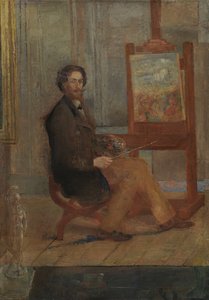
James Ensor
1860 - 1949 , Belgium
Lühikesed faktid
- Artistic Movement Or Style: Expressionism, Surrealism
- Artists Who Influenced This Artist:
- Bruegel the Elder
- Francisco Goya
- Whistler
- Date Of Birth: April 13, 1860
- Date Of Death: November 19, 1949
- Full Name: James Sidney Edouard Ensor
- Nationality: Belgian
- Notable Artworks:
- The Scandalized Masks
- Skeletons Fighting...
- Christ's Entry into Brussels
- Place Of Birth: Ostend, Belgium

