


 Eelvaade
 Saada
Saada Jaga
Jaga
 Teave teose kohta
 Juhend

 Laadi alla
 Sarnased teosed
 Röntgenuuring
 Slaidietendus
 Q&A
Q&A Statistika
Death Pursuing the Human Herd


 Loe lähemalt
Hankige trükiivaldatav fail, mis on kvaliteedilt palju parem kui veebilehel näidatud eelvaade. Kõik meie müüdavad digitaalsed pildid pärinevad meie arhiivist kõrge resolutsiooniga originaalfailidest — tavaliselt 5000 kuni 15 000 pikslit laiust — nii et saate julgelt trükida suurematsat, lüüdist teha või detailset sisu reproduktsiooni teha.
Meie stuudiost ei lahtu ükski fail puutumatuna. Digiekpert võrdleb värve algsest maalistimusega ja vajadusel korrigeerib neid, seejärel parandab selgust ja detaile professionaalsete retušimisvahendite abil — püüdes alati jääda truudeks kunstniku pintoonile ja stiilile. Tulemuseks on pilt, mis näeb välja nagu maali, mitte nagu filtreeritud skann.
Teet kinnituse enne lõplikku valmimist: meie ekspert saadab pildi 72 tunni jooksul e-posti ülevaatamiseks. Ei ole rahul? Paluge parandusi või korrektsioone ning kui kvaliteet ei vasta ootustele, võite paluda tagastamist.
See on kvaliteet, millele tuguvad väljaandjad, disainistuudiod, galeriid ja trükikojad.
Digitaalne kunstiteos
Laadi alla kõrge resolutsiooniga fail isiklikuks vaatamiseks, trükkimiseks ja loomingulisteks projektideks. ( Lülita trükkitoodetele Osta käsitsi maalatud teos)
Sisse kuulub iga digitaalse pildi tellimusega
Eksperdi digitaalne kohaletoimetamine, garanteeritud
Valides AllPaintingsStore.com, ei saa sa lihtsalt pilti – saad professionaalselt parandatud digitaalse teose, mida on valmistatud täpsusega ja mis on toetatud rahuldamatusgarantiiga. Siin on kõik, mis sinu tellimusega automaatselt kaasneb:

Kiire digitaalne edastus
Teie kõrge resolutsiooniga digitaalne pildifail saadetakse teile e-posti 72 tunni jooksul pärast tellimist – kohe kasutamiseks valmis.

Tehisintellektiga täiustatud digitaalne fail
Teie teos on professionaalselt optimeeritud arenenud tehisintellekti tööriistade ja käsitsi redigeerimise abil, tagades maksimaalse detailitaseme, selguse ja värvitäpsuse.

Tasuta eluaegne uuesti saatmine
Kas kustutasid faili kogukalu unustamisel või kustutamisel? Puudub mure – saad selle uuesti igal ajal ilma lisatasuta.

Puuduvad importimaksud – alati
Nautige oma teoseid koheselt ilma tolli-, maksude või tarnimaskuludeta – digiletchargused on alati maksuvabadud.

Värvitäpsuse garantii
Me tagame, et teie digitaalne pilt kajastaks originaali värve professionaalsete tööriistade ja värvihalduse abil võimalikult täpselt.

100 päeva rahuldamatuse garantii
Kui te ei ole oma digitaalse pildi eest rahul, siis me parandame seda või tagastame 100% summast 100 päeva jooksul – küsimusteta.

100% raha tagastamise garantii
Ei ole rahul? Saate täielise tagastaja 100 päeva jooksul pärast digitaalse faili kättesaamist – ilma küsimusteta.

Suurema tellimuse soodustused
Osta 3 pilti, säästa 10% - Osta 5, säästa 15% - Osta 10+, säästa 20%. Sobib suurepäraselt loomingulisteks projektideks, galeriideks ja agentuurideks.
A Vision of Mortality: Decoding James Ensor’s ‘Death Pursuing the Human Herd’
James Ensor's *Death Pursuing the Human Herd* is a visceral and unforgettable statement on the human condition, rendered with the unsettling energy that defines his unique contribution to Expressionism. Painted in the late 19th century, this large-scale oil painting doesn’t offer comfort; it confronts us with the inescapable reality of mortality and the anxieties of modern life. The work is a powerful example of Ensor's ability to blend grotesque imagery with profound philosophical questioning.Subject & Composition: A Chaotic Flight from Fate
The canvas explodes with a frenzied scene – a mass of figures, seemingly representing all of humanity, desperately fleeing a skeletal figure embodying Death. The skeleton, wielding a scythe, actively cuts down members of the crowd, emphasizing the indiscriminate nature of fate. Ensor masterfully creates a sense of claustrophobia and panic through the tightly packed composition and dynamic movement. A bizarre element – a figure riding atop a dragon-like creature – adds to the overall feeling of surreal chaos and societal upheaval. The scene isn’t simply about physical death, but also the decay of values and the anxieties surrounding modernity.Style & Technique: Expressionist Intensity
*Death Pursuing the Human Herd* is a prime example of Expressionism, characterized by its bold colors, distorted forms, and emotionally charged brushwork. Ensor doesn’t aim for realistic representation; instead, he utilizes vibrant, often jarring hues and energetic strokes to convey inner turmoil and psychological states. The painting's surface is alive with texture, contributing to the overall sense of unease and urgency. His technique prioritizes emotional impact over precise detail, creating a raw and immediate connection with the viewer. The deliberate crudeness in some areas further amplifies the feeling of desperation and societal breakdown.Symbolism & Interpretation: Masks, Mortality, and Modernity
Ensor’s work is rich in symbolism. The skeleton is an obvious *memento mori*, a reminder of death's inevitability. However, the painting goes deeper. The crowd represents not just individuals but society as a whole, blindly rushing towards its doom. The masks frequently found in Ensor’s oeuvre – though less prominent here than in some other works – hint at the artificiality and hypocrisy he perceived within societal structures. The dragon-like creature could symbolize destructive forces or perhaps the irrationality of power. The painting can be interpreted as a commentary on social injustice, political corruption, and the anxieties surrounding rapid industrialization during the late 19th century.Historical Context & Ensor’s Legacy
James Ensor (1860-1949) was a Belgian painter who anticipated many of the themes and techniques later embraced by Expressionist and Surrealist artists. He rejected academic conventions, forging his own path with intensely personal and often disturbing imagery. His work was initially met with criticism and misunderstanding, but he is now recognized as a pivotal figure in modern art history. *Death Pursuing the Human Herd* exemplifies Ensor’s unique vision – a blend of dark humor, social critique, and profound existential questioning. His influence can be seen in the works of artists like Egon Schiele and Max Beckmann.Emotional Impact & Interior Design Considerations
This painting is not intended to be passively observed; it demands a reaction. It evokes feelings of anxiety, fear, and perhaps even a morbid fascination. Its dramatic composition and intense color palette make it a striking focal point for any space. While its subject matter is dark, the vibrant colors can surprisingly complement modern or eclectic interiors. Consider pairing this reproduction with neutral tones to allow the artwork’s intensity to truly shine. It's a conversation starter, a piece that invites contemplation and challenges conventional perspectives – perfect for those who appreciate art with depth and meaning.- Explore more of James Ensor’s work at AllPaintingsStore.com.
- Discover high-quality oil painting reproductions of *Death Pursuing the Human Herd* at AllPaintingsStore.com.
- Learn about other Expressionist masters like Egon Schiele through AllPaintingsStore.com.
Korduvad küsimused
Kuidas teose "Death Pursuing the Human Herd" motiiv seobub James Ensor tavalistega teemadega?
"Death Pursuing the Human Herd" kujutab teemasid death and mortality, crowd panic, skeletal figure, dark imagery, symbolic scene, human herd, expressionist theme, samal ajal kui James Ensor tuntud teemad on romanticism's drama, symbolist undertones, gothic horror elements, social critique", death obsession, anxiety of modernity, "recurr, masks and grotesque figures. Nende kahe võrdlemine näitab, kuidas teos seobub kunstniku tavalistega motiividega.
Mis on soovitatav trükimõõt teosele "Death Pursuing the Human Herd"?
Soovitatav trükimõõt teosele „Death Pursuing the Human Herd“, autor James Ensor on Large.
Millissele perioodile James Ensor karjäärist kuulub teos "Death Pursuing the Human Herd"?
James Ensor loomingus kuulub teos "Death Pursuing the Human Herd" perioodi Mature Period. See etap aitab seda võrdida kunstniku teiste töödega.
Sarnased teosed


Kunstniku elulugu
James Ensor: A Pioneer of Modernism
James Sidney Edouard, Baron Ensor (Ostend, 13 April 1860 – 19 November 1949) was a Flemish-Belgian painter and printmaker, an important influence on expressionism and surrealism who lived in Ostend for almost his entire life. He was associated with the artistic group Les XX.
Early Life and Artistic Training
James Ensor’s father, James Frederic Ensor, born in Brussels to English parents, was a cultivated man who studied engineering in England and Germany. Ensor's mother, Maria Catharina Haegheman, was Belgian. Ensor himself lacked interest in academic study and left school at the age of fifteen to begin his artistic training with two local painters. From 1876, he attended drawing lessons at the College of the Blessed Virgin in Ostend.
The Impressionist Influence and Initial Works
Ensor’s early paintings reflected a more traditional approach, depicting scenes of everyday life rendered in somber tones. Works like *Russian Music* (1881) and *The Drunkards* (1883) reveal a nascent talent grappling with realism, but even within these early pieces, hints of the unsettling imagery to come are present. A pivotal shift occurred as Ensor’s palette brightened and his subject matter grew increasingly bizarre. He began to populate his canvases with carnivals, skeletons, puppets, and allegorical figures—a world steeped in fantasy and often bordering on the grotesque. This wasn't merely a stylistic change; it was a deliberate exploration of the darker aspects of human existence, a rejection of societal norms, and an embrace of the irrational.
Les XX and Artistic Innovation
In 1883 Ensor, along with a few older students of the Brussels‘ academy, would take leave of the artists‘ association *L'Essor*. They established the artists‘ association* Les Vingt*. This will play an important role in the dissemination of various international *avant-garde* movements. Ensor’s father’s shop in Ostend was a main purveyor of carnival paraphernalia, and this fascination would permeate his artwork.
Major Paintings and Recurring Themes
Throughout his career, Ensor produced a series of works that continue to shock and fascinate audiences today. *The Scandalized Masks* (1883) stands as an early testament to his fascination with the power of disguise and its ability to reveal hidden emotions. Perhaps his most controversial work, *Christ’s Entry into Brussels* (1888-1889), remains a powerful satire of religious hypocrisy and societal indifference—a painting initially met with harsh criticism but now celebrated as a masterpiece. The unsettling image of Christ entering a city teeming with grotesque masked figures is a potent commentary on the disconnect between spiritual ideals and human behavior.
Legacy and Influence
James Ensor was recognized as a pivotal figure in the transition from 19th-century Symbolism to early 20th-century Expressionism and Surrealism—a true pioneer of modern art. His fearless exploration of the subconscious, his embrace of grotesque imagery, and his rejection of academic conventions paved the way for future generations of artists who dared to challenge artistic norms. He is remembered as a visionary artist whose uncompromising vision continues to inspire contemplation and debate.
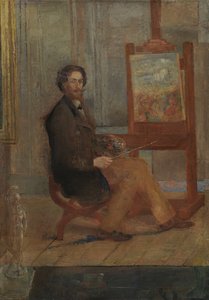
James Ensor
1860 - 1949 , Belgium
Lühikesed faktid
- Artistic Movement Or Style: Expressionism, Surrealism
- Artists Who Influenced This Artist:
- Bruegel the Elder
- Francisco Goya
- Whistler
- Date Of Birth: April 13, 1860
- Date Of Death: November 19, 1949
- Full Name: James Sidney Edouard Ensor
- Nationality: Belgian
- Notable Artworks:
- The Scandalized Masks
- Skeletons Fighting...
- Christ's Entry into Brussels
- Place Of Birth: Ostend, Belgium