


 Vaata sisu
 Jaga teost
 Jaga
Jaga
 Detailid
 Õppekate juhend

 Laadi alla
 Sarnased teosed
 Röntgenuuring
 Slaidietendus
 Statistika
Duel de Masque


 Loe lähemalt
Käsitsi valmistatud õlimaalireproduktsioon
Meie kunstnike poolt tellimusel valmistatud käsitsi maalitud õli-kainaste teos teie soovitud suuruses ja raamis. ( Lülita trükkitoodetele Ülemineku digitaalse pildi müügi kanalisse)




P118B €10

P118H €10

P118W €10

P438Z €10

P508JH €12

P508YH €12

P805H €10

P805Z €10

P919BZ €10

P919G €10

P919XJ €10

P959ZH €10

P968JZ €12

W106C €8

W218G €10

W218JH €8

W218Y €10

W307PJ €10

W316G €10

W316PJ €8

W316Y €10

W398PJ €8

W4111J €10

W500HY €15

W500JH €15

W692G €12

W849H €8

W940BG €15

W953PJ €8




Vali meie eelmääratud suurused, mis vastavad teose algupärastele proportsioonidele.

Sisestage vajalik laius ja kõrgus, et teos sobiks teie raamile või seinale. Kuna tegu on käsipainatud teosega, siis erineva kujuga suuruse korral võib kunstnik jätta pildi ümber veidi rohkem marginaali või lõigata osa ära — valik on teie. Enne maali alustamist saadame teile kinnitamiseks digitaalse näidisprojektsiooni. Sellel lehel näidatud pilt ei kajasta tegelikku tulemust — seda näitab ainult näidisprojekttsioon.
Pärast tellimust saadab AllPaintingsStore.com meeskond kliendile e-posti juhised ning esitab eelvaate kavandi
Maailmline tarne 3–4 nädala jooksul tavalise 5 nädala asemel. (27 oktoober). Kvaliteedis kompromisse ei tehta.

Tasuta ekspresssaatmine üle maailma

Kõrgekvaliteediline lina-kangastest muld

Täielik transpordikindlustus

Tollimaksude tagastamise garantii

Värvitoime täpsuse garantii

100 päeva tagastusõigus (ainult defektide korral)

100% raha tagasi garantii

Hulgusoodustus
 Klaasivalik on saadaval ainult kuni 110 cm suuruses teostes

Duel de Masque
Reproduktsiooni materjal
Reproduktsiooni mõõtmed
-


Lõppsumma
€ 227
James Ensor’s “Duel de Masque”: A Descent into Carnival’s Shadow
James Ensor's "Duel de Masque" (c. 1890) isn’t merely a painting; it’s an immersive plunge into the unsettling heart of masquerade and social decay. This large-scale oil on canvas, largely lost to definitive documentation regarding its exact dimensions, immediately confronts the viewer with a scene brimming with theatrical excess and veiled menace. Set against a muted, almost melancholic backdrop – suggesting a bleak winter morning – it depicts a gathering of figures caught in the aftermath of a duel, their identities obscured by elaborate costumes and masks. The painting’s power lies not in dramatic action, but in its carefully constructed atmosphere of unease, hinting at hidden resentments and unspoken anxieties beneath the veneer of festive entertainment.
Ensor, born in Ostend, Belgium, to an English father and a Belgian mother, possessed a uniquely dual heritage that profoundly shaped his artistic vision. His childhood spent amidst the vibrant chaos of carnival celebrations – a world saturated with masks, puppets, and theatrical performances – became a foundational element of his oeuvre. This fascination with disguise and concealment is powerfully evident in “Duel de Masque,” where each figure embodies a carefully constructed persona, deliberately distancing themselves from genuine emotion or identity. The artist’s early exposure to this world of illusion undoubtedly fueled his exploration of the darker aspects of human nature, often presented through distorted figures and unsettling imagery.
The Language of Masks and Symbolism
The central motif of “Duel de Masque” – the mask itself – is far more than a simple decorative element. It represents a deliberate attempt to conceal, to create an artificial identity, and ultimately, to distance oneself from responsibility. Each character wears a costume that actively obscures their true nature: a Pierrot with a bloodied face, a Duc de Guise shrouded in velvet, a Domino clutching his head – all figures trapped within the confines of their chosen roles. The skeletal figure prominently displayed adds another layer of symbolic weight, representing mortality and the inevitable decay beneath the surface of social performance. The inclusion of a surgeon, dressed as a doge of Venice, suggests an attempt to mend wounds both physical and emotional, yet his efforts are futile against the pervasive sense of ruin.
Beyond the individual costumes, the painting’s composition contributes significantly to its unsettling effect. The figures are arranged in a deliberately claustrophobic space, creating a feeling of confinement and tension. The muted color palette – dominated by grays, browns, and blacks – further enhances this sense of gloom, while the stark lighting emphasizes the drama of the scene. The deliberate blurring of lines between reality and illusion—the painted backdrop, the theatrical costumes, the obscured faces—forces the viewer to question the nature of truth and deception.
Ensor’s Expressionist Roots and Lasting Influence
“Duel de Masque” is widely considered a pivotal work in James Ensor's development as an artist, foreshadowing his later explorations into Expressionism and Surrealism. While he initially struggled with the rigid conventions of the Académie Royale des Beaux-Arts in Brussels, Ensor ultimately forged his own distinctive style—characterized by bold colors, distorted figures, and a preoccupation with psychological themes. His willingness to challenge artistic norms and embrace unconventional subject matter established him as a radical innovator within the Belgian art scene.
The painting’s influence extends far beyond its immediate historical context. Ensor's exploration of masks, social satire, and the anxieties of modern life resonated with artists who would later define these movements. Reproductions of “Duel de Masque,” particularly in high-quality formats offered by AllPaintingsStore.com, provide a powerful window into Ensor’s artistic vision—a captivating glimpse into a world where appearances are deceiving, and the masks we wear conceal profound emotional turmoil. The painting's enduring appeal lies in its ability to provoke thought and evoke a visceral response, reminding us of the complexities of human identity and the ever-present tension between appearance and reality.
Küsimused ja vastused
Kuidas teos „Duel de Masque“, autor James Ensor seob Expressionist Masks kunstniku kodumaaga?
Teose "Duel de Masque" on loonud Belgium-s sündinud James Ensor, tuginedes Expressionist Masks suunale. Kunstniku päritolu seob teose Expressionist Masks stiiliga, mida praktiseerivad Belgium kunstnikud.
Milline suurus on soovituslik teosele "Duel de Masque" ruumis Living Room?
Soovitatav kombinatsioon teosele „Duel de Masque“, autor James Ensor: Large trükis Living Room-s.
Kas saan näha teose „Duel de Masque“, autor James Ensor röntgenpilti?
Teost "Duel de Masque" saab uurida kiht kihti teose Röntgenkiirgus lehel, mis on interaktiivne vaatur, mida on inspireerinud restauraatori valgilaud ja mis pakub kujundist üksteist optilist lugemist.
Sarnased teosed


Kunstniku elulugu
James Ensor: A Pioneer of Modernism
James Sidney Edouard, Baron Ensor (Ostend, 13 April 1860 – 19 November 1949) was a Flemish-Belgian painter and printmaker, an important influence on expressionism and surrealism who lived in Ostend for almost his entire life. He was associated with the artistic group Les XX.
Early Life and Artistic Training
James Ensor’s father, James Frederic Ensor, born in Brussels to English parents, was a cultivated man who studied engineering in England and Germany. Ensor's mother, Maria Catharina Haegheman, was Belgian. Ensor himself lacked interest in academic study and left school at the age of fifteen to begin his artistic training with two local painters. From 1876, he attended drawing lessons at the College of the Blessed Virgin in Ostend.
The Impressionist Influence and Initial Works
Ensor’s early paintings reflected a more traditional approach, depicting scenes of everyday life rendered in somber tones. Works like *Russian Music* (1881) and *The Drunkards* (1883) reveal a nascent talent grappling with realism, but even within these early pieces, hints of the unsettling imagery to come are present. A pivotal shift occurred as Ensor’s palette brightened and his subject matter grew increasingly bizarre. He began to populate his canvases with carnivals, skeletons, puppets, and allegorical figures—a world steeped in fantasy and often bordering on the grotesque. This wasn't merely a stylistic change; it was a deliberate exploration of the darker aspects of human existence, a rejection of societal norms, and an embrace of the irrational.
Les XX and Artistic Innovation
In 1883 Ensor, along with a few older students of the Brussels‘ academy, would take leave of the artists‘ association *L'Essor*. They established the artists‘ association* Les Vingt*. This will play an important role in the dissemination of various international *avant-garde* movements. Ensor’s father’s shop in Ostend was a main purveyor of carnival paraphernalia, and this fascination would permeate his artwork.
Major Paintings and Recurring Themes
Throughout his career, Ensor produced a series of works that continue to shock and fascinate audiences today. *The Scandalized Masks* (1883) stands as an early testament to his fascination with the power of disguise and its ability to reveal hidden emotions. Perhaps his most controversial work, *Christ’s Entry into Brussels* (1888-1889), remains a powerful satire of religious hypocrisy and societal indifference—a painting initially met with harsh criticism but now celebrated as a masterpiece. The unsettling image of Christ entering a city teeming with grotesque masked figures is a potent commentary on the disconnect between spiritual ideals and human behavior.
Legacy and Influence
James Ensor was recognized as a pivotal figure in the transition from 19th-century Symbolism to early 20th-century Expressionism and Surrealism—a true pioneer of modern art. His fearless exploration of the subconscious, his embrace of grotesque imagery, and his rejection of academic conventions paved the way for future generations of artists who dared to challenge artistic norms. He is remembered as a visionary artist whose uncompromising vision continues to inspire contemplation and debate.
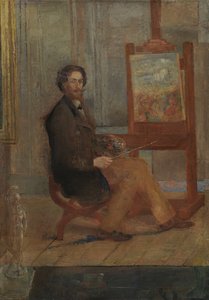
James Ensor
1860 - 1949 , Belgium
Lühikest infot
- Artistic Movement Or Style: Expressionism, Surrealism
- Artists Who Influenced This Artist:
- Bruegel the Elder
- Francisco Goya
- Whistler
- Date Of Birth: April 13, 1860
- Date Of Death: November 19, 1949
- Full Name: James Sidney Edouard Ensor
- Nationality: Belgian
- Notable Artworks:
- The Scandalized Masks
- Skeletons Fighting...
- Christ's Entry into Brussels
- Place Of Birth: Ostend, Belgium
Sarnased artiklid
James Abbott McNeill Whistler: 25 meistriteost kunstikollektsioonis | AllPaintingsStore.com
Avastage James Abbott McNeill Whistler'i 25 võrratut meistriteost! Sukelduge esteetilisse kunstimaailma, õppige tema maalitehnikatest ja leidke täiuslik seina kaunistus AllPaintingsStore.com-ist. Kunstikollektsioonid & reprodutsioonid.
Francisco Goya Parimad Teosed: Hingematvad Kunstiteosed Kodudesse – AllPaintingsStore
Avastage Francisco Goya 25 parimat teost! Sukelduge Hispaania kunsti, romantismisse ja portree maalide maailma. Leidke inspiratsiooni kodudekoriks AllPaintingsStore.com-is – kvaliteetsed kunstireproduktsioonid ja kollektsioonid.

James Ensor's Grotesque Visions: Social Commentary & Artistic Innovation
Explore the unsettling yet captivating world of James Ensor, a pioneer of Expressionism. Discover his satirical masterpieces, symbolic imagery & lasting influence on modern art. High-quality reproductions available at AllPaintingsStore.

About Us
Discover our story! We bring world-class art into your life through expert curation, personalized creations, and free previews. Trusted by individuals and businesses since 2000.
Sir Alfred Munnings' Masterpieces: 25 Paintings That Define Equine Art | AllPaintingsStore
Explore 25 iconic Sir Alfred Munnings paintings! Discover the beauty of British Impressionism, equine art & rural England. Find museum-quality reproductions and elevate your home decor with AllPaintingsStore. Explore the full collection online.


