Rahatagastus garantii · 100 päeva Tasuta kohaletoimetamine üle maailma
449587teosed 30613kunstnikud 4660muuseumid 32keeled
Catalogue entry

Rooftops of Ostend

Acrylic.

Fig. 1. James Ensor, Rooftops of Ostend. Shown as the reproduction you are specifying: , .

§ 1Catalogue data

§ 2Abstract

Kogumisobjekti kirjeldus

James Ensor’s haunting Rooftops of Ostend captures the melancholic beauty of a Belgian cityscape under a dramatic cloudy sky—a masterful example of Symbolism's exploration of psychological depth and unsettling realism.

Kunstniku elulugu

James Ensor oli Belgia maalikunstnik ja graafik, kes tunnetaan erityisesti häikäisevästä groteskista kuvastuksestaan sekä karnevaalimaskeista että luurangosta. Hän oli ekspressionismi ja surrealismi liikkeen varhainen pioneeri ning jätkus kunstilinnakena maailmale suurteoseksi.

§ 3Commentary

A Window into Ostend’s Soul: James Ensor's Rooftops

  • James Ensor (1860-1949), a Belgian artist born in Ostend, stands as a singular figure within the Symbolist movement. His work transcends mere representation; it delves into psychological landscapes and confronts viewers with unsettling truths about human existence.
  • “Rooftops of Ostend,” painted circa 1888-1900, exemplifies Ensor’s distinctive style—characterized by bold lines, flattened perspectives, and a deliberate rejection of academic conventions. The canvas captures the cityscape of Ostend with remarkable precision, yet simultaneously imbues it with an atmosphere of melancholy and contemplation.

Composition and Technique: Embracing Distortion for Emotional Resonance

  • Ensor’s technique is marked by a masterful use of impasto—thickly applied paint—creating textural surfaces that heighten the visual impact. The artist employs a muted palette dominated by earthy tones, punctuated by splashes of crimson and ochre, mirroring the dramatic interplay between light and shadow.
  • Notably, Ensor deliberately distorts architectural forms, flattening planes and exaggerating contours to convey a sense of unease and disorientation. This stylistic choice isn’t merely decorative; it serves as a conduit for expressing psychological anxieties—a hallmark of Symbolist art.

Historical Context: The Shadow of Modernity

  • "Rooftops of Ostend" emerged during the late Victorian era and coincided with burgeoning industrialization and urbanization. Ensor’s depiction reflects anxieties surrounding societal change, mirroring broader concerns about the loss of innocence and the encroaching influence of modernity.
  • Ostend itself was a prominent port city undergoing rapid transformation—a hub for trade and tourism—and Ensor's painting captures this dynamism while simultaneously hinting at its darker undercurrents. The inclusion of a clock symbolizes the relentless march of time, emphasizing the ephemeral nature of human experience.

Symbolism Beyond Surface Appearance: Masks and Disguise

  • As with much of Ensor’s oeuvre, “Rooftops of Ostend” is laden with symbolic references. The prominent clock serves as a visual motif for confronting mortality—a recurring theme in Ensor's work. Furthermore, the artist’s penchant for masks and disguise reflects his preoccupation with concealing identity and exploring hidden emotions.
  • The overcast sky contributes to the painting’s mood of introspection and apprehension. It symbolizes obscurity and uncertainty, mirroring the psychological complexities portrayed within the cityscape itself—a space where appearances deceive and truths remain concealed.

Emotional Impact: A Portrait of Existential Disquiet

  • "Rooftops of Ostend" resonates with viewers on a visceral level, eliciting feelings of melancholy and unease. Ensor’s masterful manipulation of color and texture compels contemplation—inviting us to confront uncomfortable realities about human condition.
  • More than just a depiction of a place, the painting is an exploration of inner turmoil—a testament to Ensor's ability to translate psychological states into visual form. It remains a powerful reminder that art can transcend mere representation and communicate profound truths about our shared experience.

Korduvad küsimused

Kuhu James Ensor loomingulisse perioodi kuulub teos "Rooftops of Ostend"?

Teos "Rooftops of Ostend" esindab kunstniku James Ensor loovperioodi Mature Period.

Milline on teose „Rooftops of Ostend“, autor James Ensor värvitooni intensiivsus?

Teose "Rooftops of Ostend" värvitoon on Balanced. Intensiivsus kirjeldab värvide tugevust ja ergitust.

Milline on teose "Rooftops of Ostend" atmosfäär?

Teose "Rooftops of Ostend" atmosfäär on Dramatic."
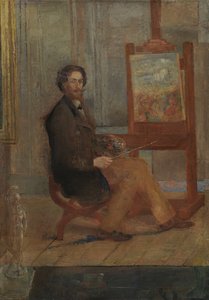
§ 4The artist

James Ensor

James Ensor

1860 - 1949, Belgium

Quick facts about James Ensor

  • Artistic Movement Or Style: Expressionism, Surrealism
  • Artists Who Influenced This Artist:
    • Bruegel the Elder
    • Francisco Goya
    • Whistler
  • Date Of Birth: April 13, 1860
  • Date Of Death: November 19, 1949
  • Full Name: James Sidney Edouard Ensor
  • Nationality: Belgian
  • Notable Artworks:
    • The Scandalized Masks
    • Skeletons Fighting...
    • Christ's Entry into Brussels
  • Place Of Birth: Ostend, Belgium

Kunstniku elulugu

James Ensor: A Pioneer of Modernism

James Sidney Edouard, Baron Ensor (Ostend, 13 April 1860 – 19 November 1949) was a Flemish-Belgian painter and printmaker, an important influence on expressionism and surrealism who lived in Ostend for almost his entire life. He was associated with the artistic group Les XX.

Early Life and Artistic Training

James Ensor’s father, James Frederic Ensor, born in Brussels to English parents, was a cultivated man who studied engineering in England and Germany. Ensor's mother, Maria Catharina Haegheman, was Belgian. Ensor himself lacked interest in academic study and left school at the age of fifteen to begin his artistic training with two local painters. From 1876, he attended drawing lessons at the College of the Blessed Virgin in Ostend.

The Impressionist Influence and Initial Works

Ensor’s early paintings reflected a more traditional approach, depicting scenes of everyday life rendered in somber tones. Works like *Russian Music* (1881) and *The Drunkards* (1883) reveal a nascent talent grappling with realism, but even within these early pieces, hints of the unsettling imagery to come are present. A pivotal shift occurred as Ensor’s palette brightened and his subject matter grew increasingly bizarre. He began to populate his canvases with carnivals, skeletons, puppets, and allegorical figures—a world steeped in fantasy and often bordering on the grotesque. This wasn't merely a stylistic change; it was a deliberate exploration of the darker aspects of human existence, a rejection of societal norms, and an embrace of the irrational.

Les XX and Artistic Innovation

In 1883 Ensor, along with a few older students of the Brussels‘ academy, would take leave of the artists‘ association *L'Essor*. They established the artists‘ association* Les Vingt*. This will play an important role in the dissemination of various international *avant-garde* movements. Ensor’s father’s shop in Ostend was a main purveyor of carnival paraphernalia, and this fascination would permeate his artwork.

Major Paintings and Recurring Themes

Throughout his career, Ensor produced a series of works that continue to shock and fascinate audiences today. *The Scandalized Masks* (1883) stands as an early testament to his fascination with the power of disguise and its ability to reveal hidden emotions. Perhaps his most controversial work, *Christ’s Entry into Brussels* (1888-1889), remains a powerful satire of religious hypocrisy and societal indifference—a painting initially met with harsh criticism but now celebrated as a masterpiece. The unsettling image of Christ entering a city teeming with grotesque masked figures is a potent commentary on the disconnect between spiritual ideals and human behavior.

Legacy and Influence

James Ensor was recognized as a pivotal figure in the transition from 19th-century Symbolism to early 20th-century Expressionism and Surrealism—a true pioneer of modern art. His fearless exploration of the subconscious, his embrace of grotesque imagery, and his rejection of academic conventions paved the way for future generations of artists who dared to challenge artistic norms. He is remembered as a visionary artist whose uncompromising vision continues to inspire contemplation and debate.

§ 5Comparanda

§ 6Questions

Teave teose kohta

  • Artistic style: Expressionist
  • Movement: Symbolism
  • Influences: Romanticism
  • Title: Rooftops of Ostend
  • Medium: Oil on canvas

§ 7Cite this entry

AllPaintingsStore.com, “James Ensor, Rooftops of Ostend”, https://allpaintingsstore.com/et/art/james-ensor-rooftops-of-ostend-8BWRU4-en/ArtistReproduction/ (accessed 3 oktoober 2026).

§ 8The reproduction

Käsitsi valmistatud õlimaalireproduktsioon

Meie kunstnike poolt tellimusel valmistatud käsitsi maalitud õli-kainaste teos teie soovitud suuruses ja raamis. ( Lülita trükkitoodetele Lülita digitaalse pildi juurde)

It is specified on the order sheet in the margin; the present state of that sheet reads as follows.

Rooftops of Ostend

Reproduktsiooni tehnika

Reproduktsiooni suurus

-

Eelistatud tippkunstnik

Rohkem detaile, peenust ja lisatootmisaega

-

Reproduktsiooni raamivalikud

-

-

Kunstiteoste või reproduktsioonide puhul, mille üks külg on üle 105 cm (umbikmolt 41 tolli), saadetakse raam kirjal asendis, la Dismantlitud komplektina. See meetod tagab ohutuse kohaletoimetamisel ja väldib transpordil tekkivaid kahjustusi.

Vajalik professionaalne kokkupanek – see ei ole isetegevusega valmistamiseks mõeldud toode.
Komplekt tuleb kokku panna ja lõvet pingutada kogemusega professionaalse raamija, kasutades puiduliim (ei kuulu komplekti), lõvetpingi ja klempe, et hoida raami kande mustad õigena liimi kuivamisaja jooksul. Vale kokkupanek või ebaühtlane lõvetping võib kunstiteost püsivalt kahjustada ning seda ei katta meie garantii.

  • Kaasatud on kõik tahked puidust liistud, täpselt lõigatud vastavaks suuruseks.

  • Kokku panemiseks kasutatakse lisatud kruvisid ning nurkade liimamiseks vajalikku puuliima, mida ei ole komplektis ja mida peab raamivalmistaja ise hankima.

  • Vajalik on kasutada professionaalseid tööriistu, mis ei kuulu komplekti: lõvetelapide pingist (pingutaja) ja klambreid, et hoida raami puidu nurgas õigena liimi kuivamisaja jooksul.

Oluline:
Nurgaliimamiseks on vaja puiduliim, liimimine peab toimuma klempide all kuni liim on täielikult kuivanud ning kokku monteeritud raami kanga pingutamiseks on vajalik kanga pingutustang. Kumbki neist ei kuulu komplekti. Palun veenduge enne selle suuruse tellimist, et teil on saadaval kogenud professionaalne raamistaja.

Nimesildikiri

-

-

Kaitsevärnitsus

Läikiv lakk (muudab värvid elavamaks ning kaitseb valgust ja niiskust eest)

-

Kohanda oma teost

Näiteid muudatuste kohta: Asenda nägu kliendi fotoga; Lisa lemmikloom (nt asenda kass koeraga); Lisa taustale peidetud sõnum; Muuda tausta maastikku või elemente.

-

Kiire tarne

Ülemaailmne tarne riiki 3–4 nädalaga tavalise 5 nädala asemel. (31 oktoober). Kvaliteedis kompromisse ei tehta.

-

Kiirsaatmine

Ülemaailmne tarne () 5 nädala jooksul. (7 november).

Sisse kuuluv

Koguhind

€ 229

Included with every order

  • Tasuta ekspresssaatmine üle maailma
  • Kõrgekvaliteediline lina-kangas
  • Täielik transpordikindlustus
  • Tollimaksude tagastamise garantii
  • Värvitoime täpsuse garantii
  • 100 päeva tagastusõigus (ainult valmistusdefektide korral)
  • 100% raha tagasi garantii
  • Hulgusoodustus
Order sheet