Rahatagastus garantii · 100 päeva Tasuta kohaletoimetamine üle maailma
449582teosed 30618kunstnikud 4705muuseumid 32keeled
Valuta
    Keel
      Ateljee · Asutatud 2015 · Pariis, Prantsusmaa
      AllPaintingsStore
      allpaintingsstore.com
      Vaata sisu Vaata AR-eelvaadet Lülita trükkitoodetele Ülemineku digitaalse pildi müügi kanalisse Jaga teost
      Detailid Õppekate juhend Lisa lemmikutesse Laadi alla Sarnased teosed Röntgenuuring Slaidietendus Statistika

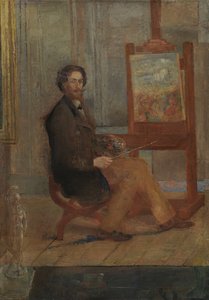
      Self Portrait with Demons

      James Ensor oli Belgia maalikunstnik ja graafik, kes tunnetaan erityisesti häikäisevästä groteskista kuvastuksestaan sekä karnevaalimaskeista että luurangosta. Hän oli ekspressionismi ja surrealismi liikkeen varhainen pioneeri ning jätkus kunstilinnakena maailmale suurteoseksi.

      Käsitsi valmistatud õlimaalireproduktsioon

      Meie kunstnike poolt tellimusel valmistatud käsitsi maalitud õli-kainaste teos teie soovitud suuruses ja raamis. ( Lülita trükkitoodetele Ülemineku digitaalse pildi müügi kanalisse)

      Corner sample of the P118B picture frame: moulded polystyrene, 5 cm wide and 3 cm thick
      P118B 10
      Corner sample of the P118H picture frame: moulded polystyrene, 5 cm wide and 3 cm thick
      P118H 10
      Corner sample of the P118W picture frame: moulded polystyrene, 5 cm wide and 3 cm thick
      P118W 10
      Corner sample of the P438Z picture frame: moulded polystyrene, 5.5 cm wide and 3.5 cm thick
      P438Z 10
      Corner sample of the P508JH picture frame: moulded polystyrene, 7 cm wide and 3.5 cm thick
      P508JH 12
      Corner sample of the P508YH picture frame: moulded polystyrene, 7 cm wide and 3.5 cm thick
      P508YH 12
      Corner sample of the P805H picture frame: moulded polystyrene, 5 cm wide and 3.5 cm thick
      P805H 10
      Corner sample of the P805Z picture frame: moulded polystyrene, 5 cm wide and 3.5 cm thick
      P805Z 10
      Corner sample of the P919BZ picture frame: moulded polystyrene, 7 cm wide and 3.5 cm thick
      P919BZ 10
      Corner sample of the P919G picture frame: moulded polystyrene, 7 cm wide and 3.5 cm thick
      P919G 10
      Corner sample of the P919XJ picture frame: moulded polystyrene, 7 cm wide and 3.5 cm thick
      P919XJ 10
      Corner sample of the P959ZH picture frame: moulded polystyrene, 5 cm wide and 3 cm thick
      P959ZH 10
      Corner sample of the P968JZ picture frame: moulded polystyrene, 6 cm wide and 4 cm thick
      P968JZ 12
      Corner sample of the W106C picture frame: solid wood, 5 cm wide and 3 cm thick
      W106C 8
      Corner sample of the W218G picture frame: solid wood, 5 cm wide and 3 cm thick
      W218G 10
      Corner sample of the W218JH picture frame: solid wood, 5 cm wide and 3 cm thick
      W218JH 8
      Corner sample of the W218Y picture frame: solid wood, 5 cm wide and 3 cm thick
      W218Y 10
      Corner sample of the W307PJ picture frame: solid wood, 6 cm wide and 3 cm thick
      W307PJ 10
      Corner sample of the W316G picture frame: solid wood, 6 cm wide and 3 cm thick
      W316G 10
      Corner sample of the W316PJ picture frame: solid wood, 6 cm wide and 3 cm thick
      W316PJ 8
      Corner sample of the W316Y picture frame: solid wood, 6 cm wide and 3 cm thick
      W316Y 10
      Corner sample of the W398PJ picture frame: solid wood, 5 cm wide and 3 cm thick
      W398PJ 8
      Corner sample of the W4111J picture frame: solid wood, 6.5 cm wide and 3.5 cm thick
      W4111J 10
      Corner sample of the W500HY picture frame: solid wood, 7 cm wide and 5 cm thick
      W500HY 15
      Corner sample of the W500JH picture frame: solid wood, 7 cm wide and 5 cm thick
      W500JH 15
      Corner sample of the W692G picture frame: solid wood, 8 cm wide and 4 cm thick
      W692G 12
      Corner sample of the W849H picture frame: solid wood, 5 cm wide and 3 cm thick
      W849H 8
      Corner sample of the W940BG picture frame: solid wood, 7.5 cm wide and 4.5 cm thick
      W940BG 15
      Corner sample of the W953PJ picture frame: solid wood, 6 cm wide and 3.5 cm thick
      W953PJ 8

      Standardne suurus
      kohandatud
      CM
      INCH

      Vali meie eelmääratud suurused, mis vastavad teose algupärastele proportsioonidele.

      laius
      kõrgus

      Sa võite sisestada oma mõõtmed konkreetse raami või ruumi sobivuse tagamiseks. Kui teie valitud suurus ei vasta originaalpildi proportsioonidele, siis kärvime kunstiteost või laiendame maali täiendavate käsitsi maalitud elementidega. Enne tootmise algust saadetakse teile heakskiitmiseks digitaalne eelvaade.
      Palun pidage meeles, et ekraanil kuvatav eelvaade ei kajasta tegelikku kärpimist või laiendamist. Ainult eelvaade näitab täpselt lõplikku kompositsiooni.
      Kuigi on saadaval kohandatud suurused, soovitame originaalproportsioonide säilimiseks valida mõõdud eelmääratletud nimekirjast.

      Näited muudetavatest elementidest: asenda nägu kliendi fotoga; lisa lemmikloom (nt asenda kass koeraga); lisa taustale peidetud sõnum; muuda tausta maastikku või elemente.
      Pärast tellimust saadab AllPaintingsStore.com meeskond kliendile e-posti juhised ning esitab eelvaate kavandi

      Maailmline tarne 3–4 nädala jooksul tavalise 5 nädala asemel. (9 oktoober). Kvaliteedis kompromisse ei tehta.

      Tasuta ekspresssaatmine üle maailma
      Kõrgekvaliteediline lina-kangastest muld
      Täielik transpordikindlustus
      Tollimaksude tagastamise garantii
      Värvitoime täpsuse garantii
      100 päeva tagastusõigus (ainult defektide korral)
      100% raha tagasi garantii
      Hulgusoodustus

      Kogu summa

      € 222

      Self Portrait with Demons

      Reproduktsiooni materjal

      Reproduktsiooni mõõtmed

      -

      Lõppsumma

      € 222

      Teave teose kohta

      • Location: The Art Institute of Chicago
      • Notable elements or techniques: Detailed demonic imagery; Expressionist brushstrokes
      • Influences: German Expressionism
      • Movement: Symbolism
      • Title: Self Portrait with Demons
      • Year: 1898
      • Artistic style: Dark, unsettling realism

      Kunstiteaduse kvartett

      Iga küsimuse kohta on ainult üks õige vastus.

      Küsimus 1:
      What is the primary subject matter of James Ensor’s ‘Self Portrait with Demons’?
      Küsimus 2:
      The Salon des Cent exhibition, where this painting was showcased, is significant for what reason?
      Küsimus 3:
      James Ensor’s artistic style is characterized by:
      Küsimus 4:
      What visual element contributes to the dramatic atmosphere of ‘Self Portrait with Demons’?
      Küsimus 5:
      Based on the image description, how would you describe Ensor's depiction of the demons?

      James Ensor’s Disturbing Vision: Exploring “Self Portrait with Demons”

      James Ensor (1860-1949), a Belgian artist whose oeuvre remains profoundly unsettling yet undeniably captivating, stands as a singular figure in the late nineteenth and early twentieth centuries. His work consistently confronts viewers with uncomfortable truths about human psychology and societal anxieties—a characteristic powerfully embodied in “Self Portrait with Demons,” painted in 1888. This haunting image transcends mere self-representation; it’s an interrogation of identity itself, layered with potent symbolism that speaks to the pervasive influence of folklore and psychological torment.
      • Subject Matter & Composition: Ensor presents himself as a man seated before a dark backdrop populated by grotesque figures—demons, goblins, and monstrous faces—that swirl around him like an oppressive aura. The artist’s gaze is direct, unflinching, capturing a moment of profound introspection amidst this chaotic visual landscape.
      • Style & Technique: Ensor's style aligns with Symbolism, rejecting Impressionistic optical realism in favor of expressive brushstrokes and muted color palettes. He employs a technique reminiscent of woodcuts and engravings—a deliberate choice that contributes to the artwork’s starkness and reinforces its thematic concerns. The textured surface of the painting enhances the sense of unease and invites contemplation.
      The Historical Context: Painted during Ensor's formative years, “Self Portrait with Demons” reflects the anxieties prevalent in European intellectual circles at the time—specifically, a fascination with Freud’s burgeoning psychoanalytic theories. The depiction of demons isn’t simply fantastical; it represents internalized fears and repressed desires—a cornerstone of Ensor’s exploration of the human psyche. Furthermore, the painting draws upon Germanic folklore and mythology, referencing figures like Loki and trolls – symbols of chaos and disruption that underscore the artist's preoccupation with confronting darkness within oneself.
      • Symbolism & Emotional Impact: The demons surrounding Ensor serve as metaphors for internal struggles—doubt, fear, and vulnerability. Their positioning emphasizes the artist’s isolation and his confrontation with forces beyond rational comprehension. More than just a portrait, “Self Portrait with Demons” is an emotional landscape—a visceral depiction of psychological turmoil that continues to resonate with audiences today.
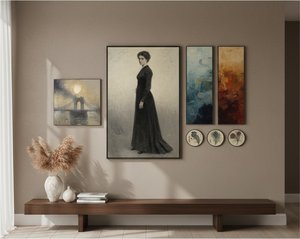
      • Interior Design Considerations: Reproductions of Ensor's work can inject a dramatic element into interior spaces, provoking thought and stimulating conversation. The artwork’s dark palette and unsettling imagery create a powerful contrast against lighter backgrounds, offering an opportunity for curators and designers to explore themes of introspection and confronting hidden anxieties.
      Concluding Remarks: James Ensor's “Self Portrait with Demons” remains a masterpiece of Symbolist art—a testament to his ability to distill complex psychological ideas into a visually arresting image. Its enduring power lies in its unflinching gaze at the darker recesses of human experience, prompting viewers to confront their own demons and appreciate the profound beauty found within unsettling contemplation.

      Küsimused ja vastused

      Kas saan tellida teose "Self Portrait with Demons" õli-reproduktsiooni?

      Teose „Self Portrait with Demons“, autor James Ensor käsitsi maalatud reproduktsioone müüakse saidil see veebileht: käsitsi maalatud õlireproduktsioon linaelapale, tellimiseks kasutada see leht.

      Kust saan osta teose „Self Portrait with Demons“, autor James Ensor trükki?

      Teose „Self Portrait with Demons“, autor James Ensor trüket saate tellida otse lehelt see leht: kunstiprint puuvillalõikel}}^{\text{canvas}}$ või arhiveeritaval kangaspaberil.

      Millises tehnikas on teos „Self Portrait with Demons“, autor James Ensor valmistatud?

      Teose "Self Portrait with Demons" tehnika on Acrylic On Canvas."

      Kes on teose "Self Portrait with Demons" kunstnik?

      Teose "Self Portrait with Demons" autoriks on mõeldud James Ensor.

      Millist väripaletti teoses „Self Portrait with Demons“, autor James Ensor on kasutatud?

      Teose „Self Portrait with Demons“, autor James Ensor väripalett on kirjeldatud kui Neutrals. See on lühike kirjeldus teose värvide kohta.

      Millist tunnet tekitavad teose „Self Portrait with Demons“, autor James Ensor värvid?

      Teos „Self Portrait with Demons“, autor James Ensor ühendab endas Neutrals värvipaletti ja Mysterious toonist.

      Kas ma saan teost „Self Portrait with Demons“, autor James Ensor enne tellimist eelvaatata?

      Teavet lehel Eelvaade teose "Self Portrait with Demons" kohta võimaldab teil teost enne tellimist eelvaatata.


      Kunstniku elulugu

      James Ensor: A Pioneer of Modernism

      James Sidney Edouard, Baron Ensor (Ostend, 13 April 1860 – 19 November 1949) was a Flemish-Belgian painter and printmaker, an important influence on expressionism and surrealism who lived in Ostend for almost his entire life. He was associated with the artistic group Les XX.

      Early Life and Artistic Training

      James Ensor’s father, James Frederic Ensor, born in Brussels to English parents, was a cultivated man who studied engineering in England and Germany. Ensor's mother, Maria Catharina Haegheman, was Belgian. Ensor himself lacked interest in academic study and left school at the age of fifteen to begin his artistic training with two local painters. From 1876, he attended drawing lessons at the College of the Blessed Virgin in Ostend.

      The Impressionist Influence and Initial Works

      Ensor’s early paintings reflected a more traditional approach, depicting scenes of everyday life rendered in somber tones. Works like *Russian Music* (1881) and *The Drunkards* (1883) reveal a nascent talent grappling with realism, but even within these early pieces, hints of the unsettling imagery to come are present. A pivotal shift occurred as Ensor’s palette brightened and his subject matter grew increasingly bizarre. He began to populate his canvases with carnivals, skeletons, puppets, and allegorical figures—a world steeped in fantasy and often bordering on the grotesque. This wasn't merely a stylistic change; it was a deliberate exploration of the darker aspects of human existence, a rejection of societal norms, and an embrace of the irrational.

      Les XX and Artistic Innovation

      In 1883 Ensor, along with a few older students of the Brussels‘ academy, would take leave of the artists‘ association *L'Essor*. They established the artists‘ association* Les Vingt*. This will play an important role in the dissemination of various international *avant-garde* movements. Ensor’s father’s shop in Ostend was a main purveyor of carnival paraphernalia, and this fascination would permeate his artwork.

      Major Paintings and Recurring Themes

      Throughout his career, Ensor produced a series of works that continue to shock and fascinate audiences today. *The Scandalized Masks* (1883) stands as an early testament to his fascination with the power of disguise and its ability to reveal hidden emotions. Perhaps his most controversial work, *Christ’s Entry into Brussels* (1888-1889), remains a powerful satire of religious hypocrisy and societal indifference—a painting initially met with harsh criticism but now celebrated as a masterpiece. The unsettling image of Christ entering a city teeming with grotesque masked figures is a potent commentary on the disconnect between spiritual ideals and human behavior.

      Legacy and Influence

      James Ensor was recognized as a pivotal figure in the transition from 19th-century Symbolism to early 20th-century Expressionism and Surrealism—a true pioneer of modern art. His fearless exploration of the subconscious, his embrace of grotesque imagery, and his rejection of academic conventions paved the way for future generations of artists who dared to challenge artistic norms. He is remembered as a visionary artist whose uncompromising vision continues to inspire contemplation and debate.

      James Ensor

      James Ensor

      1860 - 1949 , Belgium

      Lühikest infot

      • Artistic Movement Or Style: Expressionism, Surrealism
      • Artists Who Influenced This Artist:
        • Bruegel the Elder
        • Francisco Goya
        • Whistler
      • Date Of Birth: April 13, 1860
      • Date Of Death: November 19, 1949
      • Full Name: James Sidney Edouard Ensor
      • Nationality: Belgian
      • Notable Artworks:
        • The Scandalized Masks
        • Skeletons Fighting...
        • Christ's Entry into Brussels
      • Place Of Birth: Ostend, Belgium
      Avastage teoseid, mis on koondatud teemade, stiilide ja omaduste kaupa.