Saada
Saada Jaga
Jaga
 Teave teose kohta

 Laadi alla
 Sarnased teosed
 Slaidietendus
Strange Insects


 Loe lähemalt
Giclée / Kunstiprint
Muuseumikvaliteediga giclée- või kangasprint kiire tootmisega ja paindlikud viimistlusvõimalused. ( Osta käsitsi maalitud maal Osta pilt)




































Vali meie eelmääratud suurused, mis vastavad teose algupärastele proportsioonidele.

Saate sisestada oma mõõdud, et need sobiks konkreetse raami või ruumi sisse. Kui valitud suurus ei vasta originaalteose proportsioonidele, lõigame teose ära või laiendame pilti peegeldatud või ühtlase servaga. Enne tootmisprotsessi algust saadetakse Teie kinnitamiseks digitaalne näidis.
Palun märka, et ekraanil kuvatav eelvaade ei kajasta tegelikku lõigamist või laiendamist. Ainult näidis kujutab täpselt lõplikku kompositsiooni.
Kuigi erimõõdu on saadaval, soovitame originaaproportsioonide säilitamiseks valida mõõt ette määratud nimekirjast.
Ülemaailmne tarne () 2 nädala jooksul, tavalise 4/5 nädala asemel. (12 august)

Tasuta ekspresssaatmine üle maailma

Kõrgekvaliteediline linakangas

Täielik transpordikindlustus

Tollimaksude tagastamise garantii

Värvitoime täpsuse garantii

60-päevane tagastusõig: ainult tootmisdefektide korral

100% raha tagasi garantii

Hulgusoodustus
 Klaasivalik on saadaval ainult suuruses kuni 110 cm

Strange Insects
Giclée / Kunstiprint
Reproduktsiooni suurus
-


Kogusumma
$ 64
Kogumuse kirjeldus
James Ensor's 'Strange Insects': A Descent into the Uncanny
James Ensor’s ‘Strange Insects,’ created around 1920, stands as a profoundly unsettling testament to the artist’s lifelong preoccupation with the grotesque and the psychological. This monochrome drawing, depicting two figures – one conventionally dressed, the other disturbingly insect-like – plunges the viewer into a world of anxiety and distorted perception, hallmarks of Ensor's distinctive artistic vision. The image immediately evokes a sense of unease, fueled by the unsettling juxtaposition of human and non-human forms. It’s not merely a drawing; it’s an invitation to confront the darker aspects of the human condition, rendered with a masterful command of line and shadow.
- Subject Matter: The central figures represent a confrontation between the familiar and the alien. The woman in the dress embodies societal norms and perhaps even a fragile sense of order, while her companion – a towering, insect-like figure – represents primal fears, anxieties, and the potential for monstrous transformation.
- Style & Technique: Ensor’s style is characterized by its raw emotional intensity and deliberate distortion. The drawing employs thick, expressive lines, creating a sense of movement and agitation. The use of black and white amplifies the dramatic effect, stripping away any distractions and focusing attention on the unsettling forms.
A Brussels Workshop & the Seeds of Discontent
Ensor’s artistic journey was deeply rooted in his upbringing and experiences. Born in Ostend, Belgium, in 1860, to an English father and a Belgian mother, he navigated a world of cultural contrasts that would profoundly shape his work. His family's souvenir shop – a repository of carnival masks, shells, and other curiosities – served as a crucial source of inspiration, fostering his fascination with disguise, illusion, and the unsettling beauty of the macabre. This early exposure to theatricality and the exotic undoubtedly contributed to the recurring motifs of masks and monsters that populate his oeuvre. His initial resistance to the rigid academic training at the Académie Royale des Beaux-Arts in Brussels reflects a desire for artistic freedom and an unwillingness to conform to established conventions.
Symbolism & Theatrical Horror
'Strange Insects' is laden with symbolic weight, echoing Ensor’s broader thematic concerns. The insect figure can be interpreted as representing the subconscious, the repressed, or perhaps even societal anxieties about disease and decay. The bird in the upper left corner adds another layer of complexity – often associated with omens and warnings, it could symbolize impending doom or a distorted sense of freedom. Ensor frequently employed theatrical elements in his work, drawing inspiration from carnivals, circuses, and religious processions. This influence is evident in the dramatic composition and the heightened emotional intensity of ‘Strange Insects,’ creating an atmosphere akin to a nightmare vision.
Emotional Impact & Artistic Legacy
Ensor’s art continues to resonate with viewers today due to its unflinching exploration of human anxieties and its masterful manipulation of form and emotion. 'Strange Insects' is not a comfortable image; it demands engagement, provoking a visceral response rooted in fear and fascination. It exemplifies Ensor’s ability to translate psychological states into visual terms, creating works that are both deeply personal and universally relevant. As a hand-painted reproduction, this artwork offers an unparalleled opportunity to experience the full force of Ensor's vision – a chilling reminder of the darkness that resides within us all.
Sarnased teosed


Kunstniku elulugu
James Ensor: A Pioneer of Modernism
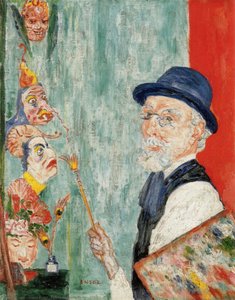
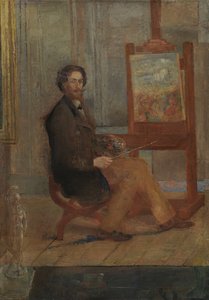
James Sidney Edouard, Baron Ensor (Ostend, 13 April 1860 – 19 November 1949) was a Flemish-Belgian painter and printmaker, an important influence on expressionism and surrealism who lived in Ostend for almost his entire life. He was associated with the artistic group Les XX.
Early Life and Artistic Training
James Ensor’s father, James Frederic Ensor, born in Brussels to English parents, was a cultivated man who studied engineering in England and Germany. Ensor's mother, Maria Catharina Haegheman, was Belgian. Ensor himself lacked interest in academic study and left school at the age of fifteen to begin his artistic training with two local painters. From 1876, he attended drawing lessons at the College of the Blessed Virgin in Ostend.
The Impressionist Influence and Initial Works
Ensor’s early paintings reflected a more traditional approach, depicting scenes of everyday life rendered in somber tones. Works like *Russian Music* (1881) and *The Drunkards* (1883) reveal a nascent talent grappling with realism, but even within these early pieces, hints of the unsettling imagery to come are present. A pivotal shift occurred as Ensor’s palette brightened and his subject matter grew increasingly bizarre. He began to populate his canvases with carnivals, skeletons, puppets, and allegorical figures—a world steeped in fantasy and often bordering on the grotesque. This wasn't merely a stylistic change; it was a deliberate exploration of the darker aspects of human existence, a rejection of societal norms, and an embrace of the irrational.
Les XX and Artistic Innovation
In 1883 Ensor, along with a few older students of the Brussels‘ academy, would take leave of the artists‘ association *L'Essor*. They established the artists‘ association* Les Vingt*. This will play an important role in the dissemination of various international *avant-garde* movements. Ensor’s father’s shop in Ostend was a main purveyor of carnival paraphernalia, and this fascination would permeate his artwork.
Major Paintings and Recurring Themes
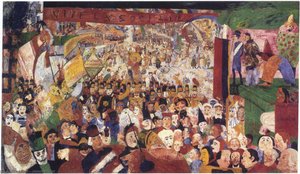
Throughout his career, Ensor produced a series of works that continue to shock and fascinate audiences today. *The Scandalized Masks* (1883) stands as an early testament to his fascination with the power of disguise and its ability to reveal hidden emotions. Perhaps his most controversial work, *Christ’s Entry into Brussels* (1888-1889), remains a powerful satire of religious hypocrisy and societal indifference—a painting initially met with harsh criticism but now celebrated as a masterpiece. The unsettling image of Christ entering a city teeming with grotesque masked figures is a potent commentary on the disconnect between spiritual ideals and human behavior.
Legacy and Influence
James Ensor was recognized as a pivotal figure in the transition from 19th-century Symbolism to early 20th-century Expressionism and Surrealism—a true pioneer of modern art. His fearless exploration of the subconscious, his embrace of grotesque imagery, and his rejection of academic conventions paved the way for future generations of artists who dared to challenge artistic norms. He is remembered as a visionary artist whose uncompromising vision continues to inspire contemplation and debate.
James Ensor
1860 - 1949 , Belgium
Lühikesed faktid
- Artistic Movement Or Style: Expressionism, Surrealism
- Artists Who Influenced This Artist:
- Bruegel the Elder
- Francisco Goya
- Whistler
- Date Of Birth: April 13, 1860
- Date Of Death: November 19, 1949
- Full Name: James Sidney Edouard Ensor
- Nationality: Belgian
- Notable Artworks:
- The Scandalized Masks
- Skeletons Fighting...
- Christ's Entry into Brussels
- Place Of Birth: Ostend, Belgium
Seotud artiklid

The Art of Emphasis: Scaling Artwork for Impactful Statement Walls
Elevate your interiors with impactful statement walls! Expert guide on scaling artwork for perfect proportions & design harmony. Custom solutions & free consultations at AllPaintingsStore.

Max Ernsti 25 parimat teost: Surrealismi meistriteosed teie interjööri
Avastage Max Ernsti 25 parimat teost! Sukelduge surrealismi ja dadaismi maailma, tutvuge kunstniku lugude ja tehnikatega. Leidke täiuslik maali oma interjööri AllPaintingsStore.com-ist – kvaliteetsed kunstireprodutsioonid ja kollektsioonid.
Etching Masters: 10 Legendary Prints That Revolutionized Art | AllPaintingsStore
Journey through 10 legendary etching masterpieces by Rembrandt, Dürer & Goya. Explore the history of printmaking and discover timeless art for your home. Find museum-quality reproductions at AllPaintingsStore.com.

Surrealist Painting Masterpieces: 10 Artworks That Redefined Reality | AllPaintingsStore
Journey into the dreamlike world of Surrealism! Explore 10 masterpieces by Dali, Magritte & Miró that redefined art. Discover their stories & find museum-quality reproductions to elevate your home decor on AllPaintingsStore.com.

Transforming Spaces: A Comprehensive Exploration of Wall Decor Through Art History & Contemporary Practice
Explore the art of transforming spaces with our comprehensive guide to wall decor. From historical movements to contemporary trends, discover how to curate impactful interiors and commission bespoke artwork for a truly personalized aesthetic.