


 Vaata sisu
 Jaga teost
 Jaga
Jaga
 Detailid
 Õppekate juhend

 Laadi alla
 Sarnased teosed
 Röntgenuuring
 Slaidietendus
 Statistika
The Dead Cockerel


 Loe lähemalt
Ostke kõrglahutusel ja täiustatud digitaalne pilt, mis on oluliselt parem kui veebilehel näidatud eelvaade.
Iga fail on meie spetsialistide poolt hoolikalt ette valmistatud, kasutades kaasaegseid tööriistu ja professionaalset käsitsi retušeerimist. Tagame, et igal pildil on erakordne selgus, täpne värvitäpsus ja peen detail.
Lõplik fail saadetakse e-posti teel 72 tunni jooksul ning on optimeeritud koheseks kasutamiseks professionaalsetes, toimetuslikes ja trüki keskkondades. See on sama kvaliteet, mida usaldavad tipptasemel disainistuudiod, kirjastused ja galeriid.
Digitaalne pilt
Laadi alla kõrge resolutsiooniga fail isiklikuks vaatamiseks, trükkimiseks ja loomingulisteks projektideks. ( Lülita trükkitoodetele Telli käsitsi maalitud reproduktsioon)
Sisse kuulub iga digitaalse pildi tellimusega
Professionaalne digitaalne kohaletoimetamine, garanteeritud
Valides AllPaintingsStore.com, ei saa sa lihtsalt pilti – saad professionaalselt parandatud digitaalse teose, mida on valmistatud täpsusega ja mis on toetatud rahuldamatusgarantiiga. Siin on kõik, mis sinu tellimusega automaatselt kaasneb:

Kiire e-posti edastus
Teie kõrge resolutsiooniga digitaalne pildifail saadetakse teile e-posti 72 tunni jooksul pärast tellimist – kohe kasutamiseks valmis.

Tehisintellektiga täiustatud digitaalne fail
Teie teos on professionaalselt optimeeritud arenenud tehisintellekti tööriistade ja käsitsi redigeerimise abil, tagades maksimaalse detailitaseme, selguse ja värvitäpsuse.

Tasuta eluaegne uuesti saatmine
Kas kustutasid faili kogukalu unustamisel või kustutamisel? Puudub mure – saad selle uuesti igal ajal ilma lisatasuta.

Puuduvad importimaksud – alati
Nautige oma teoseid koheselt ilma tolli-, maksude või tarnimaskuludeta – digiletchargused on alati maksuvabadud.

Värvitäpsuse garantii
Me tagame, et teie digitaalne pilt kajastaks originaali värve professionaalsete tööriistade ja värvihalduse abil võimalikult täpselt.

100 päeva rahuldamatuse garantii
Kui te ei ole oma digitaalse pildi eest rahul, siis me parandame seda või tagastame 100% summast 100 päeva jooksul – küsimusteta.

100% raha tagastamise garantii
Ei ole rahul? Saate täielise tagastaja 100 päeva jooksul pärast digitaalse faili kättesaamist – ilma küsimusteta.

Suurema tellimuse soodustused
Osta 3 pilti, säästa 10% - Osta 5, säästa 15% - Osta 10+, säästa 20%. Sobib suurepäraselt loomingulisteks projektideks, galeriideks ja agentuurideks.
A Haunting Still Life: Unpacking the Symbolism of James Ensor’s “The Dead Cockerel”
James Ensor's "The Dead Cockerel" isn’t merely a depiction of a deceased bird; it’s a meticulously constructed tableau brimming with unsettling beauty and profound symbolism. Created in 1888, this oil painting stands as a cornerstone of Expressionism, showcasing Ensor’s unique ability to distill intense emotion into a visually arresting composition. The scene unfolds on a dark table, dominated by the stark reality of a dead rooster – its plumage rendered in muted tones, a poignant contrast to the vibrant array of fruits surrounding it. This juxtaposition immediately establishes a tension between life and death, abundance and decay, a central theme that permeates the entire work.
Ensor’s masterful use of color is paramount. He employs a deliberately jarring palette – deep reds, yellows, and blues – to heighten the emotional impact. The apples, oranges, and grapes, rendered with meticulous detail, are not presented as symbols of simple bounty but rather as emblems of transience. Their ripeness hints at impending decay, mirroring the fate of the cockerel itself. The careful arrangement of these fruits, scattered across the table in a seemingly random yet deliberate manner, contributes to the painting’s unsettling atmosphere, drawing the viewer into its complex narrative.
The Expressionist Vision: Distortion and Emotional Intensity
“The Dead Cockerel” is deeply rooted in the principles of Expressionism, a movement that sought to convey subjective emotions rather than objective reality. Ensor, a pioneer of this style, rejected academic conventions in favor of bold brushstrokes, distorted forms, and an intensely personal vision. Notice how the rooster isn’t depicted with anatomical accuracy; its form is simplified, almost skeletal, emphasizing its vulnerability and mortality. The artist's deliberate use of impasto – thick layers of paint applied directly to the canvas – further enhances the painting’s tactile quality and contributes to its overall sense of drama.
Furthermore, Ensor’s background in theatrical design is evident in the painting’s staged quality. It resembles a still life from a macabre performance, reminiscent of carnival scenes he witnessed as a child. The inclusion of masks – though not explicitly visible – echoes his lifelong fascination with disguise and identity, suggesting that beneath the surface of appearances lies a darker, more unsettling truth. The overall effect is one of controlled chaos, mirroring the anxieties and uncertainties of modern life.
Symbolism and Mortality: A Vanitas Still Life
Beyond its aesthetic qualities, “The Dead Cockerel” operates as a sophisticated vanitas still life – a genre traditionally associated with Dutch Golden Age painting. Vanitas paintings served as reminders of mortality and the fleeting nature of earthly pleasures. Here, the dead cockerel functions as the ultimate symbol of this transience, while the fruits represent the ephemeral beauty of life. The inclusion of elements like the hanging rope (suggesting execution) adds another layer of symbolic weight, reinforcing the painting’s meditation on death and decay.
James Ensor's exploration of mortality is particularly poignant given his own personal struggles with illness and loss throughout his life. The painting can be interpreted as a reflection of his anxieties about aging, vulnerability, and the inevitability of death. However, despite its somber subject matter, “The Dead Cockerel” isn’t simply a morbid depiction of decay; it's also imbued with a strange beauty and a sense of quiet contemplation. It invites us to confront our own mortality and appreciate the preciousness of each fleeting moment.
Bringing Ensor Home: A High-Quality Reproduction
AllPaintingsStore offers meticulously crafted, hand-painted reproductions of James Ensor’s “The Dead Cockerel,” capturing the artist's unique style and emotional intensity with unparalleled fidelity. Each reproduction is created by skilled artisans using archival-quality materials, ensuring that it will retain its beauty and vibrancy for generations to come. Whether you are an art collector, a design enthusiast, or simply someone seeking a captivating piece of art to adorn your home, a AllPaintingsStore reproduction of “The Dead Cockerel” is a stunning addition to any collection. Explore our selection today and bring this haunting masterpiece into your world.
Küsimused ja vastused
Millist värviharmoniat esitab „The Dead Cockerel“, autor James Ensor?
Teose "The Dead Cockerel" värviharmonia on Strong Color Unity.
Kuidas kunstiliikumine ja ajastu tegemist on teoses „The Dead Cockerel“, autor James Ensor?
Teos „The Dead Cockerel“, autor James Ensor kuulub Expressionism suunasse ning on loodud autori 19. sajand ajastul.
Kui karge on teose "The Dead Cockerel" väripalett?
Teose "The Dead Cockerel" värvipalett on koonuse方面 Balanced Soft.
Sarnased teosed


Kunstniku biograafia
James Ensor: A Pioneer of Modernism
James Sidney Edouard, Baron Ensor (Ostend, 13 April 1860 – 19 November 1949) was a Flemish-Belgian painter and printmaker, an important influence on expressionism and surrealism who lived in Ostend for almost his entire life. He was associated with the artistic group Les XX.
Early Life and Artistic Training
James Ensor’s father, James Frederic Ensor, born in Brussels to English parents, was a cultivated man who studied engineering in England and Germany. Ensor's mother, Maria Catharina Haegheman, was Belgian. Ensor himself lacked interest in academic study and left school at the age of fifteen to begin his artistic training with two local painters. From 1876, he attended drawing lessons at the College of the Blessed Virgin in Ostend.
The Impressionist Influence and Initial Works
Ensor’s early paintings reflected a more traditional approach, depicting scenes of everyday life rendered in somber tones. Works like *Russian Music* (1881) and *The Drunkards* (1883) reveal a nascent talent grappling with realism, but even within these early pieces, hints of the unsettling imagery to come are present. A pivotal shift occurred as Ensor’s palette brightened and his subject matter grew increasingly bizarre. He began to populate his canvases with carnivals, skeletons, puppets, and allegorical figures—a world steeped in fantasy and often bordering on the grotesque. This wasn't merely a stylistic change; it was a deliberate exploration of the darker aspects of human existence, a rejection of societal norms, and an embrace of the irrational.
Les XX and Artistic Innovation
In 1883 Ensor, along with a few older students of the Brussels‘ academy, would take leave of the artists‘ association *L'Essor*. They established the artists‘ association* Les Vingt*. This will play an important role in the dissemination of various international *avant-garde* movements. Ensor’s father’s shop in Ostend was a main purveyor of carnival paraphernalia, and this fascination would permeate his artwork.
Major Paintings and Recurring Themes
Throughout his career, Ensor produced a series of works that continue to shock and fascinate audiences today. *The Scandalized Masks* (1883) stands as an early testament to his fascination with the power of disguise and its ability to reveal hidden emotions. Perhaps his most controversial work, *Christ’s Entry into Brussels* (1888-1889), remains a powerful satire of religious hypocrisy and societal indifference—a painting initially met with harsh criticism but now celebrated as a masterpiece. The unsettling image of Christ entering a city teeming with grotesque masked figures is a potent commentary on the disconnect between spiritual ideals and human behavior.
Legacy and Influence
James Ensor was recognized as a pivotal figure in the transition from 19th-century Symbolism to early 20th-century Expressionism and Surrealism—a true pioneer of modern art. His fearless exploration of the subconscious, his embrace of grotesque imagery, and his rejection of academic conventions paved the way for future generations of artists who dared to challenge artistic norms. He is remembered as a visionary artist whose uncompromising vision continues to inspire contemplation and debate.
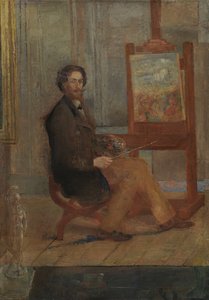
James Ensor
1860 - 1949 , Belgium
Kiired faktid
- Artistic Movement Or Style: Expressionism, Surrealism
- Artists Who Influenced This Artist:
- Bruegel the Elder
- Francisco Goya
- Whistler
- Date Of Birth: April 13, 1860
- Date Of Death: November 19, 1949
- Full Name: James Sidney Edouard Ensor
- Nationality: Belgian
- Notable Artworks:
- The Scandalized Masks
- Skeletons Fighting...
- Christ's Entry into Brussels
- Place Of Birth: Ostend, Belgium

