Rahatagastus garantii · 100 päeva Tasuta kohaletoimetamine üle maailma
449587teosed 30613kunstnikud 4660muuseumid 32keeled
Catalogue entry

Triptych

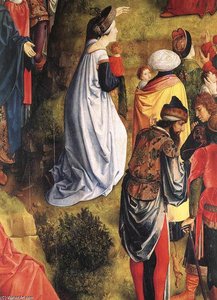
1510. Oil On Panel, 73.0 x 56.0 cm. Wallraf-Richartz-Museum.

Fig. 1. Jan De Beer, Triptych, 1510. Shown as the reproduction you are specifying: , .

§ 1Catalogue data

Mõõtmed
73.0 x 56.0 cm

§ 2Abstract

Kogumisobjekti kirjeldus

A dramatic Renaissance triptych by Jan De Beer featuring rich oil scenes of solemn religious gatherings and grand Gothic architecture that invites you to explore the exquisite detail of this 1510 masterpiece.

Kunstniku elulugu

An Antwerp Mannerist master known for his Triptych. Discover the divine beauty of his religious works today.

§ 3Commentary

A Window into the Devotion of the Northern Renaissance

In the quiet, hallowed atmosphere of the Wallraf-Richartz-Museum in Cologne, there exists a portal to a bygone era of profound spiritual intensity. Jan De Beer’s Triptych, dating from approximately 1510, is not merely a painting but a sacred architectural experience rendered in oil and oak. As one approaches these three panels, the viewer is immediately enveloped by the dramatic grandeur of the Northern Renaissance. This masterpiece serves as a breathtaking testament to an age where art was the primary vessel for divine communication, blending the meticulous realism of the Netherlandish tradition with a burgeoning sense of theatrical scale.

The composition unfolds across three distinct panels, each measuring 73 x 56 cm, creating a rhythmic movement that guides the eye through scenes of solemn religious gatherings. De Beer utilizes the unique format of the triptych to orchestrate a narrative flow, where the central focus is anchored by grand Gothic architecture. These soaring arches and intricate stone details do more than provide a setting; they act as a symbolic bridge between the earthly realm of the figures depicted and the celestial heavens above. The artist’s ability to render light filtering through these imagined cathedrals creates a sense of depth that pulls the observer into the very heart of the liturgy.


Mastery of Light and Netherlandish Detail

The technical brilliance of Jan De Beer lies in his command over the oil medium, a technique that allowed for the exquisite layering of glazes to achieve unparalleled luminosity. Every inch of this work reveals a devotion to detail that is characteristic of the period's finest practitioners. One can observe the heavy, rich textures of ceremonial garments, the subtle sheen on polished surfaces, and the atmospheric haze that lends a sense of profound stillness to the religious assembly. This meticulous approach ensures that even the smallest element—a fold in a cloak or the shadow cast by a pillar—contributes to the overall emotional weight of the piece.

For the discerning collector or interior designer, this triptych offers an unparalleled opportunity to introduce a sense of historical gravity and sophisticated elegance into a space. The interplay of light and shadow within the painting provides a dynamic visual interest that evolves with the ambient lighting of a room. Whether placed in a curated gallery setting or as a focal point in a stately library, the work commands attention through its quiet power rather than through mere ornamentation. It is an invitation to contemplate the intersection of human craftsmanship and spiritual aspiration.


A Timeless Legacy for Modern Interiors

Beyond its historical significance, the Triptych resonates with a contemporary appreciation for storytelling and structural beauty. The piece embodies a sense of "sacred drama," where the solemnity of the figures evokes a meditative state in the viewer. This emotional resonance makes it an ideal choice for those seeking to decorate spaces intended for reflection, study, or high-end hospitality environments that require a touch of Old World prestige.

Owning a high-quality reproduction of such a significant work allows one to preserve the legacy of Jan De Beer within a modern context. It brings the rich textures and the somber, beautiful palette of the 16th century into the present day, offering a sophisticated layer of cultural depth. To display this triptych is to celebrate the enduring human desire to capture the sublime through the mastery of paint and wood.

Korduvad küsimused

Millisele kunstnikule on teos "Triptych" atribuutseeritud?

Teose "Triptych" loovija on Jan De Beer. Selle lehe info kirjeldab Jan De Beer algteost.

Kuidas kontrast ja harmonii "Triptych" teoses ühes tuttuvad?

Teose „Triptych“, autor Jan De Beer väruanalüüs on tuvastatud Statement kontrast ja Strong Color Unity harmoonia.

Kust teose „Triptych“, autor Jan De Beer külastajad pärit on?

Teose "Triptych" jaoks on olemas Statistika leht. See kajastab teose ja kunstniku teiste teoste kuutlikke külastusi riigi ja keele järgi lahutatud statistikaga.

§ 4The artist

Jan De Beer

Jan De Beer

1475 - 1528, Netherlands

Quick facts about Jan De Beer

  • Artistic Movement Or Style: Antwerp Mannerism
  • Full Name: Jan De Beer
  • Notable Artworks:
    • Madonna and Child with a pilgrim and an angel
    • Triptych
    • Annunciation
  • Place Of Birth: Netherlands
  • Date Of Birth: 1475
  • Date Of Death: 1528

Kunstniku elulugu

The Master of Antwerp Mannerism

Jan De Beer stands as a luminous figure from the dawn of the sixteenth century, a period of profound spiritual and artistic transition in the Low Countries. Active primarily in Antwerp, he was a central protagonist in a loose but influential group of painters known as the Antwerp Mannerists. For many years, his individual identity remained shrouded in mystery, as much of his oeuvre was attributed to the Master of the Milan Adoration. It was only through the diligent efforts of art historians in the twentieth century that De Beer was rediscovered and reclaimed from the shadows of anonymity, revealing a painter of immense technical skill and profound religious devotion.

Born into an artistic lineage as the son of the painter Claes de Beer, Jan’s path was paved with the traditions of his craft. His early training under Gillis van Everen provided him with a foundation in the meticulous Netherlandish style, yet he would go on to transcend mere imitation. By 1504, he had achieved the prestigious status of master within the Antwerp Guild of Saint Luke, eventually rising to the esteemed position of dean. His professional life was deeply intertwined with the vibrant, bustling commerce and religious fervor of Antwerp, where he operated a large and productive workshop that shaped the visual language of the era.

A Symphony of Devotion and Detail

The work of Jan De Beer is characterized by a breathtaking marriage of Northern Renaissance realism and a burgeoning sense of theatricality. His compositions often serve as sacred windows, inviting the viewer into moments of divine encounter. In masterpieces such as his Annunciation, one finds a world where the celestial and terrestrial realms breathe in unison. He possessed a singular ability to render the weight of a heavy, ceremonial garment or the delicate, translucent sheen of a wine glass with such precision that the objects seem to possess a life of their own. This mastery of the oil medium allowed him to employ subtle gradations of light and shadow, creating a sense of volume and depth that pulls the observer into the heart of the narrative.

Beyond mere technical virtuosity, De Beer’s art is steeped in a rich tapestry of symbolism. Whether through the presence of birds hinting at divine grace or the architectural grandeur of Gothic arches acting as bridges to the heavens, every element of his work is imbued with meaning. His triptychs, such as those dating from approximately 1510 and 1515, demonstrate a sophisticated command over narrative flow, using multiple panels to orchestrate complex religious dramas that move between intimate indoor sanctuaries and expansive, sunlit vistas. In these works, the meticulous craftsmanship of the Northern tradition meets an emerging interest in human interaction and architectural scale.

Legacy and Historical Significance

Though his name fell into obscurity following the end of the sixteenth century, Jan De Beer’s influence endured through the lasting impact of the Antwerp Mannerist style. He was a contemporary of other great figures like Quentin Matsys and may have even collaborated with landscape innovators such as Joachim Patinir. His ability to maintain fame and respect during his lifetime—as noted by the Italian biographer Lodovico Guicciardini—speaks to the high regard in which he was held by his peers.

Today, De Beer is recognized not merely as a skilled craftsman, but as an artist who captured the very soul of a period in transition. His rediscovered legacy offers a vital link to the spiritual intensity of the early sixteenth century, reminding us of an age where art served as the primary vessel for divine communication and where every brushstroke was an act of profound faith.

§ 5Comparanda

§ 6Questions

Teave teose kohta

  • Artist: Jan De Beer
  • Artistic style: Renaissance
  • Location: Wallraf-Richartz-Museum, Cologne
  • Dimensions: 73 x 56 cm
  • Title: Triptych

§ 7Cite this entry

AllPaintingsStore.com, “Jan De Beer, Triptych (1510)”, https://allpaintingsstore.com/et/art/jan-de-beer-triptych-8XZ9X9-en/ (accessed 3 oktoober 2026).

§ 8The reproduction

Käsitsi valmistatud õlimaalireproduktsioon

Meie kunstnike poolt tellimusel valmistatud käsitsi maalitud õli-kainaste teos teie soovitud suuruses ja raamis. ( Lülita trükkitoodetele Lülita digitaalse pildi juurde)

It is specified on the order sheet in the margin; the present state of that sheet reads as follows.

Triptych

Reproduktsiooni tehnika

Reproduktsiooni suurus

-

Eelistatud tippkunstnik

Rohkem detaile, peenust ja lisatootmisaega

-

Reproduktsiooni raamivalikud

-

-

Kunstiteoste või reproduktsioonide puhul, mille üks külg on üle 105 cm (umbikmolt 41 tolli), saadetakse raam kirjal asendis, la Dismantlitud komplektina. See meetod tagab ohutuse kohaletoimetamisel ja väldib transpordil tekkivaid kahjustusi.

Vajalik professionaalne kokkupanek – see ei ole isetegevusega valmistamiseks mõeldud toode.
Komplekt tuleb kokku panna ja lõvet pingutada kogemusega professionaalse raamija, kasutades puiduliim (ei kuulu komplekti), lõvetpingi ja klempe, et hoida raami kande mustad õigena liimi kuivamisaja jooksul. Vale kokkupanek või ebaühtlane lõvetping võib kunstiteost püsivalt kahjustada ning seda ei katta meie garantii.

  • Kaasatud on kõik tahked puidust liistud, täpselt lõigatud vastavaks suuruseks.

  • Kokku panemiseks kasutatakse lisatud kruvisid ning nurkade liimamiseks vajalikku puuliima, mida ei ole komplektis ja mida peab raamivalmistaja ise hankima.

  • Vajalik on kasutada professionaalseid tööriistu, mis ei kuulu komplekti: lõvetelapide pingist (pingutaja) ja klambreid, et hoida raami puidu nurgas õigena liimi kuivamisaja jooksul.

Oluline:
Nurgaliimamiseks on vaja puiduliim, liimimine peab toimuma klempide all kuni liim on täielikult kuivanud ning kokku monteeritud raami kanga pingutamiseks on vajalik kanga pingutustang. Kumbki neist ei kuulu komplekti. Palun veenduge enne selle suuruse tellimist, et teil on saadaval kogenud professionaalne raamistaja.

Nimesildikiri

-

-

Kaitsevärnitsus

Läikiv lakk (muudab värvid elavamaks ning kaitseb valgust ja niiskust eest)

-

Kohanda oma teost

Näiteid muudatuste kohta: Asenda nägu kliendi fotoga; Lisa lemmikloom (nt asenda kass koeraga); Lisa taustale peidetud sõnum; Muuda tausta maastikku või elemente.

-

Kiire tarne

Ülemaailmne tarne riiki 3–4 nädalaga tavalise 5 nädala asemel. (31 oktoober). Kvaliteedis kompromisse ei tehta.

-

Kiirsaatmine

Ülemaailmne tarne () 5 nädala jooksul. (7 november).

Sisse kuuluv

Koguhind

€ 229

Included with every order

  • Tasuta ekspresssaatmine üle maailma
  • Kõrgekvaliteediline lina-kangas
  • Täielik transpordikindlustus
  • Tollimaksude tagastamise garantii
  • Värvitoime täpsuse garantii
  • 100 päeva tagastusõigus (ainult valmistusdefektide korral)
  • 100% raha tagasi garantii
  • Hulgusoodustus
Order sheet