

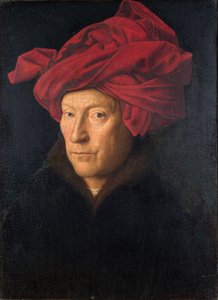
1437. Oil On Panel, 27.0 x 21.0 cm. Gemäldegalerie.

§ 1Kataloogandmed

- 27.0 x 21.0 cm


§ 2Abstraktne
Kogumisobjekti kirjeldus
Experience the breathtaking realism of Jan van Eyck's 1437 Small Triptych, a masterpiece of Early Netherlandish oil painting featuring the Virgin and Child, inviting you to bring this divine devotion into your home.
 Loe lähemalt
Kunstniku elulugu
Varajase neerlandlase maaliku ja Arnolfini portree pioneer. Avasta tema revolutsioonilised õlitehnikad ja meistriteosed juba täna.
§ 3Kommentaar
A Miniature Universe of Devotion
In the quiet corners of art history, few works command as much reverence through their sheer intimacy as Jan van Eyck’s Small Triptych. Created in 1437, this diminutive masterpiece—measuring a mere 27 x 21 cm—defies its small scale by offering an expansive window into the divine. At first glance, the viewer is drawn into a sacred tableau: the Virgin Mary cradling the Christ Child within a richly detailed church interior. The scene is not merely a depiction of religious figures but a profound meditation on presence and grace. Beside them, the presence of St. Michael and a kneeling donor figure invites us into a private moment of prayer, bridging the gap between the earthly realm and the celestial. For the collector or lover of fine art, this piece represents the pinnacle of Early Netherlandish devotion, where every millimeter of the panel is saturated with spiritual intent.
The emotional resonance of the work lies in its ability to make the monumental feel personal. There is a tender, almost palpable warmth in the way the light falls across Mary’s serene countenance, a testament to Van Eyck's unparalleled ability to capture human emotion through a divine lens. To gaze upon this triptych is to participate in a centuries-old tradition of contemplation. It is an ideal centerpiece for a curated space, offering a sense of historical depth and quiet sophistication that can anchor a room, whether placed in a sunlit study or a formal gallery setting.
The Alchemy of Oil and Light
What truly elevates this triptych above its contemporaries is the revolutionary technique employed by Jan van Eyck. As a pioneer of the oil painting medium, Van Eyck moved away from the flatter, more opaque qualities of tempera to embrace the translucent possibilities of oil. This allowed him to employ meticulous glazing—layering thin, transparent skins of pigment to build up a depth of color that seems to glow from within. When observing a high-quality reproduction, one can truly appreciate the subtle gradations of shadow and the brilliant, jewel-like luminosity of the textures. The artist’s hand is visible in the breathtaking realism of the fabrics, the soft skin tones, and the intricate architectural details of the background.
This mastery of light serves a symbolic purpose as much as a technical one. In the 15th century, light was often viewed as a metaphor for the divine presence; by manipulating light through oil, Van Eyck literally brought the "light of God" into the physical world. The bronze frames, inscribed with Latin lettering, further reinforce this connection to medieval theological thought, acting as a threshold between our world and the sacred narrative contained within the panels. For interior designers, the interplay of these rich textures and deep, luminous tones provides an exquisite opportunity to introduce classical elegance and a sense of timelessness into modern decor.
A Legacy for the Discerning Collector
Owning or displaying a reproduction of the Small Triptych is more than an aesthetic choice; it is an engagement with one of the most significant turning points in Western art. This work marks the moment when realism began to merge with mysticism, creating a visual language that would influence generations of painters. The composition, carefully orchestrated to guide the eye from the donor's humble plea to the radiant Christ Child, remains a masterclass in narrative flow and iconographic complexity.
Whether you are an art historian captivated by the technical innovations of the Flemish Primitives or a decorator seeking to infuse a space with a sense of quiet majesty, this triptych offers endless inspiration. It stands as a testament to the idea that true greatness is not measured by physical dimensions, but by the depth of the soul captured upon the panel. A hand-painted reproduction of such a masterpiece allows the splendor of Van Eyck’s vision to reside within your own home, serving as a permanent reminder of the beauty found in the smallest, most sacred details.
Korduvad küsimused
Kas teose "Small Triptych" kõrgekvaliteediline allalaadimine on saadaval?
Teose "Small Triptych" digitaalset versiooni saab tellida kui kõrge resolutsiooniga digitaalse pildi allalaadimine, ostes seda otse sellelt lehelt Digitaalne kunstiteos.
Mis on originaalteose „Small Triptych“, autor Jan Van Eyck mõõdud?
Originaalteose „Small Triptych“, autor Jan Van Eyck mõõdud on 27 x 21 cm.
Mis vanuses loos Jan Van Eyck teose "Small Triptych"?
Jan Van Eyck loobus teose "Small Triptych" 47 aasta vanuses. Kunstnik on sündinud aastal 1390 ning teos on dateeritud 1437.


 Lülita trükkitoodetele


 Kunstiteoste või reproduktsioonide puhul, mille üks külg on üle 105 cm (umbikmolt 41 tolli), saadetakse raam kirjal asendis, la Dismantlitud komplektina. See meetod tagab ohutuse kohaletoimetamisel ja väldib transpordil tekkivaid kahjustusi.


