


 Vaata sisu
 Jaga teost
 Jaga
Jaga
 Detailid
 Õppekate juhend

 Laadi alla
 Sarnased teosed
 Röntgenuuring
 Slaidietendus
 Statistika
Presbyterian catechising

 Loe lähemalt
Käsitsi valmistatud õlimaalireproduktsioon
Meie kunstnike poolt tellimusel valmistatud käsitsi maalitud õli-kainaste teos teie soovitud suuruses ja raamis. ( Lülita trükkitoodetele Ülemineku digitaalse pildi müügi kanalisse)




































Vali meie eelmääratud suurused, mis vastavad teose algupärastele proportsioonidele.

Sisestage vajalik laius ja kõrgus, et teos sobiks teie raamile või seinale. Kuna tegu on käsipainatud teosega, siis erineva kujuga suuruse korral võib kunstnik jätta pildi ümber veidi rohkem marginaali või lõigata osa ära — valik on teie. Enne maali alustamist saadame teile kinnitamiseks digitaalse näidisprojektsiooni. Sellel lehel näidatud pilt ei kajasta tegelikku tulemust — seda näitab ainult näidisprojekttsioon.
Pärast tellimust saadab AllPaintingsStore.com meeskond kliendile e-posti juhised ning esitab eelvaate kavandi
Maailmline tarne 3–4 nädala jooksul tavalise 5 nädala asemel. (25 oktoober). Kvaliteedis kompromisse ei tehta.

Tasuta ekspresssaatmine üle maailma

Kõrgekvaliteediline lina-kangastest muld

Täielik transpordikindlustus

Tollimaksude tagastamise garantii

Värvitoime täpsuse garantii

100 päeva tagastusõigus (ainult defektide korral)

100% raha tagasi garantii

Hulgusoodustus
 Klaasivalik on saadaval ainult kuni 110 cm suuruses teostes

Presbyterian catechising
Reproduktsiooni materjal
Reproduktsiooni mõõtmed
-


Lõppsumma
€ 402
Sarnased teosed


Kunstniku elulugu
The Painter of Spanish Dreams: The Life and Legacy of John Phillip
Born in the rugged landscape of Aberdeen, Scotland, in 1817, John Phillip would eventually transcend his humble beginnings to become one of the most evocative voices of the Victorian era. Affectionately known by the moniker "Spanish Phillip," his journey was one of profound transformation, moving from the meticulous, somber depictions of Scottish rural life to the sun-drenched, vibrant canvases of Southern Europe. His early years were marked by a burgeoning talent that caught the eye of influential patrons, most notably Lord Panmure, whose generosity provided the essential bridge for Phillip to reach London’s Royal Academy of Arts in 1836. It was within this prestigious institution that Phillip found his artistic tribe, joining the influential group known as The Clique. Led by the eccentric Richard Dadd, this circle of artists shared a deep reverence for the narrative realism of William Hogarth and the dramatic landscapes of David Wilkie, principles that would form the bedrock of Phillip’s early technical mastery.
In his formative years, Phillip’s brush was dedicated to the dignity and hardship of the Scottish people. He captured the quiet, often grueling existence of crofters with a precision that spoke to the soul of his homeland. These early works were characterized by a meticulous attention to detail and a sense of pious domesticity, reflecting the cultural currents of late Victorian Scotland. However, a pivotal shift occurred in 1851, prompted by medical advice to seek warmer climates for his health. This pilgrimage to Spain was not merely a restorative journey but an artistic rebirth. As he wandered through the streets of Seville and Madrid, the shadows of Scotland were replaced by the brilliant light of Andalusia. The influence of Spanish masters Bartolom Tamayo, Bartolomé Esteban Murillo, and Diego Velázquez began to permeate his work, fundamentally altering his palette and his approach to form.
A Transformation of Light and Technique
The transition from the detailed, almost documentary style of his Scottish period to a much broader, more painterly technique marks the most fascinating evolution in Phillip’s career. While he initially resisted the burgeoning Pre-Raphaelite movement, his later works, such as The Letter Writer, Seville, began to exhibit a subtle engagement with their luminous qualities. As his travels deepened his connection to the Spanish spirit, his brushwork grew more confident and expressive, mirroring the late-career developments of contemporaries like John Everett Millais. He moved away from rigid outlines toward an exploration of texture and atmosphere, using impasto to capture the heat and dust of the Spanish landscape.
This stylistic maturation reached its zenith in the 1860s, where his compositions became grander and more emotionally resonant. His ability to weave together the following elements defined his mature period:
- Dramatic Chiaroscuro: Utilizing deep shadows and piercing highlights to create a sense of theatrical movement.
- Cultural Immersion: Moving beyond mere observation to capture the very essence of Spanish street life and religious devotion.
- Narrative Depth: Creating scenes that felt like frozen moments from a larger, unfolding story, much like his inspirations Murillo and Velázquez.
Major achievements such as The Early Career of Murillo (1864) and La Gloria (1865) stand as testaments to this period of mastery. In these works, Phillip did not just paint subjects; he painted the very history of art itself, paying homage to the masters who had inspired his own metamorphosis. His legacy remains that of a bridge-builder—between the somber traditions of Scottish genre painting and the vibrant, light-filled romanticism of the Mediterranean. Though his life was cut short in 1867, John Phillip left behind a body of work that continues to enchant, inviting viewers to step out of the grey mists of the North and into the eternal, golden glow of his Spanish dreams.

John Phillip
1817 - 1867 , United Kingdom
Lühikest infot
- Full Name: John Phillip
- Nationality: Scottish
- Date Of Birth: 1817
- Date Of Death: 1867
- Place Of Birth: Aberdeen, United Kingdom
- Notable Artworks:
- The Letter Writer, Seville
- Early Career of Murillo
- La Gloria
- Artistic Movement Or Style: Victorian Genre Painting; Pre-Raphaelite Influence
- Artists Who Influenced This Artist:
- William Hogarth
- David Wilkie
- Bartolomé Murillo
- Diego Velázquez
- Artists Or Movements Influenced By This Artist: ['Edwin Long']
Sarnased artiklid
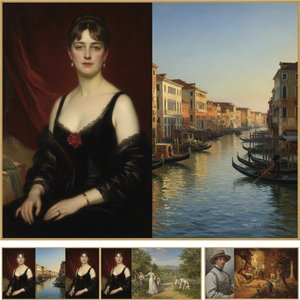
John Singer Sargent's 25 Masterpieces: Portraits & Beyond | AllPaintingsStore
Explore 25 iconic John Singer Sargent paintings – from dazzling portraits to Impressionist landscapes. Discover the stories behind Madame X, El Jaleo & more! Find museum-quality art reproductions and elevate your home decor with AllPaintingsStore.com.
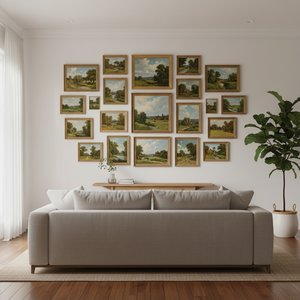
John Constable: 25 Suurimat Teost Inglise Maastikumaali Tippu
Avastage John Constable'i 25 suurimat teost! Sukeldu inglise maastikumaali romantismisse, imetlege Dedham Vale ilu ja leia inspiratsiooni kodukaunistuseks. Kvaliteetsed kunstireprodutsioonid AllPaintingsStore.com-is. Vaata kohe!
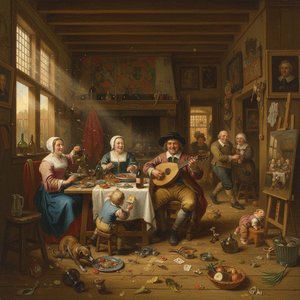
Jan Steen: A Master of Dutch Genre Painting & the Golden Age
Explore the life & art of Jan Steen, a leading Dutch Golden Age painter renowned for his humorous genre scenes & insightful social commentary. Discover his techniques, legacy, and collecting tips.
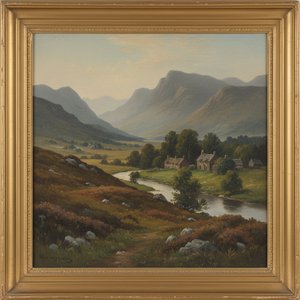
Sir John Watson Gordon: A Study in Scottish Landscape Painting & Tonal Impressionism
Explore the captivating portraits of Sir John Watson Gordon, a leading Scottish master. Discover his evolution from neoclassical style to atmospheric Tonalism and influence on 19th-century British art. Learn about his iconic sitters & legacy.

Chiaroscuro and Character: A Definitive Guide to Light and Shadow in the Dutch Baroque Era
Explore the dramatic mastery of the Dutch Baroque era. Discover how masters like Rembrandt used chiaroscuro to transform everyday life into timeless art. An expert guide for collectors and enthusiasts seeking to understand the profound interplay of light and shadow.

