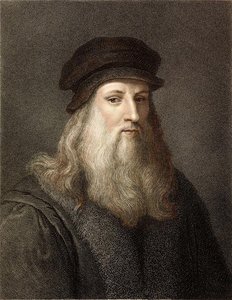
1512. Akrüül võimlusel, 33.0 x 21.0 cm.

§ 1Kataloogandmed

- 33.0 x 21.0 cm


§ 2Abstraktne
Kogumisobjekti kirjeldus
Explore Leonardo da Vinci’s iconic ‘Self-Portrait’ (1512). A masterpiece of High Renaissance realism, showcasing chiaroscuro & anatomical detail. Admire this timeless artwork!
 Loe lähemalt
Kunstniku elulugu
Avastage Leonardo da Vinci (1452-1519): Mona Lisa ja Viimase õhtusöögi renessanssgenius! Avastage tema sfumato tehnika, anatoomiauuringud ja murdilavad leiutised.
§ 3Kommentaar
A Glimpse into Genius: Leonardo da Vinci’s Self-Portrait
This captivating self-portrait, created in 1512 by the quintessential Renaissance man, Leonardo da Vinci, offers an intimate encounter with one of history's most brilliant minds. Rendered in delicate red chalk on paper (33 x 21 cm), and currently housed at the Biblioteca Reale in Turin, Italy, this work transcends a simple likeness; it’s a profound statement about artistry, intellect, and the passage of time.Masterful Technique & Artistic Style
Da Vinci's unparalleled skill is immediately apparent in his masterful use of chiaroscuro – the dramatic interplay of light and shadow. This technique lends an extraordinary depth and three-dimensionality to the drawing, bringing the subject vividly to life. The meticulous hatching and cross-hatching create a remarkable sense of texture, particularly evident in the flowing hair and beard. The work exemplifies High Renaissance realism, prioritizing anatomical accuracy and nuanced observation. Unlike many portraits of his time, this piece eschews lavish ornamentation, focusing instead on the raw essence of the sitter’s character.Decoding the Subject & Symbolism
The subject is depicted as a mature man with long, wavy hair and a full beard – an unconventional appearance for Renaissance Italy that suggests wisdom, contemplation, and perhaps even a deliberate rejection of societal norms. His aquiline nose and deeply etched lines around his eyes and brow convey a sense of profound introspection and experience. Some scholars interpret the length of his facial hair as symbolic of his intellectual freedom and dedication to knowledge, distancing him from the constraints of conventional society. While widely accepted as a self-portrait, debate continues among art historians regarding its definitive identification.Historical Context & Legacy
Created during Da Vinci’s second period in Milan, this self-portrait encapsulates the spirit of the Renaissance – a fervent pursuit of knowledge across diverse disciplines. Da Vinci was not merely an artist; he was an anatomist, engineer, inventor, and scientist. This drawing embodies that multifaceted genius, presenting him as the archetypal “Renaissance Man.” It stands as one of the few surviving self-portraits from this period, offering a rare glimpse into the mind and persona of a true polymath. The work’s influence extends far beyond the realm of art, inspiring generations with its embodiment of human potential.Emotional Impact & Modern Relevance
This self-portrait evokes a sense of quiet dignity and profound contemplation. The subject's gaze is directed inward, inviting viewers to reflect on their own mortality and the pursuit of knowledge. In our modern world, Da Vinci’s work continues to resonate deeply, reminding us of the enduring power of artistic expression and the importance of intellectual curiosity. It serves as a powerful symbol of human creativity and the relentless quest for understanding.Further Exploration
- Explore more works by Leonardo da Vinci: List of works by Leonardo da Vinci
- Delve deeper into the portrait’s history: Portrait of a Man in Red Chalk (Wikipedia)
Korduvad küsimused
Mis vanuses loos Leonardo Da Vinci teose "Self Portrait"?
Kui teos "Self Portrait" loodi aastal 1512, oli Leonardo Da Vinci (sündinud aastal 1452) 60 aastane.
Kas „Self Portrait“, autor Leonardo Da Vinci on maalid, joonis või etsing?
"Self Portrait" on Seinakunst teos.
Milline on teose „Self Portrait“, autor Leonardo Da Vinci värvitoon?
Teoses „Self Portrait“, autor Leonardo Da Vinci on kasutatud Pastelltoonid värvipaletti, kus domineerib Korallipunane (#f3ab6d) värv.


 Lülita trükkitoodetele


 Kunstiteoste või reproduktsioonide puhul, mille üks külg on üle 105 cm (umbikmolt 41 tolli), saadetakse raam kirjal asendis, la Dismantlitud komplektina. See meetod tagab ohutuse kohaletoimetamisel ja väldib transpordil tekkivaid kahjustusi.