

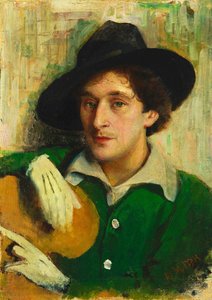
1914. Acrylic On Canvas, 49.0 x 44.0 cm.

§ 1Kataloogandmed

- 49.0 x 44.0 cm


See teos on autoriõigusega kaitstud
Sellel lehel kuvatav kunstiteos on kaitstud autoriõigusega, mis tähendab, et meil ei ole seaduslikku õigust luua või müüa identset reproduktsiooni. Seda kaitset rakendatakse rahvusvaheliste kokkulepete alusel, nagu näiteks Berne konventsioon ning riiklike seadustega, sealhulgas nendega, mida on sätestatud USA autoriõiguse seadus – 17. peatükk.
Austasena ja seaduslikuna alternatiivina pakume originaalist inspireeritud, käsitsi maalitud isikupärastatud teoseid. Meie osutavad ja professionalsed kunstnikud uurivad hoolikalt originaali stiili, meelemoi ja kunstilist olemust, et luua uus, ainulaadne teos, mis tekitab sama tunnet – olles samal ajal omaette originaalne looming.
See meetod järgib täielikult autoriõiguse reegleid, kuna see ei põhine kaitstud kunstiteose kopeerimisel või dupliteerimisel. Selle asemel on tegu loova reinterpreetatsiooniga – uue maaldisega, mis on algteosest inspireeritud, kuid ei ole sellest identiline.
 Loe lähemalt
§ 2Abstraktne
Kogumisobjekti kirjeldus
Kunstniku elulugu
Avasta Marc Chagalli (1887–1985) maailm – juudi päritolu kunstniku looming, kus kohtuvad unenäolised maalimid, Vatebski mälestused ja vapustavad vitraažid. Tutvuge tema pärandiga!
§ 3Kommentaar
Blue Lovers: A Symphony of Color and Emotion
Marc Chagall’s “Blue Lovers,” completed in 1914 during his formative years as a Cubist innovator, transcends mere visual representation; it embodies the very essence of romantic connection. Measuring 49 x 44 cm, this oil painting stands as a cornerstone of Cubism—a stylistic choice that Chagall skillfully employed to convey his profound personal vision and artistic exploration.
- Style: Cubism – Chagall’s embrace of this revolutionary movement distinguishes him from many contemporaries. Unlike Impressionists who sought to capture fleeting moments of light, Cubism dissected objects into geometric fragments, presenting multiple perspectives simultaneously—a technique that challenged conventional artistic norms and paved the way for Surrealist experimentation.
- Technique: Chagall’s masterful brushwork contributes significantly to the painting's emotive power. Thick impasto creates textural surfaces that capture the physicality of the figures and imbue them with palpable warmth. The artist meticulously blended blues—ranging from serene cerulean to deep indigo—to establish a dominant color palette symbolizing tranquility, timelessness, and transcendence.
The Significance of Blue
Chagall’s unwavering fascination with blue is documented throughout his oeuvre, reflecting his belief in its ability to evoke spiritual contemplation. As he famously stated, “Blue symbolizes a space devoid of mass and time,” mirroring the idealized realm where earthly constraints dissolve and lovers merge into one harmonious entity. This sentimentality resonates deeply with Chagall's own relationship with Bella Rosenfield—a tumultuous romance that fueled his artistic creativity until her passing in 1994.
Historical Context: Vitebsk’s Influence
The painting’s genesis occurred in Vitebsk, Belarus—a city brimming with cultural diversity shaped by Orthodox Christianity and Jewish traditions. Chagall's upbringing instilled within him a distinctive aesthetic sensibility characterized by fantastical imagery and vibrant hues—elements that would permeate his subsequent works. The depiction of the couple’s faces pressed together underscores the importance of intimacy and vulnerability in human experience, mirroring themes prevalent in Vitebsk folklore.
Symbolism: Gesture and Light
The painting's composition is meticulously crafted to convey a sense of movement and dynamism—a subtle tremor that captures the fleeting beauty of a moment shared. The couple’s gesture—a tender embrace—represents affection, devotion, and mutual support. Furthermore, Chagall skillfully utilizes light—primarily emanating from an unseen source—to illuminate the figures' faces and create an ethereal atmosphere, symbolizing enlightenment and spiritual illumination.
Legacy: A Masterpiece Preserved
"Blue Lovers" resides within The Museum Staatsgalerie Moderner Kunst (Munich, Germany), cementing Chagall’s place as one of the foremost artists of the 20th century. Alongside “Les yeux” by Maria H., this painting exemplifies Chagall's unparalleled ability to fuse stylistic innovation with heartfelt emotion—a testament to his enduring artistic legacy.
Korduvad küsimused
Kas teosele "Blue Lovers" on saadaval lisatud reaalsete elementidega (AR) eelvaade?
Teosele "Blue Lovers" on saadaval täiendatud reaalne eelvaade: teose AR-eelvaade teose kohta leht näitab seda teie enda ruumis ühilduval seadmel.
Mis on teose „Blue Lovers“, autor Mark Šagall kuju ja mõõdud?
„Blue Lovers“, autor Mark Šagall on Portrait kompositsioon, mille originaalmõõdud on 49 x 44 cm.
Kuidas kunstiliikumine ja ajastu kohtuvad teoses „Blue Lovers“, autor Mark Šagall?
Teos "Blue Lovers" kuulub Cubism suunale ning selle looja tegutses Modernism ajastul.


 Lülita trükkitoodetele


 Kunstiteoste või reproduktsioonide puhul, mille üks külg on üle 105 cm (umbikmolt 41 tolli), saadetakse raam kirjal asendis, la Dismantlitud komplektina. See meetod tagab ohutuse kohaletoimetamisel ja väldib transpordil tekkivaid kahjustusi.


