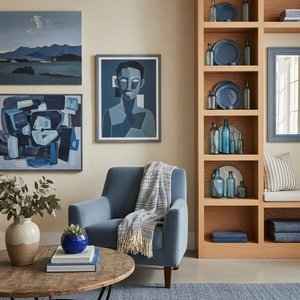
Acrylic On Canvas, 100.0 x 81.0 cm.

§ 1Kataloogandmed

- 100.0 x 81.0 cm


See teos on autoriõigusega kaitstud
Sellel lehel kuvatav kunstiteos on kaitstud autoriõigusega, mis tähendab, et meil ei ole seaduslikku õigust luua või müüa identset reproduktsiooni. Seda kaitset rakendatakse rahvusvaheliste kokkulepete alusel, nagu näiteks Berne konventsioon ning riiklike seadustega, sealhulgas nendega, mida on sätestatud USA autoriõiguse seadus – 17. peatükk.
Austasena ja seaduslikuna alternatiivina pakume originaalist inspireeritud, käsitsi maalitud isikupärastatud teoseid. Meie osutavad ja professionalsed kunstnikud uurivad hoolikalt originaali stiili, meelemoi ja kunstilist olemust, et luua uus, ainulaadne teos, mis tekitab sama tunnet – olles samal ajal omaette originaalne looming.
See meetod järgib täielikult autoriõiguse reegleid, kuna see ei põhine kaitstud kunstiteose kopeerimisel või dupliteerimisel. Selle asemel on tegu loova reinterpreetatsiooniga – uue maaldisega, mis on algteosest inspireeritud, kuid ei ole sellest identiline.
 Loe lähemalt
§ 2Abstraktne
Kogumisobjekti kirjeldus
Kunstniku elulugu
Avasta Marc Chagalli (1887–1985) maailm – juudi päritolu kunstniku looming, kus kohtuvad unenäolised maalimid, Vatebski mälestused ja vapustavad vitraažid. Tutvuge tema pärandiga!
§ 3Kommentaar
Marc Chagall: A Life in Color and Imagination
Marc Chagall (1887-1985) stands as one of the most distinctive figures in 20th-century art, celebrated for his unparalleled blend of surrealism and folk art—a fusion that captured the spirit of both European intellectual currents and Jewish cultural heritage. His canvases pulsate with vibrant hues, dreamlike imagery, and symbolic representations that continue to fascinate audiences worldwide. One artwork embodying this singular vision is Bride with Blue Face (1932), a painting that transcends mere visual representation to convey profound emotional and spiritual depth.Artistic Style and Influences
Chagall’s artistic journey began in Vitebsk, Belarus—a city steeped in Jewish tradition and profoundly shaped by the confluence of Russian Orthodox Christianity and Yiddish culture. Early training under Léon Bakst instilled in him a disciplined approach to composition and theatrical design, while encounters with Cubism and Fauvism broadened his stylistic horizons. However, it was Surrealism that truly liberated Chagall’s imagination, allowing him to explore subconscious desires and fantastical narratives—a technique he honed throughout his prolific career. Bride with Blue Face exemplifies this stylistic fusion, utilizing bold color palettes and unconventional perspectives to create a scene that defies rational explanation.Composition and Symbolism
The painting’s central figure—a woman adorned in white—holds aloft a bouquet of flowers, establishing a serene focal point against a backdrop teeming with surrealistic elements. Birds soar overhead, representing freedom and aspiration; figures populate the landscape, embodying human connection and vulnerability; a car and a train traverse the scene, symbolizing movement and transformation; and a house anchors the composition, signifying stability and domesticity. Yet it is the woman’s face—painted in an arresting shade of blue—that commands immediate attention. This chromatic choice transcends mere aesthetic consideration; blue has long been associated with spirituality, melancholy, and introspection—qualities that resonate deeply within Chagall's oeuvre. The blue hue serves as a conduit for conveying emotions beyond the visible realm, inviting viewers to contemplate themes of love, loss, and remembrance.Historical Context
Chagall’s artistic development coincided with significant intellectual and social upheavals of the early 20th century—the rise of Dadaism, Expressionism, and Surrealism challenging established conventions and redefining notions of beauty and truth. Influenced by these movements, Chagall nevertheless forged his own distinctive path, prioritizing personal vision over adherence to stylistic dogma. Bride with Blue Face stands as a testament to Chagall’s ability to synthesize disparate influences—creating something wholly original and profoundly evocative. Its enduring appeal speaks to the universal desire for beauty and meaning in an increasingly fragmented world.Relevance in Modern Art
Chagall's influence extends far beyond the confines of his own time, inspiring generations of artists across disciplines—from architecture to fashion to film. His bold use of color and dreamlike imagery continues to resonate with contemporary sensibilities, demonstrating the timeless power of artistic expression. For those seeking inspiration or contemplating a purchase, AllPaintingsStore.com offers exceptional reproductions of Chagall’s masterpieces, including Bride with Blue Face and other notable pieces like Artist at Easel and Prophet Isaiah—allowing collectors to experience the brilliance of Chagall’s vision firsthand.Korduvad küsimused
Kui harmoniliselt on teoses „Bride with Blue Face“, autor Mark Šagall värvid ühendatud?
Teos „Bride with Blue Face“, autor Mark Šagall kujutab esile Discordant Palette värviharmooniat.
Milleks on „Bride with Blue Face“, autor Mark Šagall mõeldud?
Teose „Bride with Blue Face“, autor Mark Šagall soovituslik kasutusviis on Accent. Seda saab kasutada ka muudel eesmärkidel.
Millist etap Mark Šagall loomingus teos "Bride with Blue Face" esindab?
Mark Šagall loomingus kuulub teos "Bride with Blue Face" perioodi Mature Period. See etap aitab seda võrdida kunstniku teiste töödega.


 Lülita trükkitoodetele


 Kunstiteoste või reproduktsioonide puhul, mille üks külg on üle 105 cm (umbikmolt 41 tolli), saadetakse raam kirjal asendis, la Dismantlitud komplektina. See meetod tagab ohutuse kohaletoimetamisel ja väldib transpordil tekkivaid kahjustusi.