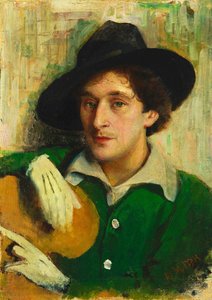
1910. Acrylic On Canvas, 34.0 x 24.0 cm.

§ 1Catalogue data
 Acrylic On Canvas
- WallArt
- Expressionism
 1910
1910 34.0 x 24.0 cm
See teos on autoriõigusega kaitstud
Sellel lehel kuvatav kunstiteos on kaitstud autoriõigusega, mis tähendab, et meil ei ole seaduslikku õigust luua või müüa identset reproduktsiooni. Seda kaitset rakendatakse rahvusvaheliste kokkulepete alusel, nagu näiteks Berne konventsioon ning riiklike seadustega, sealhulgas nendega, mida on sätestatud USA autoriõiguse seadus – 17. peatükk.
Austasena ja seaduslikuna alternatiivina pakume originaalist inspireeritud, käsitsi maalitud isikupärastatud teoseid. Meie osutavad ja professionalsed kunstnikud uurivad hoolikalt originaali stiili, meelemoi ja kunstilist olemust, et luua uus, ainulaadne teos, mis tekitab sama tunnet – olles samal ajal omaette originaalne looming.
See meetod järgib täielikult autoriõiguse reegleid, kuna see ei põhine kaitstud kunstiteose kopeerimisel või dupliteerimisel. Selle asemel on tegu loova reinterpreetatsiooniga – uue maaldisega, mis on algteosest inspireeritud, kuid ei ole sellest identiline.
 Loe lähemalt
§ 2Abstract
Kogumisobjekti kirjeldus
Marc Chagall's 'Butcher' (1910) captures a poignant scene of rural life with vibrant colors and expressive brushstrokes, reflecting the artist’s unique vision and Jewish heritage.
Kunstniku elulugu
Avasta Marc Chagalli (1887–1985) maailm – juudi päritolu kunstniku looming, kus kohtuvad unenäolised maalimid, Vatebski mälestused ja vapustavad vitraažid. Tutvuge tema pärandiga!
§ 3Commentary
A Portrait of Rustic Intensity: Unpacking Marc Chagall's "Butcher"
Marc Chagall’s 1910 painting, “Butcher,” isn’t merely a depiction of a man with a cleaver; it’s a vibrant plunge into the artist’s deeply personal and profoundly evocative world. Painted during a period of intense experimentation and stylistic evolution, this work embodies the core tenets of Expressionism while simultaneously retaining the unique, dreamlike quality that would become synonymous with Chagall's oeuvre. The painting immediately arrests the viewer with its bold color palette – a riot of blues, reds, yellows, and greens—a deliberate departure from the muted tones often associated with academic realism. This isn’t a photograph; it’s an emotional landscape rendered in pigment.
The subject himself is presented with arresting immediacy. The butcher, clad in a striking blue coat, dominates the composition, his face partially obscured by a long, flowing white beard. His posture suggests both focused concentration and a quiet intensity, hinting at the weight of responsibility and the physicality of his trade. He’s not idealized or romanticized; he's presented with raw honesty, reflecting Chagall’s fascination with everyday life and the dignity of labor. The inclusion of two birds – one perched delicately near the top left corner, another fluttering towards the bottom right – adds a layer of symbolic complexity, perhaps representing freedom, instinct, or the fleeting nature of existence within the confines of this rustic setting.
Roots in Vitebsk: Folklore and Jewish Identity
To truly understand “Butcher,” one must delve into Chagall’s formative years spent in Vitebsk, a city brimming with cultural confluence. Born Moishe Shagal in 1887, Chagall’s childhood was shaped by the vibrant tapestry of his Hasidic Jewish community – a world steeped in folklore, religious ritual, and deeply ingrained traditions. Vitebsk's unique blend of Russian Orthodox churches and bustling Jewish marketplaces provided a rich visual vocabulary for the young artist, informing his distinctive style. The painting subtly echoes this environment; the arrangement of objects, the use of color, and even the butcher’s attire all resonate with elements found in Chagall’s native landscape.
The presence of the birds is particularly significant within this context. Birds frequently appear in Chagall's work, often symbolizing hope, spirituality, or a longing for escape – themes deeply rooted in Jewish mysticism and folklore. Their placement within the scene suggests a connection between the earthly realm of the butcher’s trade and the spiritual aspirations of his community.
Expressionist Techniques: Color, Form, and Emotion
“Butcher” is firmly grounded in the principles of Expressionism, a movement characterized by its emphasis on subjective experience and emotional intensity. Chagall employs loose brushstrokes, distorted forms, and an unrestrained use of color to convey a sense of urgency and drama. The painting’s composition—the dynamic arrangement of objects, the exaggerated perspective—creates a feeling of instability and unease, mirroring the anxieties and uncertainties of the early 20th century. The gouache on paper medium lends itself beautifully to this expressive style, allowing for rich color saturation and textural variation.
Notably, Chagall’s use of color isn't merely decorative; it’s deeply symbolic. The dominant blues evoke a sense of melancholy or introspection, while the reds and yellows inject bursts of energy and vitality. This interplay of colors contributes to the painting’s overall emotional impact, creating a powerful visual narrative that transcends mere representation.
A Window into the Soul: Legacy and Interpretation
“Butcher” is more than just a portrait; it's a window into Chagall’s soul—a testament to his unwavering belief in the power of imagination and memory. It stands as a poignant reminder of his roots, his artistic evolution, and his enduring fascination with the human condition. Reproductions of this captivating work offer an exceptional opportunity to bring this evocative image into your home or office, allowing you to experience firsthand the emotional depth and artistic brilliance of one of the 20th century’s most beloved artists. AllPaintingsStore offers meticulously crafted hand-painted reproductions that faithfully capture the essence of Chagall's masterpiece, ensuring its beauty and significance endure for generations to come.
Korduvad küsimused
Millist atmosfääri toob „Butcher“, autor Mark Šagall sisekujundusse?
Teose „Butcher“, autor Mark Šagall Dramatic atmosfäär sobib ideaalselt selle soovituslikku ruumi: Living Room.
Kas „Butcher“, autor Mark Šagall on maalid, joonis või etsing?
"Butcher" on WallArt teos.
Kuidas teose "Butcher" värvid omavahel koos toimivad?
Teos „Butcher“, autor Mark Šagall kujutab esile Strong Color Unity värviharmooniat.


 Lülita trükkitoodetele


 Kunstiteoste või reproduktsioonide puhul, mille üks külg on üle 105 cm (umbikmolt 41 tolli), saadetakse raam kirjal asendis, la Dismantlitud komplektina. See meetod tagab ohutuse kohaletoimetamisel ja väldib transpordil tekkivaid kahjustusi.