

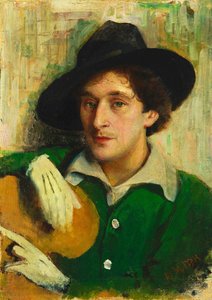
1982. Lithograph, 66.0 x 50.0 cm.

§ 1Catalogue data
 Lithograph
- WallArt
- Expressionistic Surrealism
 1982
1982- Modern
 66.0 x 50.0 cm
See teos on autoriõigusega kaitstud
Sellel lehel kuvatav kunstiteos on kaitstud autoriõigusega, mis tähendab, et meil ei ole seaduslikku õigust luua või müüa identset reproduktsiooni. Seda kaitset rakendatakse rahvusvaheliste kokkulepete alusel, nagu näiteks Berne konventsioon ning riiklike seadustega, sealhulgas nendega, mida on sätestatud USA autoriõiguse seadus – 17. peatükk.
Austasena ja seaduslikuna alternatiivina pakume originaalist inspireeritud, käsitsi maalitud isikupärastatud teoseid. Meie osutavad ja professionalsed kunstnikud uurivad hoolikalt originaali stiili, meelemoi ja kunstilist olemust, et luua uus, ainulaadne teos, mis tekitab sama tunnet – olles samal ajal omaette originaalne looming.
See meetod järgib täielikult autoriõiguse reegleid, kuna see ei põhine kaitstud kunstiteose kopeerimisel või dupliteerimisel. Selle asemel on tegu loova reinterpreetatsiooniga – uue maaldisega, mis on algteosest inspireeritud, kuid ei ole sellest identiline.
 Loe lähemalt
§ 2Abstract
Kogumisobjekti kirjeldus
Experience the dreamlike world of Marc Chagall's 'Fiddler with Rust.' This lithograph captures his signature style—folkloric figures, vibrant colors, and symbolic depth. A masterpiece from 1982.
Kunstniku elulugu
Avasta Marc Chagalli (1887–1985) maailm – juudi päritolu kunstniku looming, kus kohtuvad unenäolised maalimid, Vatebski mälestused ja vapustavad vitraažid. Tutvuge tema pärandiga!
§ 3Commentary
A Dreamscape in Rust and Gold: Unveiling Marc Chagall’s “Fiddler with Rust”
Marc Chagall's "Fiddler with Rust," painted in 1982, isn’t merely a depiction of a musician; it’s an immersion into a world brimming with memory, folklore, and the deeply personal vision that defined the artist’s extraordinary career. This lithograph, rendered in muted yet vibrant tones, captures a fleeting moment from Chagall's childhood in Vitebsk, a town forever etched within his artistic consciousness – a place of layered cultures, Orthodox churches juxtaposed against bustling Jewish marketplaces, and a profound sense of nostalgia. The painting immediately draws the eye to the central figure, a man lost in the act of playing his violin, his face simplified yet radiating an undeniable warmth. He’s not simply performing; he's embodying a connection to tradition, to community, and perhaps even to something beyond the tangible world.
The technique employed is quintessential Chagall – a masterful blend of naive art principles with a sophisticated understanding of color and composition. Lithography lends itself beautifully to his style, creating a textured surface that seems to ripple with movement. The lines are fluid and expressive, guiding the viewer’s eye through the densely populated scene. Notice how he utilizes overlapping figures, not for strict perspective but to create a sense of layered narrative, as if multiple stories are unfolding simultaneously within this single frame. The flattened space, characteristic of his work, further enhances the dreamlike quality, inviting us to step into a world where logic takes a backseat to emotion and imagination.
Symbolism Woven into the Fabric of Memory
Beyond its immediate visual appeal, “Fiddler with Rust” is rich in symbolic resonance. The violin itself is a potent emblem – representing joy, cultural heritage, and the enduring power of music. The two birds perched near the fiddler’s head are often interpreted as symbols of freedom and spirituality, perhaps alluding to Chagall's own yearning for escape from oppressive circumstances. The floating figures surrounding the central figure suggest a state of suspended animation, a dreamlike realm where memories and emotions coalesce. Even the “rust” in the title – a subtle but significant detail – hints at the passage of time, the fading of recollections, and the bittersweet nature of nostalgia.
The inclusion of two hens is particularly noteworthy. In Chagall’s Vitebsk, chickens were a common sight, representing fertility, abundance, and family life. Their presence reinforces the painting's connection to the artist’s roots and his deeply ingrained sense of belonging. The color palette—a restrained blend of earthy tones punctuated by flashes of yellow and red—contributes to the overall mood, evoking both warmth and melancholy.
A Window into Chagall’s Soul
Created in 1982, during a period when Chagall was nearing the end of his remarkable life, “Fiddler with Rust” offers a poignant glimpse into the artist's enduring spirit. It’s a testament to his ability to transform personal memories and cultural influences into universal symbols of hope, longing, and the human condition. The painting isn’t simply a portrait; it’s an invitation to contemplate the complexities of identity, the power of art, and the timeless beauty of a world seen through the eyes of a visionary artist.
Considered within the context of Chagall's broader oeuvre, “Fiddler with Rust” stands as a particularly intimate work—a deeply personal meditation on his childhood in Vitebsk. It’s a reminder that even amidst the chaos and upheaval of the 20th century, art can provide solace, connection, and a profound sense of continuity.
Technical Details & Reproduction Considerations
The artwork itself is a lithograph measuring 66 x 50 cm, executed on paper. The lithographic process lends a unique textural quality to the image, with subtle variations in tone and line that add depth and richness. Reproductions, particularly those utilizing high-quality archival inks and printing techniques, can faithfully capture this tactile dimension. When selecting a reproduction, pay close attention to the substrate – canvas or paper – as it will significantly impact the final aesthetic effect. The original’s soft lighting and diffused atmosphere are best replicated with materials that offer a similar level of subtlety and nuance.
For collectors seeking an authentic representation of Chagall's masterpiece, consider commissioning a hand-painted reproduction from AllPaintingsStore.com or other reputable art reproduction specialists. These artisans meticulously recreate the artist’s style and techniques, ensuring that the final product is both visually stunning and historically accurate.
Korduvad küsimused
Kui intensiivsed on värvid teoses „Fiddler with ruster“, autor Mark Šagall?
Teose "Fiddler with ruster" värvitoon on Monochromatic. Intensiivsus kirjeldab värvide tugevust ja ergitust.
Milleks on „Fiddler with ruster“, autor Mark Šagall mõeldud?
Teose „Fiddler with ruster“, autor Mark Šagall reproduktsiooni kasutamist on soovitatav Statement jaoks. See soovituse on tulenev teose motiivist, meelelojast ja värvigabast.
Millises koduses ruumis sobib reproduktsioon teosest "Fiddler with ruster" hästi kohale?
Soovitatav paik teosele „Fiddler with ruster“, autor Mark Šagall on Living Room. See soovituse võib muidugi oma interjööri vajadust mööda kohandada.


 Lülita trükkitoodetele


 Kunstiteoste või reproduktsioonide puhul, mille üks külg on üle 105 cm (umbikmolt 41 tolli), saadetakse raam kirjal asendis, la Dismantlitud komplektina. See meetod tagab ohutuse kohaletoimetamisel ja väldib transpordil tekkivaid kahjustusi.


