

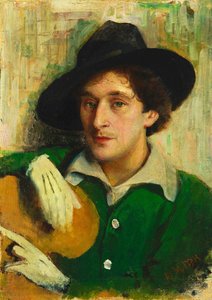
1963. Acrylic On Canvas, 33.0 x 28.0 cm.

§ 1Catalogue data

- 33.0 x 28.0 cm


See teos on autoriõigusega kaitstud
Sellel lehel kuvatav kunstiteos on kaitstud autoriõigusega, mis tähendab, et meil ei ole seaduslikku õigust luua või müüa identset reproduktsiooni. Seda kaitset rakendatakse rahvusvaheliste kokkulepete alusel, nagu näiteks Berne konventsioon ning riiklike seadustega, sealhulgas nendega, mida on sätestatud USA autoriõiguse seadus – 17. peatükk.
Austasena ja seaduslikuna alternatiivina pakume originaalist inspireeritud, käsitsi maalitud isikupärastatud teoseid. Meie osutavad ja professionalsed kunstnikud uurivad hoolikalt originaali stiili, meelemoi ja kunstilist olemust, et luua uus, ainulaadne teos, mis tekitab sama tunnet – olles samal ajal omaette originaalne looming.
See meetod järgib täielikult autoriõiguse reegleid, kuna see ei põhine kaitstud kunstiteose kopeerimisel või dupliteerimisel. Selle asemel on tegu loova reinterpreetatsiooniga – uue maaldisega, mis on algteosest inspireeritud, kuid ei ole sellest identiline.
 Loe lähemalt
§ 2Abstract
Kogumisobjekti kirjeldus
Explore Marc Chagall's vibrant 'Noah’s Ark' (1963), a Naïve Art masterpiece brimming with color & symbolism. Discover the chaotic beauty of this iconic work!
Kunstniku elulugu
Avasta Marc Chagalli (1887–1985) maailm – juudi päritolu kunstniku looming, kus kohtuvad unenäolised maalimid, Vatebski mälestused ja vapustavad vitraažid. Tutvuge tema pärandiga!
§ 3Commentary
A Sanctuary of Dreams: Exploring Marc Chagall’s ‘Noah's Ark’
Marc Chagall’s ‘Noah's Ark’, painted in 1963, is not merely an illustration of the biblical tale; it’s a vibrant distillation of memory, faith, and the enduring human spirit. Measuring a delicate 33 x 28 cm, this work possesses an intimacy that belies its grand subject matter. Chagall doesn't present us with a literal depiction of the flood or the ark’s construction. Instead, he offers a dreamscape – a swirling vortex of color and form populated by animals both familiar and fantastical, all sheltered within the embrace of the vessel. The painting is a testament to his unique artistic language, born from a childhood steeped in the folklore and religious traditions of Vitebsk, Belarus. It’s a style that defies easy categorization, drawing upon elements of Cubism, Symbolism, and Fauvism, yet remaining distinctly, undeniably Chagall.The Language of Symbols: A Visual Testament
To understand ‘Noah's Ark’, one must delve into the symbolic world that Chagall so masterfully constructed throughout his career. The ark itself isn’t portrayed as a sturdy, seaworthy vessel but rather as an almost ethereal haven, overflowing with life. Animals – cows, sheep, goats, horses, birds – are not arranged realistically; they seem to float and intertwine, representing the universal salvation offered by Noah. These creatures weren't simply chosen at random; each held significance within Jewish tradition and Chagall’s personal iconography. The presence of multiple figures, some standing, others reclining, suggests a collective humanity finding refuge from impending doom. A smaller boat in the background hints at the vastness of the flood and perhaps, the enduring hope for renewal. Even the bird soaring above isn't just an avian detail; it embodies freedom, peace, and the promise of a new beginning – a recurring motif throughout Chagall’s oeuvre. The painting is not about the disaster itself but about the preservation of life and the resilience of spirit in the face of adversity.Chagall’s Technique: A Symphony of Color and Form
Chagall's technique in ‘Noah's Ark’ is as captivating as its subject matter. He employs a vibrant palette, layering colors with a delicate touch that creates a luminous quality. The pastel medium allows for a fluidity and softness that perfectly complements the dreamlike atmosphere of the scene. Forms are simplified and often distorted, prioritizing emotional expression over strict realism. This deliberate distortion isn’t a flaw but rather a key element of his style – it imbues the painting with a sense of movement and energy. Chagall's brushstrokes aren’t hidden; they contribute to the overall texture and vibrancy of the work, revealing the artist’s hand in every detail. It is this masterful manipulation of color and form that allows him to convey not just what he *sees*, but what he *feels* about the story of Noah.A Legacy of Hope: Chagall and the Biblical Narrative
Chagall's engagement with biblical themes wasn’t accidental. Born into a Hasidic Jewish family, he was deeply familiar with the stories and traditions of his faith. In his later years, particularly after witnessing the horrors of World War II, these narratives took on new resonance. He created an entire series of paintings inspired by the Bible in the 1950s and 60s, culminating in the stunning stained-glass windows for the Hadassah Hospital Synagogue in Jerusalem. ‘Noah's Ark’ is a pivotal piece within this body of work, representing Chagall’s profound belief in the enduring power of hope and redemption. It stands as a testament to his ability to transform ancient stories into timeless works of art that continue to inspire and move audiences today. The painting isn’t just a depiction of a biblical event; it's a universal message about survival, faith, and the beauty of life itself.Korduvad küsimused
Millist värviharmoniat „Noah's Ark“, autor Mark Šagall kujutab?
Teose "Noah's Ark" värviharmonia on Unified Palette.
Milline on teose „Noah's Ark“, autor Mark Šagall värvitoit?
Teose "Noah's Ark" värvipalett on koonuse方面 Muted.
Mis on teose „Noah's Ark“, autor Mark Šagall domineeriv värv?
Teose "Noah's Ark" kõige silmapaistvam värv on Putty (#d2d1c3). Dominantne värv on kasulik teose sobitamisel interjööriga.


 Lülita trükkitoodetele


 Kunstiteoste või reproduktsioonide puhul, mille üks külg on üle 105 cm (umbikmolt 41 tolli), saadetakse raam kirjal asendis, la Dismantlitud komplektina. See meetod tagab ohutuse kohaletoimetamisel ja väldib transpordil tekkivaid kahjustusi.


