

1910. Assemblage.

§ 1Kataloogandmed


See teos on autoriõigusega kaitstud
Sellel lehel kuvatav kunstiteos on kaitstud autoriõigusega, mis tähendab, et meil ei ole seaduslikku õigust luua või müüa identset reproduktsiooni. Seda kaitset rakendatakse rahvusvaheliste kokkulepete alusel, nagu näiteks Berne konventsioon ning riiklike seadustega, sealhulgas nendega, mida on sätestatud USA autoriõiguse seadus – 17. peatükk.
Austasena ja seaduslikuna alternatiivina pakume originaalist inspireeritud, käsitsi maalitud isikupärastatud teoseid. Meie osutavad ja professionalsed kunstnikud uurivad hoolikalt originaali stiili, meelemoi ja kunstilist olemust, et luua uus, ainulaadne teos, mis tekitab sama tunnet – olles samal ajal omaette originaalne looming.
See meetod järgib täielikult autoriõiguse reegleid, kuna see ei põhine kaitstud kunstiteose kopeerimisel või dupliteerimisel. Selle asemel on tegu loova reinterpreetatsiooniga – uue maaldisega, mis on algteosest inspireeritud, kuid ei ole sellest identiline.
 Loe lähemalt
§ 2Abstraktne
Kogumisobjekti kirjeldus
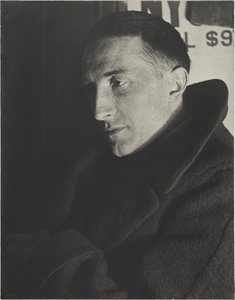
“Chauvel” was created in 1910 by Marcel Duchamp in Fauvism style. Find more prominent pieces of portrait at WikiArt.org – best visual art database. Marcel Duchamp, born Henri-Robert-Marcel Duchamp in 1887 in Blainville-Crevon, Normandy, was more than an artist; he was a philosophical provocateur who fundamentally altered the course of modern art.
Kunstniku elulugu
Marcel Duchamp: revolutsiooniline kunstnik, kes küsitles kunsti olemust Dadaismiga ja 'valmiskesed' nagu 'Fountain'. Avasta tema ikoonilisi teoseid ja filosoofilisest mõjust!
§ 3Kommentaar
A Visionary Defiance: The Soul of Chauvel
In the early twentieth century, a period defined by radical shifts in human perception, Marcel Duchamp unveiled "Chauvel," a work that would forever alter the trajectory of modern portraiture. This is not merely a likeness of Henri Chauvel, the French actor; it is a profound manifesto of rebellion captured on canvas. At first glance, the viewer is met with a striking presence—a man whose stern gaze and classic attire suggest a figure of historical weight. Yet, beneath this traditional veneer lies a deliberate subversion of expectation. Duchlam, ever the provocateur, uses the portrait to challenge the very boundaries of what we consider art, inviting us into a space where identity and abstraction collide.
The emotional resonance of the piece stems from its tension between the recognizable and the surreal. There is an undeniable gravity in Chauvel’s expression, a quiet intensity that commands respect, yet the atmosphere surrounding him vibrates with an almost electric energy. For the collector or the enthusiast of fine art, "Chauvel" offers more than just a visual subject; it provides a window into a moment of historical transition, where the old world of academic realism began to dissolve into the fragmented, emotive landscapes of the modern era.
The Vibrancy of Fauvist Expression
To understand the impact of "Chauvel," one must look toward the explosive color palette that defines its background. Duchamp embraced the Fauvist movement, a style characterized by its liberation from naturalistic color. Instead of the muted, somber tones typical of traditional portraiture, we encounter a symphony of fiery reds, intense yellows, and deep, soulful blues. These colors do not merely decorate the space; they pulsate with an autonomous life, creating a dramatic contrast against the subject's pale complexion.
This use of color serves a symbolic purpose far beyond mere aesthetics. By divorcing hue from reality, Duchamp asserts his artistic freedom, refusing to conform to the standard of visual accuracy. For interior designers seeking a centerpiece that breathes life into a room, this painting offers an unparalleled ability to anchor a space with warmth and drama. The interplay between the monochromatic classicism of the figure and the unrestrained chromatic energy of the background creates a sophisticated visual dialogue that remains as captivating today as it was in 1910.
Technique and the Birth of Modernity
The technical execution of "Chauvel" marks a pivotal departure from the singular brushstroke of the past. Duchamp experimented with an early form of assemblage, a technique that would later become a cornerstone of the Dadaist movement. By integrating photographic elements with meticulously crafted wooden panels and layers of varnish, he blurred the line between painting and objecthood. This approach was inherently revolutionary; it questioned the sanctity of the artist's hand and introduced the concept of the "found" element into the high art canon.
This layering of materials adds a tactile, multidimensional quality to the work, making a high-quality reproduction an exquisite addition to any curated collection. The way light interacts with the perceived depth of the composition allows the piece to transform depending on its environment, offering different nuances of shadow and brilliance throughout the day. "Chauvel" is not just a painting to be observed; it is an experience to be inhabited—a masterpiece of intellectual depth and aesthetic boldness that continues to inspire awe in all who encounter its defiant spirit.
Korduvad küsimused
Kui intensiivsed on värvid teoses „Chauvel“, autor Marceli Dupšan?
Teose „Chauvel“, autor Marceli Dupšan värvid on Balanced intensiivsusega.
Kas on olemas sarnaseid teoseid kui "Chauvel"?
Teosed, mis sarnanevad teosega "Chauvel", on loetletud selle teose Sarnased teosed lehel.
Millist kontrasti näitab teos „Chauvel“, autor Marceli Dupšan?
Teose „Chauvel“, autor Marceli Dupšan kontrastivaimustus on Bold.


 Lülita trükkitoodetele


 Kunstiteoste või reproduktsioonide puhul, mille üks külg on üle 105 cm (umbikmolt 41 tolli), saadetakse raam kirjal asendis, la Dismantlitud komplektina. See meetod tagab ohutuse kohaletoimetamisel ja väldib transpordil tekkivaid kahjustusi.


