

Acrylic On Canvas.

§ 1Catalogue data

See teos on autoriõigusega kaitstud
Sellel lehel kuvatav kunstiteos on kaitstud autoriõigusega, mis tähendab, et meil ei ole seaduslikku õigust luua või müüa identset reproduktsiooni. Seda kaitset rakendatakse rahvusvaheliste kokkulepete alusel, nagu näiteks Berne konventsioon ning riiklike seadustega, sealhulgas nendega, mida on sätestatud USA autoriõiguse seadus – 17. peatükk.
Austasena ja seaduslikuna alternatiivina pakume originaalist inspireeritud, käsitsi maalitud isikupärastatud teoseid. Meie osutavad ja professionalsed kunstnikud uurivad hoolikalt originaali stiili, meelemoi ja kunstilist olemust, et luua uus, ainulaadne teos, mis tekitab sama tunnet – olles samal ajal omaette originaalne looming.
See meetod järgib täielikult autoriõiguse reegleid, kuna see ei põhine kaitstud kunstiteose kopeerimisel või dupliteerimisel. Selle asemel on tegu loova reinterpreetatsiooniga – uue maaldisega, mis on algteosest inspireeritud, kuid ei ole sellest identiline.
 Loe lähemalt
§ 2Abstract
Kogumisobjekti kirjeldus
Kunstniku elulugu
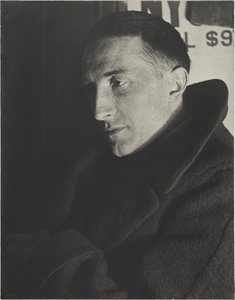
Marcel Duchamp: revolutsiooniline kunstnik, kes küsitles kunsti olemust Dadaismiga ja 'valmiskesed' nagu 'Fountain'. Avasta tema ikoonilisi teoseid ja filosoofilisest mõjust!
§ 3Commentary
From Outside: A Dadaist Challenge to Perception
Marcel Duchamp’s *From Outside* stands as an arresting testament to the radical spirit of Dadaism, a movement born from the disillusionment and trauma of World War I. This seemingly simple painting—a depiction of a doorway framed by brick arches—holds within it layers of conceptual complexity that continue to fascinate art historians and collectors alike. The artist’s deliberate choice of materials – weathered wood, nails – speaks volumes about his rejection of traditional artistic conventions and his desire to provoke viewers into questioning their assumptions about what constitutes ‘art.’Style and Technique: Embracing Chance and Minimalism
Duchamp's approach defies easy categorization. He employs a minimalist style characterized by stark geometric forms and muted tones, prioritizing conceptual impact over visual ornamentation. The brushstrokes are deliberately absent, reflecting Duchamp’s belief that the artist’s role is not to represent reality but to disrupt it. This technique aligns perfectly with Dadaist principles of chance and spontaneity, mirroring the chaotic atmosphere of the era and rejecting the polished aesthetic of preceding movements like Impressionism. The painting's surface texture contributes to its overall mood—a sense of aged solidity juxtaposed with an unsettling emptiness.Historical Context: Reaction Against War’s Ideals
Duchamp created *From Outside* in 1917, amidst the fervor of the Great War. Dada emerged as a vehement critique of militarism, nationalism, and bourgeois morality—values that seemed utterly absurd to artists grappling with the horrors unfolding across Europe. Artists like Duchamp sought to dismantle established artistic hierarchies and challenge viewers’ intellectual complacency. They embraced absurdity, irrationality, and provocation as tools for dismantling accepted norms. The doorway itself can be interpreted symbolically – representing passage into an unknown realm, a confrontation with the unsettling realities of the time, and ultimately, a refusal to passively accept societal dictates.Symbolism: The Doorway as Metaphor
Beyond its formal qualities, *From Outside* operates on a deeper symbolic level. The doorway represents not merely physical access but also psychological exploration—a gateway into confronting uncomfortable truths and questioning preconceived notions. The nails securing the wooden frame serve as reminders of permanence and constraint, contrasting with the fluidity of perception and experience. Duchamp’s intention was to force viewers to reconsider their relationship with art and its role in shaping understanding of the world around them.Emotional Impact: A Quiet Disquiet
Despite its understated appearance, *From Outside* possesses a palpable emotional resonance. The painting evokes a feeling of melancholy contemplation—a quiet acknowledgement of decay and loss alongside an invitation to consider alternative perspectives. Duchamp’s masterful manipulation of visual elements achieves this effect without resorting to explicit sentimentality. It's a piece that lingers in the mind long after viewing, prompting reflection on themes of isolation, vulnerability, and the enduring power of artistic provocation.Korduvad küsimused
Millist teemat ja atmosfääri „From outside“, autor Marceli Dupšan ühendab?
„From outside“, autor Marceli Dupšan kujutab teemasid doorway, brick archway, wooden doors, nails, architecture, geometric form, avant-garde ja selle meeleolu on Calm. Teema ja atmosfäär loovad koos teose terviku.
Kas teos „From outside“, autor Marceli Dupšan on portree-, maastiku- või ruudukompositsioon?
„From outside“, autor Marceli Dupšan on Portrait kompositsioon. Trüki suuruse valimisel on mõistlik kontrollida selle proportsioone.
Kas teos "From outside" on ilma autoriõigusteta?
Teos „From outside“, autor Marceli Dupšan on lubaõiguslikult on endiselt autoriõiguse all under kaitse. See staatus reguleerib teose pildi reprodüseerimise võimalusi.


 Lülita trükkitoodetele


 Kunstiteoste või reproduktsioonide puhul, mille üks külg on üle 105 cm (umbikmolt 41 tolli), saadetakse raam kirjal asendis, la Dismantlitud komplektina. See meetod tagab ohutuse kohaletoimetamisel ja väldib transpordil tekkivaid kahjustusi.


