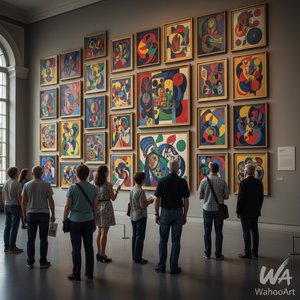
Oil On Canvas.

§ 1Catalogue data


See teos on autoriõigusega kaitstud
Sellel lehel kuvatav kunstiteos on kaitstud autoriõigusega, mis tähendab, et meil ei ole seaduslikku õigust luua või müüa identset reproduktsiooni. Seda kaitset rakendatakse rahvusvaheliste kokkulepete alusel, nagu näiteks Berne konventsioon ning riiklike seadustega, sealhulgas nendega, mida on sätestatud USA autoriõiguse seadus – 17. peatükk.
Austasena ja seaduslikuna alternatiivina pakume originaalist inspireeritud, käsitsi maalitud isikupärastatud teoseid. Meie osutavad ja professionalsed kunstnikud uurivad hoolikalt originaali stiili, meelemoi ja kunstilist olemust, et luua uus, ainulaadne teos, mis tekitab sama tunnet – olles samal ajal omaette originaalne looming.
See meetod järgib täielikult autoriõiguse reegleid, kuna see ei põhine kaitstud kunstiteose kopeerimisel või dupliteerimisel. Selle asemel on tegu loova reinterpreetatsiooniga – uue maaldisega, mis on algteosest inspireeritud, kuid ei ole sellest identiline.
 Loe lähemalt
§ 2Abstract
Kogumisobjekti kirjeldus
The painting depicts a man standing before a window, dressed in yellow shirt and black pants, gazing out at the scenery. A vibrant red wall serves as backdrop, enhancing the composition's dynamism. Rothko’s masterful technique captures the subject’s posture and expression.
Kunstniku elulugu
Mark Rothko (1903-1970) – abstraktsionistlik kunstnik, tuntud Color Field maalide poolest. Tema emotsionaalsed värvilised pindade teosed ja Rothko kabel on olulised 20. sajandi kunstis.
§ 3Commentary
The Weight of Silence: Contemplating Rothko’s Existential Vision
In the quietude of Mark Rothko’s Portrait 1, one encounters more than just a visual arrangement; one enters a profound dialogue with mortality. This work, emerging from the twilight of the artist's life in 1963, serves as an arresting stillness—a portrait not merely of a man, but of the deep, heavy contemplation inherent in confronting one's own end. While the canvas presents a figure standing before a window, the true subject is the palpable tension between the physical presence of the man and the vast, psychological space he inhabits. The composition captures a moment of profound introspection, where the boundaries between the individual and the infinite begin to blur.
The technique employed here is a masterclass in emotional condensation. Eschewing the frantic gestures of his contemporaries, Rothko utilized thin, luminous washes of pigment—vibrant cadmium yellows, deep crimsons, and somber ultramarine blues—to create expansive planes that seem to breathe upon the canvas. These colors are not merely decorative; they are conduits for raw sensation. As the edges of the rectangular forms bleed into one another, the viewer is invited to bypass intellectual analysis and instead tap into a primal, visceral experience. The way the red wall behind the subject vibrates against his yellow shirt creates a chromatic tension that mirrors the internal struggle between life's vitality and the encroaching shadows of uncertainty.
A Mirror to a Turbulent Era
To understand the gravity of this piece, one must look toward the historical landscape of the 1960s. As the world grappled with the anxieties of the Vietnam War and the looming threat of nuclear annihilation, Rothko sought refuge in a deliberate stripping away of the extraneous. This movement toward a refined minimalism was a reaction against the chaotic energy of earlier Abstract Expressionism. In this portrait, the simplicity of the man’s posture—hands on hips, gaze fixed outward—acts as a vessel for the collective anxieties of an era. The window behind him does not merely provide depth; it serves as a threshold between the known and the unknown, much like the artist's own transition from the tangible world to the realm of pure abstraction.
For the discerning collector or interior designer, this reproduction offers more than just aesthetic beauty; it provides an anchor of contemplative depth. The painting’s ability to command a room through its symbolic weight makes it a centerpiece for spaces dedicated to reflection and intellectual engagement. It is a work that demands presence, inviting anyone who stands before it to pause, breathe, and confront the beautiful, terrifying mystery of existence. Whether placed in a modern gallery setting or a private study, Portrait 1 remains an enduring testament to the power of color to evoke the human soul.
Korduvad küsimused
Milline on teose „Portrait 1“, autor Mark Rothko värvitoit?
Teose „Portrait 1“, autor Mark Rothko värvitoit on Clear Color Presence kütkusega.
Kas teose „Portrait 1“, autor Mark Rothko pilt on vabalt reproduseeritav?
Teos „Portrait 1“, autor Mark Rothko on lubaõiguslikult on endiselt autoriõiguse all under kaitse. See staatus reguleerib teose pildi reprodüseerimise võimalusi.
Kas „Portrait 1“, autor Mark Rothko kuulub nõutudud Abstract Expressionism teostega?
Teos „Portrait 1“, autor Mark Rothko on klassifitseeritud tasemele Iconic ning kuulub Abstract Expressionism suunasse.


 Lülita trükkitoodetele


 Kunstiteoste või reproduktsioonide puhul, mille üks külg on üle 105 cm (umbikmolt 41 tolli), saadetakse raam kirjal asendis, la Dismantlitud komplektina. See meetod tagab ohutuse kohaletoimetamisel ja väldib transpordil tekkivaid kahjustusi.