

Acrylic On Canvas.

§ 1Catalogue data

See teos on autoriõigusega kaitstud
Sellel lehel kuvatav kunstiteos on kaitstud autoriõigusega, mis tähendab, et meil ei ole seaduslikku õigust luua või müüa identset reproduktsiooni. Seda kaitset rakendatakse rahvusvaheliste kokkulepete alusel, nagu näiteks Berne konventsioon ning riiklike seadustega, sealhulgas nendega, mida on sätestatud USA autoriõiguse seadus – 17. peatükk.
Austasena ja seaduslikuna alternatiivina pakume originaalist inspireeritud, käsitsi maalitud isikupärastatud teoseid. Meie osutavad ja professionalsed kunstnikud uurivad hoolikalt originaali stiili, meelemoi ja kunstilist olemust, et luua uus, ainulaadne teos, mis tekitab sama tunnet – olles samal ajal omaette originaalne looming.
See meetod järgib täielikult autoriõiguse reegleid, kuna see ei põhine kaitstud kunstiteose kopeerimisel või dupliteerimisel. Selle asemel on tegu loova reinterpreetatsiooniga – uue maaldisega, mis on algteosest inspireeritud, kuid ei ole sellest identiline.
 Loe lähemalt
§ 2Abstract
Kogumisobjekti kirjeldus
Kunstniku elulugu
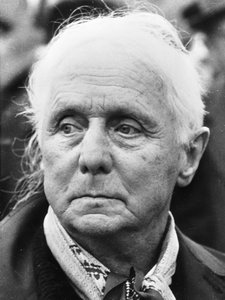
Avasta Max Ernsti (1891–1976) sürreaalne maailm! Saksa-amrilane oli Dada ja sürrealismi pioneer, tuntud oma frotaaži, kollaažide ja unenäolike maalidega. Tutvuge tema teoste psühholoogiliste teemadega!
§ 3Commentary
Les princes dorment mal: An Intriguing Portrait of Surrealist Imagination
“I never impose a title on a picture; I wait for the title to impose itself,” Max Ernst famously declared, encapsulating his artistic philosophy and highlighting the profound connection between artist and artwork. This sentiment perfectly embodies *Les princes dorment mal*, a captivating black and white painting by Ernst created in 1957—a piece that exemplifies the artist’s signature blend of dreamlike imagery and meticulous technique.
The artwork depicts a striking juxtaposition: a cat adorned with spectacles perched before a bird. The feline figure exudes an air of intellectual curiosity, accentuated by a neatly tied bow tie – a whimsical detail that speaks to Ernst's playful engagement with Surrealist conventions. Two birds inhabit the composition, one positioned prominently at the top left corner and another nestled towards the bottom right, contributing to the painting’s sense of depth and spatial arrangement.
Set against a backdrop of stylized trees—a recurring motif in Ernst’s oeuvre—the scene unfolds with an understated elegance. Ernst skillfully employs *grattage*, a technique he pioneered during his Surrealist years, scraping away layers of paint to reveal underlying textures and create a surface that resembles weathered bark or ancient stone. This method wasn't merely stylistic choice; it was a deliberate effort to liberate the image from conventional representation, channeling subconscious impulses into tangible form.
The painting’s historical context is firmly rooted in the late 1950s, a period marked by Ernst’s return to Europe after spending time in Arizona and his subsequent recognition as a leading figure in Surrealism. Following the prestigious Grand Prix awarded at the Venice Biennale in 1954—a pivotal moment signifying Ernst's resurgence on the international stage—the artist embarked on ambitious retrospectives that solidified his reputation and explored new avenues of artistic expression.
Beyond its formal qualities, *Les princes dorment mal* resonates with symbolic significance. The cat’s spectacles represent intellect and observation, while the bird embodies freedom and aspiration – themes central to Surrealist thought. Ernst's masterful manipulation of texture and color—though muted in this monochrome rendition—effectively conveys a mood of quiet contemplation and invites viewers to delve into the complexities of the subconscious mind. It is a testament to Ernst’s ability to transform everyday subjects into vehicles for profound psychological exploration.
The painting’s provenance traces back to Galerie Creuzevault in Paris, followed by The Mayor Gallery in London and Peggy Hennessy before finding its way into the hands of Couturier & Nicolay auction house. It was subsequently exhibited at venues including Tate Gallery London and Louisiana Museum of Modern Art Stockholm, cementing its place within the broader narrative of Ernst’s artistic legacy.
A publication by Werner Spies in 1988 noted that Ernst's work during this period showcased “no sign of complacency,” as he continued to refine his technique and revisit earlier themes. The meticulous detail evident in *Les princes dorment mal*, coupled with its evocative atmosphere, ensures its enduring appeal to collectors and interior designers alike—a timeless masterpiece embodying the spirit of Surrealist innovation.
Korduvad küsimused
Kas teoses „Les princes dorment mal“, autor Mak Ernst kasutatakse tugevaid kontraste või pehmeid harmooniaid?
Teose „Les princes dorment mal“, autor Mak Ernst värvikompositsioon ühendab endas Gentle kontrasti ja Softly Mixed Palette harmooniat.
Kui karge on teose "Les princes dorment mal" väripalett?
Teose "Les princes dorment mal" värvipalett on koonuse方面 Subtle Color.
Kuidas seda teost „Les princes dorment mal“, autor Mak Ernst saab kasutada kodukujunduses?
Teost "Les princes dorment mal" on soovitatav kasutada Accent jaoks ning selleks soovitellav ruum on Living Room.


 Lülita trükkitoodetele


 Kunstiteoste või reproduktsioonide puhul, mille üks külg on üle 105 cm (umbikmolt 41 tolli), saadetakse raam kirjal asendis, la Dismantlitud komplektina. See meetod tagab ohutuse kohaletoimetamisel ja väldib transpordil tekkivaid kahjustusi.


