


 Eelvaade
 Saada
Saada Jaga
Jaga
 Teave teose kohta
 Juhend

 Laadi alla
 Sarnased teosed
 Röntgenuuring
 Slaidietendus
 Q&A
Q&A Statistika
The Golden Cell


 Loe lähemalt
Giclée / Kunstiprint
Muuseumikvaliteediga giclée- või kangasprint kiire tootmisega ja paindlikud viimistlusvõimalused. ( Osta käsitsi maalatud teos Lülita digitaalse pildi juurde)




P118B €10

P118H €10

P118W €10

P438Z €10

P508JH €12

P508YH €12

P805H €10

P805Z €10

P919BZ €10

P919G €10

P919XJ €10

P959ZH €10

P968JZ €12

W106C €8

W218G €10

W218JH €8

W218Y €10

W307PJ €10

W316G €10

W316PJ €8

W316Y €10

W398PJ €8

W4111J €10

W500HY €15

W500JH €15

W692G €12

W849H €8

W940BG €15

W953PJ €8




Vali meie eelmääratud suurused, mis vastavad teose algupärastele proportsioonidele.

Sisestage vajalik laius ja kõrgus, et see sobiks teie raamile või seinale. Trükki saab ainult lõigata, seda ei saa kunagi pildist suuremaks teha, seega ka erineva mustega suurus kaotab osa pildist. Enne trükkimist saadame teile kinnitamiseks digitaalse näidisprojektsiooni. Sellel lehel näidatud pilt ei kujuta reaalset lõiget — seda näitab ainult näidisprojektsioon.
Ülemaailmne tarne () 2 nädala jooksul, tavalise 4/5 nädala asemel. (30 oktoober)

Tasuta ekspresssaatmine üle maailma

Kõrgekvaliteediline lina-kangas

Täielik transpordikindlustus

Tollimaksude tagastamise garantii

Värvitoime täpsuse garantii

100 päeva tagastusõigus (ainult valmistusdefektide korral)

100% raha tagasi garantii

Hulgusoodustus
 Klaasivalik on saadaval ainult kuni 110 cm suuruses teostes

The Golden Cell
Giclée / Kunstiprint
Reproduktsiooni suurus
-


Koguhind
€ 57
A Glimpse into the Subconscious Mind
Odilon Redon’s The Golden Cell, painted in 1892, is not merely a portrait; it is an invitation into the labyrinthine corridors of the human psyche. The subject—a woman rendered with striking blue tones against a luminous, almost ethereal yellow background—captures a moment suspended between deep thought and quiet revelation. Her downward gaze suggests introspection, as if she is contemplating secrets only visible in the stillness of her own mind. Redon, forever drawn to the unseen realms of imagination, uses this composition to transport the viewer beyond the tangible reality into a space rich with symbolic weight.
Symbolism and the Allure of Blue
The interplay of color is central to the painting's mesmerizing effect. The vibrant blue dominating the woman’s attire and features contrasts sharply yet harmoniously with the radiant yellow ground, creating an immediate visual tension that draws the eye inward. In Symbolist art, such colors often carry profound emotional resonance. Blue frequently speaks to melancholy, spirituality, or mystery, while gold tones suggest enlightenment or a sacred enclosure—the titular "Golden Cell." This juxtaposition hints at a soul contained within a moment of brilliant, yet perhaps isolating, contemplation. The elongated neck adds an almost sculptural quality to the figure, emphasizing her thoughtful detachment from the bustling world outside the canvas.
Mastery in Technique and Style
As a key exponent of Symbolism, Redon eschewed the straightforward narratives of academic art for something more suggestive and dreamlike. While his early work explored etching and lithography, The Golden Cell showcases his painterly ability to evoke atmosphere. The technique allows the edges to soften, blurring the line between solid form and surrounding ether. It is a masterful handling of light against shadow, giving the entire piece an almost phosphorescent quality. For those who appreciate art that whispers rather than shouts its meaning, this work exemplifies the delicate balance between detailed portraiture and pure emotional abstraction.
Creating an Atmosphere for Modern Spaces
For collectors and interior designers alike, The Golden Cell offers more than just aesthetic beauty; it provides a focal point of profound contemplation. Its rich, jewel-toned palette—the deep blues against the warm gold—makes it exceptionally versatile. Imagine this piece anchoring a drawing-room or a study, where its enigmatic presence encourages conversation and quiet reflection. Owning a high-quality reproduction allows one to bring this specific mood of sophisticated mystery into your personal sanctuary, transforming a mere wall into a portal to Redon’s imaginative world.
Korduvad küsimused
Kes lõi teose "The Golden Cell" ja millises stiilis see on?
Teose "The Golden Cell" on loonud Odilon Redon Symbolism stiilis. Kunstnik ja suunamine määratlevad teose traditsiooni.
Kuidas on "The Golden Cell" ajalooliselt positsioneeritud?
Teos „The Golden Cell“, autor Odilon Redon kuulub Symbolism suunale, mis on osa 19th Century ajastust. Koos annavad need teosele selle koha kunstiajas.
Milline värv on teoses "The Golden Cell" kõige silmapaistvam?
Midnight Blue (#2b2f6b) on teose „The Golden Cell“, autor Odilon Redon domineeriv värv.
Sarnased teosed


Kunstniku elulugu
Odilon Redon (1840-1916), Between Shadow and Light
Odilon Redon, born Bertrand Jean Redon in Bordeaux, France, was an artist perpetually drawn to translate the unseen realms of imagination and dream into tangible form. His artistic journey began not with grand ambition but with quiet observation; at just ten years old he won a drawing prize—a foreshadowing of the visual sensitivity that would define his life’s work. Though initially steered towards architecture by familial expectations, Redon's true calling lay elsewhere, illuminated by instruction from Jean- Léon Gérôme and, crucially, Rodolphe Bresdin, who guided him in the intricate arts of etching and lithography. These techniques became foundational to his early explorations, allowing him to delve into a world of shadowy figures and ambiguous forms that would soon captivate those seeking an alternative to academic realism. The interruption of the Franco-Prussian War saw Redon briefly serving in the military, but it was upon his return to Paris that his artistic vision truly began to coalesce.Early Life and Influences
Redon’s childhood was marked by a profound connection with nature—specifically the landscape surrounding Bordeaux and Peyrelebade vineyard estate near Listrac-Médoc where he spent summers. This formative experience instilled in him an enduring fascination with organic forms and textures, which would permeate his artistic output throughout his life. At seven, a visit to Parisian museums profoundly impacted his artistic sensibility, exposing him to the works of masters like Millet and Corot—artists who championed tonal landscapes and conveyed emotion through subtle shading. Formal art training began at age eleven under Stanislas Gorin, a pupil of Eugène Isabey, who introduced Redon to the Romantic and Symbolist traditions of painting. His father’s insistence on architectural studies ultimately proved unsuccessful in fulfilling his ambitions for a career in design, though he continued to pursue artistic endeavors alongside his professional pursuits. The influence of writers like Edgar Allan Poe and Charles Baudelaire—who shared a fascination with the macabre, the mysterious, and the power of suggestion—is palpable in Redon’s early works, shaping his stylistic choices and thematic concerns. Notably, he was deeply moved by Darwin's theory of evolution, which challenged prevailing scientific dogma and opened up new avenues for artistic exploration.The Birth of Symbolism: ‘Noirs’ and Early Visions
Redon’s artistic breakthrough arrived in 1879 with the publication of *Dans le rêve* (In the Dream)—his first album of lithographs printed by Lemercier—a pivotal moment that cemented his position within the burgeoning Symbolist movement. These monochrome prints, executed primarily in charcoal and lithography, represented a radical departure from academic realism, prioritizing emotional resonance over visual accuracy. The “noirs,” as these works came to be known, weren’t merely studies in darkness; they were explorations of the subconscious mind—populated by unsettling creatures, disembodied eyes, and haunting figures emerging from swirling mists. Redon deliberately rejected conventional artistic conventions, seeking instead to evoke feelings of anxiety, wonder, and melancholy—themes that would recur throughout his oeuvre. The stylistic echoes of Poe and Baudelaire are unmistakable: a shared preoccupation with psychological horror and the unsettling beauty of decay. Critics initially dismissed Redon’s “noirs” as morbid fantasies, yet they quickly gained recognition for their expressive power and masterful technique.Technique and Artistic Vision
Redon's mastery of etching and lithography—skills honed under Rodolphe Bresdin—became indispensable to his artistic process. He meticulously crafted each print, employing subtle tonal gradations and intricate textures to convey mood and atmosphere with remarkable precision. His use of charcoal was particularly distinctive, allowing him to capture the ethereal quality of dreams and visions—a stylistic hallmark that would define his signature style. Beyond technique, Redon possessed a profound philosophical outlook informed by scientific discoveries and literary influences. He believed in “placing the visible at the service of the invisible,” striving to represent not merely what he saw but what he felt—a principle that underpinned his artistic endeavors throughout his life. His fascination with mythology and Eastern religions—particularly Buddhism—manifested itself in symbolic imagery and compositional arrangements that reflected a desire for transcendence.Legacy and Influence
Odilon Redon’s impact on the art world extends far beyond his own lifetime. He was awarded the Legion of Honor in 1903, recognizing his contribution to French culture and artistic innovation. His work gained wider acclaim with exhibitions at the New York Armory Show in 1913—a landmark event that introduced modern art concepts to American audiences—and Mellerio published *Odilon Redon: Painter, Engraver* in 1923. Most importantly, Redon’s exploration of dreams and irrationality profoundly influenced Surrealist artists like Marcel Duchamp and Max Ernst, who adopted his stylistic techniques and thematic concerns as inspiration. His legacy remains one of artistic courage—a willingness to challenge conventions and embrace the ambiguous—and a testament to the transformative power of art to illuminate hidden dimensions of human experience. He truly captured the essence of Symbolism, prioritizing emotion over realism and delving into realms beyond the observable world.
Odilon Redon
1840 - 1916 , Prantsusmaa
Lühikest infot
- Artistic Movement Or Style: Symbolism
- Artists Or Movements Influenced By This Artist:
- Surrealism
- Marcel Duchamp
- Artists Who Influenced This Artist:
- Jean-Léon Gérôme
- Rodolphe Bresdin
- Date Of Birth: 1840
- Full Name: Odilon Redon
- Nationality: Prantsuse
- Notable Artworks:
- Centaurs
- Onnes
- Portrait of Ari Redon
- Place Of Death: Pariis
Sarnased artiklid

The Golden Hue: Exploring Symbolism & Emotion in Yellow Art
Explore the rich symbolism & emotional power of yellow in art history! From Van Gogh to Kandinsky, discover how artists used this vibrant hue. Expert analysis & high-quality reproductions at AllPaintingsStore.
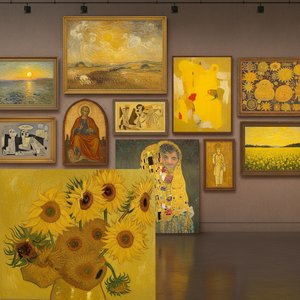
Golden Hues: 10 Masterpieces Dominated by Chrome Yellow | AllPaintingsStore
Immerse yourself in golden light! Explore 10 famous paintings dominated by 'Chrome Yellow', from Van Gogh’s Sunflowers to Monet's Haystacks. Discover the stories behind these iconic Impressionist & Post-Impressionist masterpieces and find museum-quality art reproductions at AllPaintingsStore.com.

The Allure of Azure: Exploring the Symbolic & Aesthetic Depths of Blue in Art History
Explore the rich history of blue in art! Discover its symbolism, from ancient pigments to modern masterpieces by Kandinsky & Seurat. Uncover the psychological impact and cultural meanings behind this captivating hue.
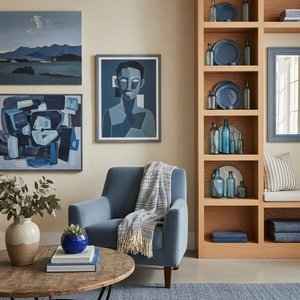
Slate Blue Masterpieces: 10 Iconic Paintings & Timeless Home Decor Ideas
Immerse yourself in the captivating world of slate blue! Explore 10 iconic paintings by Monet, Van Gogh & Renoir. Discover their stories, techniques & find museum-quality art reproductions for your home at .

Golden Hues: Top 10 Paintings Dominated by Yellow Ochre |
Explore 10 iconic paintings bathed in golden yellow ochre! From Van Gogh's sunflowers to Monet’s haystacks, discover the stories behind these masterpieces. Find museum-quality art reproductions & elevate your home decor on .


