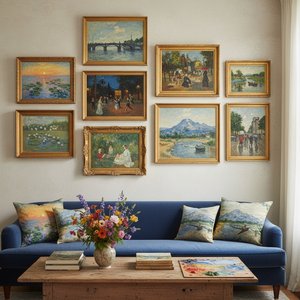
1877. Acrylic On Canvas, 217.0 x 130.0 cm. Artizon Museum.

§ 1Kataloogandmed

- 217.0 x 130.0 cm


§ 2Abstraktne
Kogumisobjekti kirjeldus
 Loe lähemalt
Kunstniku elulugu
Avasta Paul Cézanne (1839-1906): Postimpressionistlik pioniir, kes ühendas impressionismi ja kubismit. Tutvu geomeetriliste kujudega, stillelifidega ja tema püsiiväljaga kaasaegses kunstis! #Cezanne #Postimpressionism
§ 3Kommentaar
A Moment Frozen in Time: Cézanne’s ‘Bathers at Rest’
Paul Cézanne's “Bathers at Rest,” painted in 1877, isn’t merely a depiction of figures lounging by the water; it represents a profound shift in artistic sensibility—a decisive step away from Impressionism and toward the burgeoning explorations of Cubism. Initially dismissed by critics as amateurish and lacking finesse, Cézanne's unwavering dedication to his craft would eventually earn him recognition as one of the most influential artists of the late nineteenth century. This painting embodies a core principle of Cézanne’s artistic vision: capturing not just what is seen but how it *feels*.The Impressionist Legacy and Cézanne’s Departure
Cézanne began his artistic journey steeped in the influence of Impressionism, particularly artists like Renoir and Monet. Like them, he sought to convey fleeting sensations of light and atmosphere—the dappled sunlight filtering through foliage, the shimmering surface of water. However, Cézanne felt constrained by Impressionism’s preoccupation with optical accuracy. He believed that true art resided in distilling observation into its essential forms, rejecting the illusionistic techniques favored by his predecessors. This desire for simplification fueled his experimentation with geometric shapes and flattened planes—a characteristic that would soon define his distinctive style. The comparison to Renoir's "Rest" highlights this stylistic divergence; while Renoir strives for luminous beauty, Cézanne prioritizes structural integrity.Technique and Composition: Building Blocks of Perception
Cézanne’s masterful technique is evident in the meticulous layering of brushstrokes—a process known as “impasto.” Thickly applied paint creates a palpable texture that captures the physicality of the scene. The artist painstakingly rendered each element – the trunks of trees, the reclining figures – using interlocking planes and cylinders to suggest volume and depth without resorting to traditional perspective. This approach wasn’t simply about replicating reality; it was about reconstructing it in the artist's mind, translating visual experience into a more enduring form. Notice how Cézanne subtly manipulates color—muted greens and browns dominate the palette—creating an understated harmony that enhances the tranquility of the composition.Symbolism Beyond Surface Beauty
Beyond its aesthetic appeal, “Bathers at Rest” carries symbolic weight. The figures themselves represent humanity’s connection to nature – a theme prevalent in Romantic art preceding Cézanne's time. However, Cézanne transcends mere representation; he imbues the scene with an emotional resonance that speaks to themes of contemplation and repose. The positioning of the men—facing away from each other—suggests a deliberate separation, yet simultaneously underscores their shared experience of stillness. It’s as if Cézanne is inviting us to pause and consider the profound beauty inherent in simple moments of existence.A Lasting Impression: Influence on Modern Art
“Bathers at Rest” stands as a cornerstone of Post-Impressionism and profoundly impacted subsequent artistic movements, notably Cubism pioneered by Picasso and Braque. Cézanne’s exploration of form and color paved the way for artists to dismantle traditional conventions and embrace abstraction—a radical departure from representational art that continues to inspire creativity today. Its enduring appeal lies in its ability to capture not just what we see but how we *feel*, cementing Cézanne's place as a visionary artist who fundamentally reshaped the landscape of modern art.Korduvad küsimused
Millissele kunstisuunale kuulub teos „Bathers at Rest“, autor Paul Cézanne?
Teosest „Bathers at Rest“, autor Paul Cézanne tuntud kunstisuuna on Post-Impressionist Landscape. See klassifikatsioon aitab teost paigutada sarnaste kunstnike ja teoste hulka.
Millale Paul Cézanne karjääri etapile vastab teose "Bathers at Rest" kuupäev 1877?
Aasta 1877 aitab teosele "Bathers at Rest" määrata Paul Cézanne loomingulise arengu perioodi Mature Period.
Mis on teose „Bathers at Rest“, autor Paul Cézanne loomisaeg?
Teose „Bathers at Rest“, autor Paul Cézanne loomimisaastaks on märgitud 1877.


 Lülita trükkitoodetele


 Kunstiteoste või reproduktsioonide puhul, mille üks külg on üle 105 cm (umbikmolt 41 tolli), saadetakse raam kirjal asendis, la Dismantlitud komplektina. See meetod tagab ohutuse kohaletoimetamisel ja väldib transpordil tekkivaid kahjustusi.