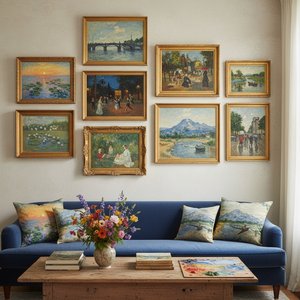
1890. Oil On Canvas.

§ 1Catalogue data


§ 2Abstract
Kogumisobjekti kirjeldus
“Boy Resting” by Paul Cézanne (1890) embodies Post-Impressionist serenity through simple brushstrokes and evocative composition—a pivotal piece bridging Impressionism & Cubism's legacy. Explore Cézanne’s genius!
 Loe lähemalt
Kunstniku elulugu
Avasta Paul Cézanne (1839-1906): Postimpressionistlik pioniir, kes ühendas impressionismi ja kubismit. Tutvu geomeetriliste kujudega, stillelifidega ja tema püsiiväljaga kaasaegses kunstis! #Cezanne #Postimpressionism
§ 3Commentary
Paul Cézanne: Bridging Impressionism and Cubism
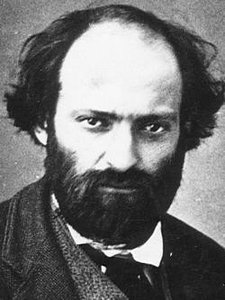
Paul Cézanne (1839–1906) stands as an undeniable cornerstone of modern art, marking the decisive transition from the shimmering surfaces of Impressionism to the fractured geometries of Cubism. More than simply copying what he saw; Cézanne fundamentally reimagined how artists could represent reality—a radical departure that profoundly influenced generations of painters and cemented his legacy as “the father of us all,” according to luminaries like Henri Matisse and Pablo Picasso. His unwavering dedication to exploring new modes of representation wasn’t merely stylistic innovation; it was a philosophical quest for capturing the essence of existence itself.- Early Influences: Cézanne's formative years were steeped in Romanticism, particularly the landscapes of Jean-François Millet and Théodore Rousseau, which instilled in him an appreciation for tonal harmony and atmospheric perspective—elements he would retain throughout his career. Simultaneously, he absorbed the stylistic impulses of Impressionists like Claude Monet and Camille Pissarro, recognizing their masterful use of color to convey fleeting sensations. However, Cézanne swiftly moved beyond mere imitation, perceiving Impressionism as a valuable springboard for developing his own distinctive vision.
- The Cézanne Style: Cézanne’s artistic style is characterized by repetitive, exploratory brushstrokes—a technique that would become synonymous with his name—and an obsessive focus on the underlying structure of objects. Unlike Impressionists who sought to capture optical impressions, Cézanne aimed to depict what he believed was “the truth” of a subject—a conviction rooted in his belief that art should strive for permanence and universality. He achieved this goal by simplifying forms into geometric shapes—cylinders, cones, and cubes—and applying color in a manner that prioritized tonal relationships over accurate depiction.
- Notable Works: Cézanne’s oeuvre encompasses an astonishing range of subjects—landscapes, portraits, still lifes—each rendered with meticulous attention to detail and imbued with palpable emotion. Among his most celebrated paintings are “Mont Sainte-Victoire,” a monumental depiction of the Provençal mountain that embodies Cézanne's unwavering commitment to capturing the grandeur of nature; “Boy Resting,” a serene portrayal of a young boy contemplating solitude, reflecting Cézanne’s fascination with human psychology and spirituality; and “Still Life with Apples, a Bottle and a Milk Pot,” which exemplifies his masterful manipulation of color and form to convey a sense of quiet contemplation.
- Historical Context: Cézanne's artistic journey unfolded against the backdrop of a rapidly changing cultural landscape—the waning influence of academic art and the burgeoning excitement surrounding avant-garde movements like Impressionism and Symbolism. Initially, his work faced considerable criticism from conservative critics who deemed it crude and lacking in finesse. However, fellow artists recognized Cézanne’s genius early on, fostering a supportive environment that enabled him to refine his technique and develop his artistic vision.
- Legacy: Cézanne's influence extends far beyond the confines of Impressionism and Cubism—he served as an inspiration for countless artists who sought to break free from traditional conventions and explore new expressive possibilities. His pioneering approach to composition, color theory, and tonal harmony continues to resonate with contemporary painters and designers alike, ensuring that Cézanne’s legacy endures as a testament to the transformative power of artistic innovation.
His unwavering pursuit of truth—expressed through simplified forms and harmonious colors—established him as an unparalleled visionary who fundamentally reshaped the trajectory of modern art.
Korduvad küsimused
Millist kasutusviisi ja ruumi on „Boy Resting“, autor Paul Cézanne jaoks soovitatav?
Teose „Boy Resting“, autor Paul Cézanne kohta on esitatud kaks soovitust: kasutus (Accent) ja ruum (Living Room).
Kuhu kohta on teose "Boy Resting" Landscape formaat soovitatav paigutada?
Formaat (Landscape) ja soovitatav ruum (Living Room) on teose „Boy Resting“, autor Paul Cézanne kohta kirjutatud kaks paigutusandmet.
Millise riigi kunstilihubast pärineb Post-Impressionism teos "Boy Resting"?
Teos "Boy Resting" ühendab oma looja sünneloolise piirkonna ja Prantsusmaa läbi Post-Impressionism suunaga.


 Lülita trükkitoodetele


 Kunstiteoste või reproduktsioonide puhul, mille üks külg on üle 105 cm (umbikmolt 41 tolli), saadetakse raam kirjal asendis, la Dismantlitud komplektina. See meetod tagab ohutuse kohaletoimetamisel ja väldib transpordil tekkivaid kahjustusi.