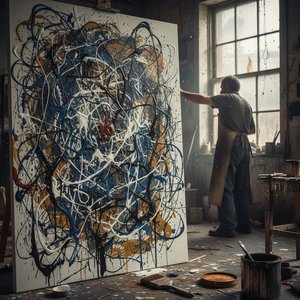
1948. Acrylic On Canvas, 575.0 x 784.0 cm.

§ 1Catalogue data

- 575.0 x 784.0 cm


§ 2Abstract
Kogumisobjekti kirjeldus
 Loe lähemalt
Kunstniku elulugu
Avastage Jackson Pollocku (1912-1956) revolutsioonilist kunsti – abstraktse ekspressionismi ja tilkkunnsti pioneeri loomingut. Tutvuge tema ikooniliste lõuendite, emotsionaalse intensiivsuse ning kaasaegse kunsti püsiva mõjuga. #AbstraktneEkspressionism #Pollock
§ 3Commentary
Number 23: A Symphony of Chance and Texture
Jackson Pollock’s “Number 23,” completed in 1948, stands as an undeniable cornerstone of Abstract Expressionism—a movement that fundamentally challenged artistic conventions and prioritized emotional expression over representational accuracy. More than just pigment on paper; it's a visceral embodiment of the artist’s process and a profound meditation on spontaneity and control within chaos.
- Composition & Technique: Pollock famously employed the “drip” technique, applying paint directly from cans onto a canvas laid horizontally on the floor. Gravity became an active collaborator, guiding the flow of pigment and resulting in a mesmerizing network of interwoven lines, splatters, and drips. This method deliberately eschewed traditional brushstrokes, favoring chance and improvisation—a radical departure from academic painting.
- Color Palette & Texture: The artwork’s restrained color palette – primarily black and white accented by subtle grey tones – serves to amplify the textural richness of the piece. Thick impasto layers create dramatic contrasts between smooth areas and densely textured surfaces, inviting viewers to explore the tactile qualities of the painting.
- Historical Context & Influence: Created during the height of the postwar artistic fervor in New York City, “Number 23” reflects the broader anxieties and aspirations of its time. Pollock’s work directly responded to the influence of Surrealism and Gestalt psychology, pushing boundaries on how artists could convey emotion and explore subconscious impulses.
- Symbolic Resonance: While devoid of recognizable imagery, "Number 23" speaks volumes about the artist's inner state. The seemingly random arrangement of lines can be interpreted as a visual representation of thought processes—a deliberate attempt to capture the fluidity and dynamism of consciousness. It’s a celebration of process over product.
- Emotional Impact: Viewing “Number 23” evokes feelings of energy, excitement, and perhaps even unease. The painting's dynamic composition compels contemplation, prompting viewers to consider the relationship between order and disorder—a theme that resonates deeply within the human experience.
Its current location at Tate Britain underscores its enduring significance as a pivotal work of modern art. A high-quality reproduction captures not only the visual splendor but also the spirit of innovation that defined Pollock’s groundbreaking approach to painting—a legacy that continues to inspire artists and collectors alike.
Korduvad küsimused
Kuidas teos "Number 23" sobitub artisti Jackson Pollock teemade ja stiiliga?
"Number 23" kuulub Jackson Pollock Abstract Expressionism perioodi teosetele, mille tuntud teemad hõlmavad pollock’s surrealist roots, western expressionism spirit, chance, improvisation mastery, iconic drip painting style, central to pollock legacy.
Millist tooni suundub "Number 23"?
Teose „Number 23“, autor Jackson Pollock domineeriv toon on Green to Violet Spectrum. See toon on paleti alusvärv.
Kas Jackson Pollock teos "Number 23" kuulub avalikku omandisse ja miks?
Teose "Number 23" autoriõiguste staatus - avalikus õiguses – selle autoriõigud onหมดunud - tuleneb kunstniku surma aastast 1956.


 Lülita trükkitoodetele


 Kunstiteoste või reproduktsioonide puhul, mille üks külg on üle 105 cm (umbikmolt 41 tolli), saadetakse raam kirjal asendis, la Dismantlitud komplektina. See meetod tagab ohutuse kohaletoimetamisel ja väldib transpordil tekkivaid kahjustusi.