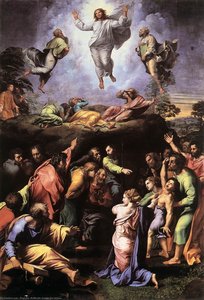
Õlimaal kangaruumil.

§ 1Kataloogandmed


§ 2Abstraktne
Kogumisobjekti kirjeldus
Discover Raphael’s ‘Madonna Alba,’ a serene High Renaissance tondo showcasing Mary, Jesus & John the Baptist. Explore its sfumato technique and rich history at the National Gallery of Art.
 Loe lähemalt
Kunstniku elulugu
Raffaello (1483-1520) oli renessansiaegne meister, tuntud oma kaunite Maarjadega, arhitektuuri geniaalusega ja ikooniliste teostega nagu 'Ateenes Akadeemia'. Avasta tema algus Urbinos ja kunstiline pärand!
§ 3Kommentaar
A Vision of Serenity: Exploring Raphael’s *Madonna Alba* Raphael’s *Madonna Alba*, painted around 1511, is a quintessential example of High Renaissance artistry. This captivating circular oil painting – a *tondo* – presents the Virgin Mary with the infant Jesus and young John the Baptist in a tranquil Italian landscape, radiating peace and divine grace. It's a work that continues to inspire awe centuries after its creation.
Subject & Composition: A Sacred Encounter
The scene depicts a tender moment of familial connection within a sacred context. Mary, seated on a simple bench, gazes gently upon the Christ Child and John the Baptist. The young John offers Jesus a cross – a poignant foreshadowing of his future sacrifice. Raphael masterfully arranges the figures in a harmonious circular design, creating a sense of unity and balance. The Madonna’s outstretched arm and flowing cloak act as visual anchors, counterbalancing the composition and drawing the viewer's eye through the scene. The landscape isn’t merely backdrop; it actively participates in the serenity of the moment.Style & Technique: The Renaissance Ideal
*Madonna Alba* embodies the core tenets of High Renaissance style: idealized beauty, anatomical accuracy, and harmonious composition. Raphael's skill is particularly evident in his application of *sfumato*, a technique pioneered by Leonardo da Vinci. This subtle blending of colors creates soft transitions and an ethereal quality, lending the painting a dreamlike atmosphere. The smooth brushstrokes and meticulous detail – visible in the rendering of fabrics, skin tones, and landscape elements – showcase Raphael’s technical virtuosity.Historical Journey: From Italy to Washington D.C.
The history of *Madonna Alba* is as compelling as the artwork itself. Originating in Italy, it was acquired by the Dukes of Alba in Spain before entering the collection of Nicholas I of Russia in 1836 and finding a home within the Imperial Hermitage Museum in Saint Petersburg. A clandestine sale to Andrew W. Mellon in 1931 brought the painting to America, where it has resided at the National Gallery of Art in Washington, D.C., since 1937. Interestingly, during its time in the Hermitage, the original circular panel was transferred to canvas due to structural damage, a conservation effort that left subtle marks visible today.Symbolism & Emotional Resonance
Beyond its aesthetic beauty, *Madonna Alba* is rich in symbolism. The cross presented by John the Baptist represents Jesus’s future passion and redemption. The serene landscape evokes a sense of paradise and divine tranquility. More profoundly, the painting embodies themes of maternal love, spiritual devotion, and the promise of salvation. Its emotional impact is one of profound peace and contemplation, inviting viewers to connect with the sacred narrative on a deeply personal level.A Timeless Masterpiece for Today’s Spaces
*Madonna Alba* remains a powerful testament to Raphael's genius and the enduring legacy of the Renaissance. Its harmonious composition, delicate color palette, and profound emotional depth make it an ideal focal point for any interior – from classic to contemporary. Whether admired in its original form at the National Gallery or as a meticulously crafted reproduction, this artwork continues to inspire and uplift generations of art lovers.- Ideal for: Living rooms, bedrooms, libraries, meditation spaces.
- Complements: Classical, Renaissance Revival, Transitional, and Modern interiors.
- Evokes a feeling of: Peace, serenity, spiritual contemplation, timeless beauty.
Korduvad küsimused
Millist trükkimisi ja suunast on teosele „Madonna Alba“, autor Raphael soovitatav kasutada?
Teose „Madonna Alba“, autor Raphael trükkimiseks on soovitatav kasutada suurust Keskmine suurus ja orientatsiooni Ruuduline.
Millisesse ruumi on teose „Madonna Alba“, autor Raphael värvide tõttu soovituslik paigutada?
Kuna teose "Madonna Alba" värvigamma on Neutraalsed toonid, soovitame selle paigutamiseks Elutuba.
Kust saan leida sarnaseid teoseid kui „Madonna Alba“, autor Raphael?
Teosed, mis sarnanevad teosega "Madonna Alba", on loetletud selle teose Sarnased teosed lehel.


 Lülita trükkitoodetele


 Kunstiteoste või reproduktsioonide puhul, mille üks külg on üle 105 cm (umbikmolt 41 tolli), saadetakse raam kirjal asendis, la Dismantlitud komplektina. See meetod tagab ohutuse kohaletoimetamisel ja väldib transpordil tekkivaid kahjustusi.