Rahatagastus garantii · 100 päeva Tasuta kohaletoimetamine üle maailma
449582teosed 30618kunstnikud 4705muuseumid 32keeled
Valuta
    Keel
      Ateljee · Asutatud 2015 · Pariis, Prantsusmaa
      AllPaintingsStore
      allpaintingsstore.com
      Vaata sisu Vaata AR-eelvaadet Lülita trükkitoodetele Ülemineku digitaalse pildi müügi kanalisse Jaga teost
      Detailid Õppekate juhend Lisa lemmikutesse Laadi alla Sarnased teosed Röntgenuuring Slaidietendus Statistika

      Donna

      René Magritte’s "Donna," painted in 1923, captures an intimate and passionate scene of two nude figures embracing with bold reds, oranges, and greens – a classic surrealist depiction reflecting Magritte's fascination with mystery and the unseen. Discover this captivating artwork and bring its enigmatic beauty into your space.

      René Magritte (1898–1967) – belgia sürrealist kunstnik, tuntud teostega nagu "The Lovers" ja "Ceci n’est pas une pipe". Tema pilkupüüdvad kompositsioonid sepitavad reaalsust ja kujutist, mõjutades pop-kunsti ja kontseptuaalset kunsti.

      Sellel lehel kuvatav kunstiteos on kaitstud autoriõigusega, mis tähendab, et meil ei ole seaduslikku õigust luua või müüa identset reproduktsiooni. Seda kaitset rakendatakse rahvusvaheliste kokkulepete alusel, nagu näiteks Berne konventsioon ning riiklike seadustega, sealhulgas nendega, mida on sätestatud USA autoriõiguse seadus – 17. peatükk.

      Austasena ja seaduslikuna alternatiivina pakume originaalist inspireeritud, käsitsi maalitud isikupärastatud teoseid. Meie osutavad ja professionalsed kunstnikud uurivad hoolikalt originaali stiili, meelemoi ja kunstilist olemust, et luua uus, ainulaadne teos, mis tekitab sama tunnet – olles samal ajal omaette originaalne looming.

      See meetod järgib täielikult autoriõiguse reegleid, kuna see ei põhine kaitstud kunstiteose kopeerimisel või dupliteerimisel. Selle asemel on tegu loova reinterpreetatsiooniga – uue maaldisega, mis on algteosest inspireeritud, kuid ei ole sellest identiline.

      Käsitsi valmistatud õlimaalireproduktsioon

      Meie kunstnike poolt tellimusel valmistatud käsitsi maalitud õli-kainaste teos teie soovitud suuruses ja raamis. ( Lülita trükkitoodetele Ülemineku digitaalse pildi müügi kanalisse)

      Corner sample of the P118B picture frame: moulded polystyrene, 5 cm wide and 3 cm thick
      P118B 10
      Corner sample of the P118H picture frame: moulded polystyrene, 5 cm wide and 3 cm thick
      P118H 10
      Corner sample of the P118W picture frame: moulded polystyrene, 5 cm wide and 3 cm thick
      P118W 10
      Corner sample of the P438Z picture frame: moulded polystyrene, 5.5 cm wide and 3.5 cm thick
      P438Z 10
      Corner sample of the P508JH picture frame: moulded polystyrene, 7 cm wide and 3.5 cm thick
      P508JH 12
      Corner sample of the P508YH picture frame: moulded polystyrene, 7 cm wide and 3.5 cm thick
      P508YH 12
      Corner sample of the P805H picture frame: moulded polystyrene, 5 cm wide and 3.5 cm thick
      P805H 10
      Corner sample of the P805Z picture frame: moulded polystyrene, 5 cm wide and 3.5 cm thick
      P805Z 10
      Corner sample of the P919BZ picture frame: moulded polystyrene, 7 cm wide and 3.5 cm thick
      P919BZ 10
      Corner sample of the P919G picture frame: moulded polystyrene, 7 cm wide and 3.5 cm thick
      P919G 10
      Corner sample of the P919XJ picture frame: moulded polystyrene, 7 cm wide and 3.5 cm thick
      P919XJ 10
      Corner sample of the P959ZH picture frame: moulded polystyrene, 5 cm wide and 3 cm thick
      P959ZH 10
      Corner sample of the P968JZ picture frame: moulded polystyrene, 6 cm wide and 4 cm thick
      P968JZ 12
      Corner sample of the W106C picture frame: solid wood, 5 cm wide and 3 cm thick
      W106C 8
      Corner sample of the W218G picture frame: solid wood, 5 cm wide and 3 cm thick
      W218G 10
      Corner sample of the W218JH picture frame: solid wood, 5 cm wide and 3 cm thick
      W218JH 8
      Corner sample of the W218Y picture frame: solid wood, 5 cm wide and 3 cm thick
      W218Y 10
      Corner sample of the W307PJ picture frame: solid wood, 6 cm wide and 3 cm thick
      W307PJ 10
      Corner sample of the W316G picture frame: solid wood, 6 cm wide and 3 cm thick
      W316G 10
      Corner sample of the W316PJ picture frame: solid wood, 6 cm wide and 3 cm thick
      W316PJ 8
      Corner sample of the W316Y picture frame: solid wood, 6 cm wide and 3 cm thick
      W316Y 10
      Corner sample of the W398PJ picture frame: solid wood, 5 cm wide and 3 cm thick
      W398PJ 8
      Corner sample of the W4111J picture frame: solid wood, 6.5 cm wide and 3.5 cm thick
      W4111J 10
      Corner sample of the W500HY picture frame: solid wood, 7 cm wide and 5 cm thick
      W500HY 15
      Corner sample of the W500JH picture frame: solid wood, 7 cm wide and 5 cm thick
      W500JH 15
      Corner sample of the W692G picture frame: solid wood, 8 cm wide and 4 cm thick
      W692G 12
      Corner sample of the W849H picture frame: solid wood, 5 cm wide and 3 cm thick
      W849H 8
      Corner sample of the W940BG picture frame: solid wood, 7.5 cm wide and 4.5 cm thick
      W940BG 15
      Corner sample of the W953PJ picture frame: solid wood, 6 cm wide and 3.5 cm thick
      W953PJ 8

      Standardne suurus
      kohandatud
      CM
      INCH

      Vali meie eelmääratud suurused, mis vastavad teose algupärastele proportsioonidele.

      laius
      kõrgus

      Sa võite sisestada oma mõõtmed konkreetse raami või ruumi sobivuse tagamiseks. Kui teie valitud suurus ei vasta originaalpildi proportsioonidele, siis kärvime kunstiteost või laiendame maali täiendavate käsitsi maalitud elementidega. Enne tootmise algust saadetakse teile heakskiitmiseks digitaalne eelvaade.
      Palun pidage meeles, et ekraanil kuvatav eelvaade ei kajasta tegelikku kärpimist või laiendamist. Ainult eelvaade näitab täpselt lõplikku kompositsiooni.
      Kuigi on saadaval kohandatud suurused, soovitame originaalproportsioonide säilimiseks valida mõõdud eelmääratletud nimekirjast.

      Näited muudetavatest elementidest: asenda nägu kliendi fotoga; lisa lemmikloom (nt asenda kass koeraga); lisa taustale peidetud sõnum; muuda tausta maastikku või elemente.
      Pärast tellimust saadab AllPaintingsStore.com meeskond kliendile e-posti juhised ning esitab eelvaate kavandi

      Maailmline tarne 3–4 nädala jooksul tavalise 5 nädala asemel. (9 oktoober). Kvaliteedis kompromisse ei tehta.

      Tasuta ekspresssaatmine üle maailma
      Kõrgekvaliteediline lina-kangastest muld
      Täielik transpordikindlustus
      Tollimaksude tagastamise garantii
      Värvitoime täpsuse garantii
      100 päeva tagastusõigus (ainult defektide korral)
      100% raha tagasi garantii
      Hulgusoodustus

      Kogu summa

      € 222

      Donna

      Reproduktsiooni materjal

      Reproduktsiooni mõõtmed

      -

      Lõppsumma

      € 222

      Teave teose kohta

      • Notable elements: Intimate scene, colors
      • Dimensions: 46 x 38 cm
      • Title: Donna
      • Subject or theme: Nudity, passion
      • Influences: Impressionism
      • Movement: Surrealism
      • Artist: René Magritte

      A Portrait of Intimacy and Unseen Grief: René Magritte’s “Donna”

      René Magritte's 1923 painting, "Donna," is not merely a depiction of two nude figures embracing; it’s a profoundly unsettling meditation on loss, perception, and the enduring power of memory. Executed during a pivotal period in the artist’s development, this work exemplifies the burgeoning surrealist movement’s fascination with challenging conventional representations of reality. Measuring 46 x 38 cm, “Donna” immediately draws the viewer into its intensely private scene, dominated by the passionate yet strangely detached interaction between the two central figures.

      • Subject and Composition: The painting centers on a woman – "Donna," as the title suggests – positioned to the left of the canvas. Her body is turned towards an unseen partner, their embrace conveying a palpable sense of intimacy. The dynamic arrangement, with limbs intertwined and bodies occupying a significant portion of the frame, creates a powerful visual narrative.
      • Color Palette: Magritte masterfully employs a vibrant yet restrained color palette dominated by rich reds, oranges, and greens. These hues aren’t used for mere decorative effect; they contribute to the painting's emotional intensity, evoking feelings of both warmth and unease. The strategic use of color adds depth and complexity to the scene, subtly guiding the viewer's eye.
      • Technique: Magritte’s technique is characterized by meticulous detail and a precise rendering of form. His brushwork is smooth and controlled, creating a polished surface that contrasts with the unsettling subject matter. This technical precision further enhances the painting’s surreal quality, amplifying its impact on the viewer.

      The Shadow of Loss: Symbolism and Personal History

      To fully appreciate “Donna,” it's crucial to understand the context of René Magritte’s life at the time of its creation. Born in 1898, Magritte experienced a deeply formative event – his mother’s suicide – when he was just thirteen years old. The image of her body recovered from the River Sambre, with her dress obscuring her face, became an enduring motif within his work. This haunting memory is powerfully echoed in “Donna,” where the veiled figure and the ambiguous nature of the embrace suggest a profound sense of grief and unresolved trauma. The painting can be interpreted as a symbolic representation of this personal loss, exploring themes of absence, vulnerability, and the difficulty of confronting painful memories.

      • Veiled Figures: The obscured faces of the figures contribute significantly to the painting’s enigmatic quality. This deliberate obscuring mirrors Magritte's broader interest in challenging viewers’ perceptions of reality and prompting them to question what is truly visible.
      • Intimate Embrace: The act of embracing itself carries a complex symbolic weight, representing both connection and separation. In “Donna,” the embrace feels simultaneously comforting and unsettling, reflecting the artist’s own struggle with loss and his exploration of human relationships.

      A Surrealist Vision: Context and Influence

      "Donna" was created during a period when Magritte was actively developing his distinctive surrealist style. Emerging from the artistic circles surrounding André Breton, Magritte sought to disrupt conventional notions of representation and tap into the subconscious mind. This painting aligns with the broader surrealist project of challenging rational thought and exploring the irrational aspects of human experience. It’s a key example of how Magritte used seemingly ordinary subjects – in this case, two nude figures – to create profoundly unsettling and evocative images.

      • Surrealism's Core Principles: The painting embodies several core principles of surrealism, including the juxtaposition of incongruous elements, the exploration of dreamlike imagery, and the rejection of traditional artistic conventions.
      • Influence of Early Masters: While Magritte developed his own unique style, he was undoubtedly influenced by earlier masters such as Édouard Manet and Gustave Moreau, whose works explored themes of beauty, mystery, and psychological depth.

      Emotional Impact and Artistic Value

      "Donna" remains a powerfully evocative work that continues to captivate viewers with its unsettling beauty and profound emotional resonance. Its meticulous technique, symbolic richness, and historical context combine to create an artwork of exceptional artistic value. This hand-painted reproduction offers a unique opportunity to experience the full impact of Magritte’s vision, bringing this enigmatic masterpiece into your home or studio.

      Küsimused ja vastused

      Millissele stiilile kuulub "Donna"?

      Teosest „Donna“, autor René Magritte tuntud kunstisuuna kuulub Surrealist Movement stiili. See klassifikatsioon aitab teost paikutada sarnaste kunstnike ja teoste hulka.

      Mis aastal loodi teos „Donna“, autor René Magritte?

      Teos "Donna" on pärit aastast 1923. See ajastu aitab mõistust seda teost René Magritte karjääri ja selle ajastu kontekstis.

      Milline suurus on soovituslik teosele "Donna" ruumis Living Room?

      Soovitatav kombinatsioon teosele „Donna“, autor René Magritte: Large trükis Living Room-s.

      Mis on teose „Donna“, autor René Magritte domineeriv toonsalm?

      Teose „Donna“, autor René Magritte läbimõtes on tunda Golden Yellow Range toonist.

      Millast ajastu kuulub teos "Donna"?

      Teose „Donna“, autor René Magritte ajalooline periood on Modern. See klassifikatsioon aitab teost kunstiloostikuliselt paikata.

      Millisele kunstnikule on teos "Donna" atribuutseeritud?

      Teose "Donna" autoriks on mõeldud René Magritte.

      Mis vanuses loos René Magritte teose "Donna"?

      René Magritte oli 25 aastane, kui ta lõi teose "Donna" aastal 1923. Empiiriline vanus on arvutatud kunstniku sünnaaasta põhjal, 1898.


      Kunstniku elulugu

      René Magritte (1898–1967): Exploring the Surrealist Landscape

      René Magritte, born René François Ghislain Magritte on November 21, 1898, in Lessines, Belgium, emerged from a childhood profoundly shaped by tragedy – the untimely death of his mother when he was merely thirteen. This formative experience instilled within him an unwavering fascination with mystery, loss, and the unsettling power of what remains unseen; it would subtly permeate his artistic vision throughout his prolific career.

      Early Artistic Explorations: Impressionism and Beyond

      Despite initial inclinations toward Impressionism, Magritte swiftly recognized its limitations in conveying the complexities he wished to explore. He enrolled at the Académie Royale des Beaux-Arts in Brussels, seeking a more rigorous training but ultimately rejecting its formal conventions. Recognizing the influence of Giorgio de Chirico’s *The Song of Love* (1922), Magritte discovered a new aesthetic path—one where familiar landscapes could transform into dreamlike realms and commonplace objects could provoke unsettling questions about reality.

      The Surrealist Breakthrough: Challenging Perception

      Magritte's commitment to Surrealism solidified in 1926 with *Le Jockey Perdu*, marking his decisive departure from traditional artistic styles. Embracing the principles of automatism championed by André Breton, he sought to liberate creativity from conscious control, mirroring the broader intellectual currents of the era. His distinctive approach distinguished him from many fellow Surrealists; Magritte wasn’t interested in delving into subconscious anxieties through free association but rather in meticulously crafting visual paradoxes that disrupted viewers' perceptions.

      Iconic Works and Recurring Themes: Paradoxical Imagery

      Magritte’s oeuvre is characterized by a masterful manipulation of illusion and representation. *The Treachery of Images (This is not a pipe)* (1929) exemplifies his genius—a deceptively simple depiction that compels us to reconsider the relationship between image and object, mirroring the core tenets of Surrealist thought. Similarly, *Les Amants* (1927-1928), featuring shrouded figures, echoes the trauma of his mother’s death while simultaneously exploring themes of concealment and intimacy. Masterpieces like *Time Transfixed* (1938) and *The Human Condition* (1933) further demonstrate Magritte's ability to unsettle viewers with unsettling juxtapositions and visual puzzles.

      Legacy and Influence: A Surrealist Pioneer

      René Magritte’s artistic legacy extends far beyond the confines of Belgian art history. His pioneering exploration of Surrealism profoundly impacted subsequent generations of artists—from Pop Art luminaries like Andy Warhol to Minimalist sculptors such as Donald Judd—establishing him as a cornerstone of 20th-century visual culture. Today, his paintings reside in prestigious museum collections worldwide, including the Musées royaux des beaux-arts de Belgique and the Magritte Museum, ensuring that his visionary aesthetic continues to inspire awe and provoke contemplation for decades to come.

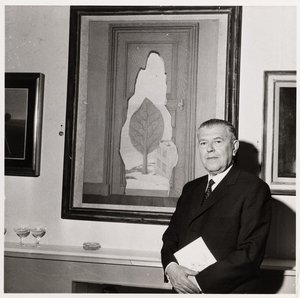
      René Magritte

      René Magritte

      1898 - 1967 , Belgia

      Lühikest infot

      • Artistic Movement Or Style: Surrealism
      • Artists Who Influenced This Artist: ['Giorgio de Chirico']
      • Date Of Birth: November 21, 1898
      • Date Of Death: August 15, 1967
      • Full Name: René François Ghislain Magritte
      • Nationality: Belgian
      • Notable Artworks:
        • Les Amants
        • The Treachery of Images
        • Time Transfixed
      • Place Of Birth: Lessines, Belgium
      Avastage teoseid, mis on koondatud teemade, stiilide ja omaduste kaupa.