- Avaleht

- Trükk lõendile
- René Magritte
- Surprises and ocean

 Eelvaade
 Saada
Saada Jaga
Jaga
 Teave teose kohta

 Laadi alla
 Sarnased teosed
 Röntgenuuring
 Slaidietendus
Surprises and ocean

 Loe lähemalt
Giclée / Kunstiprint
Muuseumikvaliteediga giclée- või kangasprint kiire tootmisega ja paindlikud viimistlusvõimalused. ( Lülita käsitsi maalatud版本le Vaata pilti)




P118B $10

P118H $10

P118W $10

P438Z $10

P508JH $12

P508YH $12

P805H $10

P805Z $10

P919BZ $10

P919G $10

P919XJ $10

P959ZH $10

P968JZ $12

W106C $8

W218G $10

W218JH $8

W218Y $10

W307PJ $10

W316G $10

W316PJ $8

W316Y $10

W398PJ $8

W4111J $10

W500HY $15

W500JH $15

W692G $12

W849H $8

W940BG $15

W953PJ $8




Vali meie eelmääratud suurused, mis vastavad teose algupärastele proportsioonidele.

Saate sisestada oma mõõdud, et need sobiks konkreetse raami või ruumi sisse. Kui valitud suurus ei vasta originaalteose proportsioonidele, lõigame teose ära või laiendame pilti peegeldatud või ühtlase servaga. Enne tootmisprotsessi algust saadetakse Teie kinnitamiseks digitaalne näidis.
Palun märka, et ekraanil kuvatav eelvaade ei kajasta tegelikku lõigamist või laiendamist. Ainult näidis kujutab täpselt lõplikku kompositsiooni.
Kuigi erimõõdu on saadaval, soovitame originaaproportsioonide säilitamiseks valida mõõt ette määratud nimekirjast.
Ülemaailmne tarne () 2 nädala jooksul, tavalise 4/5 nädala asemel. (3 august)

Tasuta ekspresssaatmine üle maailma

Kõrgekvaliteediline linakangas

Täielik transpordikindlustus

Tollimaksude tagastamise garantii

Värvitoime täpsuse garantii

60-päevane tagastusõig: ainult tootmisdefektide korral

100% raha tagasi garantii

Hulgusoodustus
 Klaasivalik on saadaval ainult suuruses kuni 110 cm

Surprises and ocean
Giclée / Kunstiprint
Reproduktsiooni suurus
-


Kogusumma
$ 65
Kogumuse kirjeldus
Surprises and Ocean: A Surrealist Meditation on Perception
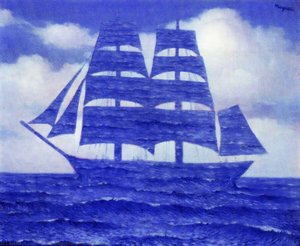
René Magritte’s “Les surprises et l’océan,” completed in 1927, stands as a cornerstone of Surrealist art—a deceptively simple composition brimming with intellectual depth and unsettling ambiguity. More than just a depiction of a beach scene, it's an invitation to question the very nature of reality itself, reflecting Magritte’s profound fascination with the interplay between illusion and truth. This artwork exemplifies his signature style: blending meticulous realism with dreamlike distortions, creating images that simultaneously captivate and confound the viewer.Composition and Technique
The painting presents a starkly horizontal landscape dominated by grey sand and an expanse of muted blue ocean. At its center sits a solitary figure—a torso devoid of head—seated passively on the shore. Behind him rests a table bearing several conical shapes, rendered with precise oil paint strokes that convey texture and depth. Magritte’s masterful technique is evident in the smooth blending of colors and the subtle gradations of tone, achieved through layering thin glazes over a primed canvas – a hallmark of his artistic practice. The angular forms of the cones and table legs contrast sharply with the organic curve of the figure's torso, furthering the sense of disorientation and highlighting Magritte’s deliberate manipulation of perspective.Symbolism and Conceptual Depth
The headless figure is arguably the painting’s most potent symbol—representing a profound absence of identity or consciousness. It embodies the Surrealist preoccupation with exploring the subconscious mind and challenging conventional notions of selfhood. Simultaneously, the cones serve as enigmatic representations of fragmented thoughts or memories, mirroring Magritte's exploration of psychological complexities. The ocean itself symbolizes vastness, uncertainty, and the hidden depths of experience—a visual metaphor for the unknowable realms beyond our immediate perception. As Giorgio de Chirico profoundly influenced Magritte’s artistic vision, “Les surprises et l’océan” echoes De Chirico’s pioneering use of unsettling juxtapositions to destabilize viewers' expectations.Historical Context and Influence
Created during Magritte’s formative years as a Surrealist artist, "Les surprises et l’océan" aligns with the movement’s core tenets—namely, liberation from rational thought and an embrace of irrational imagery. Inspired by artists like Max Ernst and Jean Arp, Magritte sought to disrupt accepted visual conventions and provoke contemplation about the relationship between appearance and reality. The painting's impact extends beyond its immediate aesthetic qualities; it anticipates the broader trends in 20th-century art—particularly Surrealism’s influence on Pop Art and Conceptual Art—demonstrating Magritte’s enduring legacy as a visionary artist who continues to inspire artists and collectors alike.Emotional Resonance
“Les surprises et l’océan” evokes a palpable sense of melancholy and isolation, mirroring Magritte's own personal struggles with loss and trauma. The painting compels viewers to confront uncomfortable questions about perception and representation—to consider what is visible versus what remains hidden beneath the surface. Its quiet stillness belies its intellectual richness, inviting contemplation on themes of existential uncertainty and the elusive nature of consciousness. This artwork serves as a testament to Magritte’s ability to distill complex psychological ideas into strikingly evocative visual forms – a timeless masterpiece that resonates with audiences across generations.Sarnased teosed


Kunstniku elulugu
René Magritte (1898–1967): Exploring the Surrealist Landscape
René Magritte, born René François Ghislain Magritte on November 21, 1898, in Lessines, Belgium, emerged from a childhood profoundly shaped by tragedy – the untimely death of his mother when he was merely thirteen. This formative experience instilled within him an unwavering fascination with mystery, loss, and the unsettling power of what remains unseen; it would subtly permeate his artistic vision throughout his prolific career.
Early Artistic Explorations: Impressionism and Beyond
Despite initial inclinations toward Impressionism, Magritte swiftly recognized its limitations in conveying the complexities he wished to explore. He enrolled at the Académie Royale des Beaux-Arts in Brussels, seeking a more rigorous training but ultimately rejecting its formal conventions. Recognizing the influence of Giorgio de Chirico’s *The Song of Love* (1922), Magritte discovered a new aesthetic path—one where familiar landscapes could transform into dreamlike realms and commonplace objects could provoke unsettling questions about reality.
The Surrealist Breakthrough: Challenging Perception
Magritte's commitment to Surrealism solidified in 1926 with *Le Jockey Perdu*, marking his decisive departure from traditional artistic styles. Embracing the principles of automatism championed by André Breton, he sought to liberate creativity from conscious control, mirroring the broader intellectual currents of the era. His distinctive approach distinguished him from many fellow Surrealists; Magritte wasn’t interested in delving into subconscious anxieties through free association but rather in meticulously crafting visual paradoxes that disrupted viewers' perceptions.
Iconic Works and Recurring Themes: Paradoxical Imagery
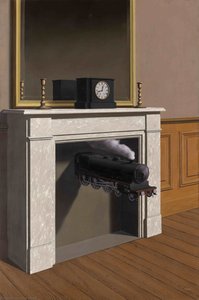
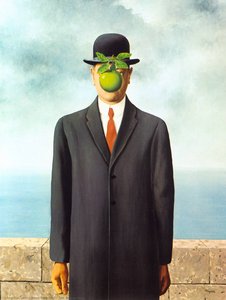
Magritte’s oeuvre is characterized by a masterful manipulation of illusion and representation. *The Treachery of Images (This is not a pipe)* (1929) exemplifies his genius—a deceptively simple depiction that compels us to reconsider the relationship between image and object, mirroring the core tenets of Surrealist thought. Similarly, *Les Amants* (1927-1928), featuring shrouded figures, echoes the trauma of his mother’s death while simultaneously exploring themes of concealment and intimacy. Masterpieces like *Time Transfixed* (1938) and *The Human Condition* (1933) further demonstrate Magritte's ability to unsettle viewers with unsettling juxtapositions and visual puzzles.
Legacy and Influence: A Surrealist Pioneer
René Magritte’s artistic legacy extends far beyond the confines of Belgian art history. His pioneering exploration of Surrealism profoundly impacted subsequent generations of artists—from Pop Art luminaries like Andy Warhol to Minimalist sculptors such as Donald Judd—establishing him as a cornerstone of 20th-century visual culture. Today, his paintings reside in prestigious museum collections worldwide, including the Musées royaux des beaux-arts de Belgique and the Magritte Museum, ensuring that his visionary aesthetic continues to inspire awe and provoke contemplation for decades to come.
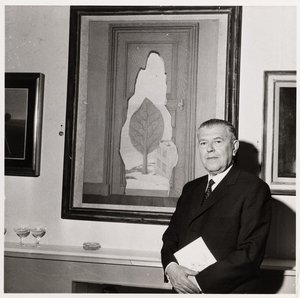
René Magritte
1898 - 1967 , Belgia
Lühikesed faktid
- Artistic Movement Or Style: Surrealism
- Artists Who Influenced This Artist: ['Giorgio de Chirico']
- Date Of Birth: November 21, 1898
- Date Of Death: August 15, 1967
- Full Name: René François Ghislain Magritte
- Nationality: Belgian
- Notable Artworks:
- Les Amants
- The Treachery of Images
- Time Transfixed
- Place Of Birth: Lessines, Belgium
Seotud artiklid

Surrealist Painting Masterpieces: 10 Artworks That Redefined Reality | AllPaintingsStore
Journey into the dreamlike world of Surrealism! Explore 10 masterpieces by Dali, Magritte & Miró that redefined art. Discover their stories & find museum-quality reproductions to elevate your home decor on AllPaintingsStore.com.
René Magritte: 25 meistriteost, mis muudavad teie kodu kunstigaleriiks | AllPaintingsStore
Avastage René Magritte 25 kõige ikoonilisemat maali! Sukeldume surrealismi maailma, õppige kunstniku lugu ja tehnikat ning leidke inspiratsiooni oma kodukaunistuseks. Kvaliteetsed reprodubktsioonid AllPaintingsStore.com-is. Avastage kogu kollektsioon online!
Oil on Canvas Masters: 10 Paintings That Redefined Art History |
Journey through art history with our guide to 10 legendary oil on canvas masterpieces! Explore iconic works by Van Gogh, Monet & Rembrandt. Find museum-quality reproductions and elevate your home decor at . Discover all masterpieces online.

The Azure Depths: Exploring Representations of the Ocean in Art History
Explore the rich history of ocean art! Discover Romantic seascapes, renowned artists like Aivazovsky & Harris, and expert guidance for collectors at AllPaintingsStore.com.

Echoes of Urban Life: A Visual Exploration of Street Scenes in Art History
Explore the captivating world of realism in art history! Discover iconic street scenes & genre paintings from masters like Courbet & Brown. Expert analysis & museum-quality reproductions at AllPaintingsStore.