- Avaleht

- Õlimaalireproduktsioon
- Simone Martini
- Blessed Agostino Novello Altarpiece

 Telli trükis Osta digipilt
 Saada
Saada
 Jaga
Jaga
 Teave teose kohta
 Lisa lemmikutesse

 Laadi alla
 Sarnased teosed
 Röntgenuuring
 Slaidietendus
Blessed Agostino Novello Altarpiece


 Loe lähemalt
Käsitsi valmistatud õlimaalireproduktsioon
Meie kunstnike poolt tellimusel valmistatud käsitsi maalitud õli-kainaste teos teie soovitud suuruses ja raamis.




P118B $10

P118H $10

P118W $10

P438Z $10

P508JH $12

P508YH $12

P805H $10

P805Z $10

P919BZ $10

P919G $10

P919XJ $10

P959ZH $10

P968JZ $12

W106C $8

W218G $10

W218JH $8

W218Y $10

W307PJ $10

W316G $10

W316PJ $8

W316Y $10

W398PJ $8

W4111J $10

W500HY $15

W500JH $15

W692G $12

W849H $8

W940BG $15

W953PJ $8




Vali meie eelmääratud suurused, mis vastavad teose algupärastele proportsioonidele.

Sa võite sisestada oma mõõtmed konkreetse raami või ruumi sobivuse tagamiseks. Kui teie valitud suurus ei vasta originaalpildi proportsioonidele, siis kärvime kunstiteost või laiendame maali täiendavate käsitsi maalitud elementidega. Enne tootmise algust saadetakse teile heakskiitmiseks digitaalne eelvaade.
Palun pidage meeles, et ekraanil kuvatav eelvaade ei kajasta tegelikku kärpimist või laiendamist. Ainult eelvaade näitab täpselt lõplikku kompositsiooni.
Kuigi on saadaval kohandatud suurused, soovitame originaalproportsioonide säilimiseks valida mõõdud eelmääratletud nimekirjast.
Pärast tellimust saadab AllPaintingsStore.com meeskond kliendile e-posti juhised ning esitab eelvaate kavandi.
Maailmline tarne 3–4 nädala jooksul tavalise 5 nädala asemel. (16 juuli). Kvaliteedis kompromisse ei tehta.

Tasuta ekspresssaatmine üle maailma

Kõrgekvaliteediline linakangas

Täielik transpordikindlustus

Tollimaksude tagastamise garantii

Värvitoime täpsuse garantii

60-päevane tagastusõig: ainult tootmisdefektide korral

100% raha tagasi garantii

Hulgusoodustus
 Klaasivalik on saadaval ainult suuruses kuni 110 cm

Blessed Agostino Novello Altarpiece
Reproduktsiooni tehnika
Reproduktsiooni suurus
-


Kogusumma
-
Teose kirjeldus
A Vision of Sanctity and Civic Life: Simone Martini’s Blessed Agostino Novello Altarpiece
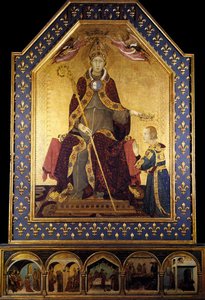
Simone Martini's *Blessed Agostino Novello Altarpiece*, created in 1324, transcends the boundaries of mere religious painting; it embodies a profound reflection on Sienese identity and its spiritual core. Commissioned for the church of Sant’Agostino in Siena—a city grappling with burgeoning civic pride alongside unwavering faith—this tempera on wood panel represents a watershed moment in Martini's artistic trajectory, marking his triumphant return to his homeland after years spent honing his craft amidst diverse influences like Assisi and Pisa. More than just an image intended for devotional contemplation, the altarpiece functioned as a deliberate proclamation of Siena’s values – piety interwoven with prosperity—a testament to Martini’s astute understanding of how art could shape cultural perception.Martini's Technique: Graceful Lines and Luminous Color
Simone Martini distinguished himself from his contemporaries through an unparalleled mastery of technique, prioritizing elegance and subtlety over the grandeur favored by Florentine artists like Giotto. His distinctive style hinged on a meticulous attention to detail—graceful lines defining drapery folds with breathtaking precision, creating textures that seemed to shimmer under the light—and a masterful manipulation of color. Martini’s skillful use of tempera – applying pigments mixed with egg yolk onto prepared wood – achieved an extraordinary luminosity, imbuing the surfaces of his paintings with an ethereal glow. The strategic application of gold leaf, particularly prominent in the central panel and framing elements, amplified this effect, symbolizing divine splendor and elevating the altarpiece’s visual impact beyond mere representation. This meticulous craftsmanship speaks volumes about Martini's dedication to capturing not just what was seen but also what was felt—a hallmark of the International Gothic style that he championed.Decoding the Narrative: Miracles and Civic Identity
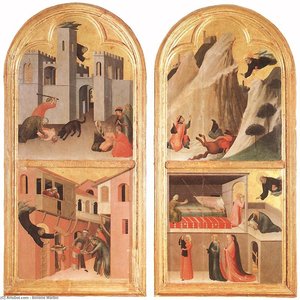
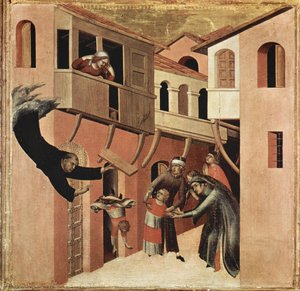
The narrative unfolding across the altarpiece’s multiple panels is equally compelling, reflecting a sophisticated engagement with theological concepts intertwined with civic concerns. The central depiction of Blessed Agostino Novello himself isn't simply a portrait; it’s a carefully constructed symbol of Sienese virtue—intellectual prowess coupled with moral integrity—a figure revered for his piety and recognized as protector of the city. Surrounding him are scenes illustrating miracles attributed to Agostino, each rendered with painstaking realism yet imbued with an underlying spiritual significance. These aren't dramatic spectacles designed to elicit awe; rather, they depict intimate acts of compassion – a child rescued from peril, livestock safeguarded from harm—underscoring Agostino’s connection to the everyday lives of Sienese citizens and reinforcing the altarpiece’s message about divine providence guiding human affairs. Notably, these miraculous interventions unfold against meticulously crafted backgrounds depicting Siena itself—a deliberate gesture that anchors the sacred realm within the tangible realities of civic life.A Legacy of Elegance: Martini’s Influence on Italian Art
Simone Martini's *Blessed Agostino Novello Altarpiece* stands as an enduring emblem of his artistic genius and a cornerstone in the history of Italian painting—a movement that profoundly shaped European art for decades to come. His stylistic innovations – prioritizing gracefulness, refined detail, and luminous color – decisively diverged from Giotto’s monumental style, establishing a new aesthetic standard that resonated throughout Italy and beyond. Martini's influence extended far beyond Siena, inspiring artists across Europe who embraced the International Gothic style—characterized by its delicate ornamentation and expressive emotionalism. Today, reproductions of this masterpiece offer art enthusiasts and interior designers alike an opportunity to experience firsthand the beauty and serenity of Martini’s vision – a timeless testament to the transformative power of art to inspire contemplation and elevate our understanding of faith and culture.


Kunstniku elulugu
Simone Martini (c.1284–1344) – A Sienese Master of Elegance and Grace
Simone Martini, born around 1284 in Siena, Italy—though precise birthdates remain elusive—stands as a cornerstone figure in the transition from medieval to Renaissance art. He wasn’t merely a painter; he was an architect of elegance, a master of line and color who infused his works with a courtly refinement that distinguished him from contemporaries like Giotto di Bondone. Historical accounts regarding Martini’s formative years are fragmentary—scholarly debate centers on whether he apprenticed under Duccio di Buoninsegna, the dominant Sienese artist of his time, or if Florence and Giotto exerted a more profound influence—yet Martini undeniably forged an artistic path uniquely his own.
Origins and Education – The Seeds of Style
The exact circumstances surrounding Simone’s upbringing are shrouded in obscurity. Tradition suggests he was born in Siena’s Sant’Egidio district, possibly the son of Martino Senese, a craftsman specializing in preparing arriccio—the initial plaster layer applied to wall surfaces destined for fresco painting—though corroborating evidence remains scant. Regardless of his precise origins, Martini’s artistic training undoubtedly commenced within Duccio di Buoninsegna’s workshop, where he absorbed the stylistic precepts of Sienese Gothic.
The Siena Workshop – Collaboration and Patronage
Martini’s formative years were marked by close association with Memmo di Filippuccio, another artisan active in San Gimignano—a partnership that fostered not only professional growth but also exposure to the burgeoning artistic culture of Tuscany. Crucially, Martini secured his first major civic commission in 1311: the frescoing of the *Maestà* for Siena’s Palazzo Pubblico—a monumental undertaking that cemented Duccio’s legacy and established Martini as a rising talent.
The Maestà – A Synthesis of Tradition
The *Maestà*, completed in 1315, represents a pivotal moment in Martini’s artistic trajectory. It served as an homage to Duccio’s own masterpiece—a stylistic echo that underscored Martini’s commitment to established Sienese conventions. Yet, Martini transcended mere imitation; he innovated through meticulous attention to detail and the incorporation of groundbreaking techniques—particularly the use of metallic pigments and punching—resulting in a painting that embodies both grandeur and exquisite refinement.
International Gothic – Influence and Artistic Vision
Martini’s stylistic hallmark is undeniably International Gothic, a movement characterized by its delicate beauty, elongated figures, flowing drapery, and opulent ornamentation. This aesthetic was profoundly shaped by artistic currents originating from France—specifically the illuminated manuscripts and ivory carvings of Parisian ateliers—which Martini skillfully assimilated into his own distinctive vision.
Later Career – Avignon and Artistic Circles
Martini’s renown extended beyond Siena, attracting commissions from papal patrons in Avignon—a city at the epicenter of European power during the thirteenth century. His presence within Francesco Petrarca’s intellectual circle further enriched his artistic milieu—a connection underscored by Vasari’s account of Martini’s portrait of Laura de Noves—demonstrating Martini's ability to capture not only physical likeness but also the essence of beauty and inspiration.
Legacy – An Enduring Influence
Simone Martini’s contribution to European art history is undeniable. He championed International Gothic style, disseminating its aesthetic principles across the continent and shaping the artistic sensibilities of subsequent generations. His frescoes in San Francesco d’Assisi exemplify his mastery of large-scale decorative painting—a testament to Martini's unparalleled command of color, form, and compositional harmony. Martini died in Avignon in 1344, leaving behind a legacy that continues to inspire awe and admiration centuries later—a beacon of elegance and artistic innovation.

Simone Martini
1284 - 1344 , Itaalia
Lühikesed faktid
- Artistic Movement Or Style: International Gothic
- Artists Who Influenced This Artist:
- Duccio di Buoninsegna
- Francesco Petrarca
- Date Of Birth: c. 1284
- Date Of Death: 1344
- Full Name: Simone Martini
- Nationality: Italian
- Notable Artworks:
- Saint Louis Crowning Robert
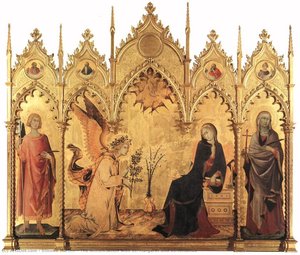
- Annunciation (Uffizi)
- Consecration of Chapel
- Place Of Birth: Siena, Italy
Seotud artiklid

Beyond Borders: The Spiritual & Stylistic Innovations of International Gothic Art
Explore the exquisite beauty & spiritual depth of International Gothic art. Discover key artists like Simone Martini & Pol de Limbourg, its origins, symbolism, and lasting influence on European painting. Expert insights at AllPaintingsStore.

The Radiant Dusk of Medieval Vision: Exploring Late Gothic Art's Synthesis of Faith, Form & Emotionality (c. 1300-1500)
Explore the exquisite beauty & spiritual depth of Late Gothic art (c. 1300-1500). Discover key artists, symbolism, and its lasting influence on the Renaissance. Expert insights at AllPaintingsStore.

Simone Martini: Innovation, Spirituality & Courtly Refinement in Sienese Painting
Explore the captivating world of Simone Martini, a pivotal figure in Sienese painting & the International Gothic style. Discover his innovative techniques, spiritual depth, and lasting influence on early Renaissance art.

Late Medieval Masterpieces: 10 Artworks That Defined an Era | AllPaintingsStore
Journey through 10 defining Late Medieval masterpieces – from Giotto's frescoes to Jan van Eyck’s realism. Explore the stories, techniques & vibrant colors of Gothic art. Find museum-quality reproductions and elevate your home decor with AllPaintingsStore.com! Discover all masterpieces on AllPaintingsStore.com

Domenico Beccafumi: A Sienese Master Between Mannerism & Baroque Anticipation
Explore the captivating world of Domenico Beccafumi, a pivotal figure bridging Mannerism & Baroque art. Discover his unique style, religious masterpieces, and lasting legacy with AllPaintingsStore.