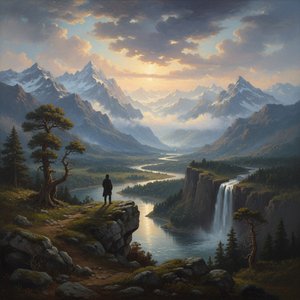
William Parrott: Luminist Pioneer of the Oregon Landscape
William Parrott (December 18, 1843 – November 9, 1905) stands as a pivotal figure in British coalmining history and a respected voice within the burgeoning Liberal Labour movement. Born at Row Green, Somerset, his formative years were marked by humble beginnings—a brickyard laborer’s son—laying the groundwork for a life dedicated to social justice and artistic expression. Despite lacking formal education, Parrott possessed an innate curiosity and self-reliance that propelled him into leadership roles within the Yorkshire Miners Association, shaping the trajectory of British industrial relations at the turn of the century. His unwavering commitment to miners' rights earned him recognition as a champion for working-class dignity and fueled his involvement in political activism.- Early Career & Union Involvement: Parrott’s ascent began with his appointment as checkweighman at Good Hope Pit, Normanton Common, establishing him as a cornerstone of the Yorkshire Miners Association from 1872 onwards. This role fostered connections within the broader trade union landscape and culminated in his election as general secretary in 1904, solidifying his position as a leading advocate for miners’ welfare.
- Political Engagement: Recognizing his potential beyond the mines, Parrott transitioned into parliamentary politics, securing the Liberal candidacy for East Leeds and subsequently winning the seat at the 1905 by-election following the death of Ben Pickard. His advocacy for miners' interests resonated with voters and cemented his commitment to Liberal principles.
- Influence on Miners’ Rights: Parrott’s impassioned speeches during debates on the Finance Bill underscored his profound understanding of the challenges facing British coalminers. He championed the cause of fair wages and warned against exploitation, shaping public discourse on labor issues and demonstrating a steadfast dedication to protecting miners' livelihoods.
Artistic Vision: Luminism and the Oregon Landscape
Beyond his political activism, Parrott possessed an extraordinary talent for painting—a passion nurtured by self-study and honed through experience. He embraced Luminist style, characterized by its ethereal light and atmospheric perspective, capturing the grandeur of the Oregon and Pacific Northwest landscapes with remarkable sensitivity. His canvases depict scenes of Mt. Hood’s majestic peaks bathed in soft hues, conveying a profound connection to nature's beauty and sublimity. This stylistic choice reflects Parrott’s belief that art could illuminate moral truths and inspire contemplation—a conviction evident throughout his oeuvre.- Technique & Style: Parrott’s Luminist approach prioritized capturing the essence of light and air, eschewing detailed realism in favor of conveying mood and emotion. He employed subtle gradations of color and carefully considered composition to create immersive vistas that transported viewers into the heart of Oregon's wilderness.
- Notable Works: Among his most celebrated paintings are depictions of Mt. Hood’s summit, rendered with breathtaking accuracy and imbued with a palpable sense of awe. These landscapes stand as testament to Parrott’s artistic prowess and his ability to translate visual experience into powerful expressions of emotion.
Legacy & Historical Significance
William Parrott's contributions extended beyond the realm of art and politics—he served as a beacon of compassion and advocacy for marginalized communities. His unwavering dedication to miners’ rights established him as a champion for social justice, shaping debates on labor policy and influencing the trajectory of British industrial history. Furthermore, his Luminist paintings continue to inspire admiration for their beauty and philosophical depth, securing his place among Britain's most influential artists of the late nineteenth century. Parrott’s life exemplifies the transformative power of self-belief, artistic passion, and unwavering commitment to ethical ideals—a legacy that resonates powerfully today.Küsimused ja vastused
Kas saan William Parrott teoseid kunstisuunadega grupeerituna sirvida?
William Parrott teoseid saab kunstniku Kõik suunad lehel sirvida kunstisuunata jaotatud kujundite kaupa.
Kust saan vaadata kõiki kunstiteoseid autori William Parrott kohta?
Kõiki William Parrott teoseid see veebileht lehel saab vaadata artisti Kõik teosed lehelt.
Kas saan uurida William Parrott värvikasutust kõigis teostes?
William Parrott teoste väriprofiil on nähtav kunstniku Palettide genoom lehel.