


 Katso seinällä
 Lähetä
 Jaa
Jaa
 Tarkemmat tiedot
 Guide
Guide

 Lataa kuva
 Samanlaisia kohteita
 Röntgenkuvaus
 Diaesitys
 Tilastot
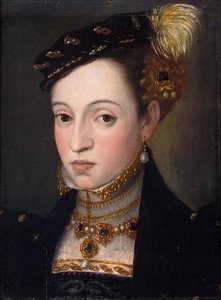
Eleonora da Toledo
 Oil On Panel
- Renaissance
 1543
1543- Renaissance
 46.0 x 59.0 cm
 Lue lisää
Käsinmaalattu öljyvärinen jäljennös
Käsinmaalattu öljyväri kankaalle haluamassasi koossa ja kehyksissä, taiteilijoidemme valmistamana tilauksesta. ( Vaihda tulosteeseen Siirry digitaaliseen kuvaan)




P118B $10

P118H $10

P118W $10

P438Z $10

P508JH $12

P508YH $12

P805H $10

P805Z $10

P919BZ $10

P919G $10

P919XJ $10

P959ZH $10

P968JZ $12

W106C $8

W218G $10

W218JH $8

W218Y $10

W307PJ $10

W316G $10

W316PJ $8

W316Y $10

W398PJ $8

W4111J $10

W500HY $15

W500JH $15

W692G $12

W849H $8

W940BG $15

W953PJ $8




Valitse valmiista mitoistamme sellaiset, jotka vastaavat teoksen alkuperäisiä mittasuhteita.

Voit syöttää omat mitat sopimaan tiettyyn kehykseen tai tilaan. Jos valitsemasi koko ei vastaa alkuperäisen kuvan mittasuhteita, rajaamme taideteoksen tai jatkamme maalausta käsin maalatuilla elementeillä. Digitaalinen esikatselu lähetetään hyväksyttäväksi ennen tuotannon aloittamista.
Huomioithan, että näytöllä oleva esikatselu ei vastaa todellista rajausta tai jatkamista. Vain digitaalinen mallikuva näyttää lopullisen sommittelun tarkasti.
Vaikka mittatilaustyöt ovat mahdollisia, suosittelemme valitsemaan mitan ennalta määritetystä listasta alkuperäisten mittasuhteiden säilyttämiseksi.
Tilauksen jälkeen AllPaintingsStore.com -tiimi lähettää asiakkaalle sähköpostitse ohjeet ja esikatselukuvan.
Maailmanlaajuinen toimitus () 3–4 viikossa tavallisen 5 viikon sijaan. (21 syyskuu). Laadusta ei tingitä.

Ilmainen pikatoimitus ympäri maailman

Korkealaatuinen pellavakangas

Kattava kuljetusvakuutus

Tulliveron palautustakuu

Takuu täydellisestä värien vastaavuudesta

100 päivän palautusoikeus valmistusvirhetapauksissa

100% rahat takaisin -takuu

Määräalennus saatavilla
 Lasivaihtoehto on saatavilla vain alle 110 cm kokoisille teoksille

Eleonora da Toledo
Reproduktiotapa
Replikaatin koko
-


Kokonaishinta
$ 258
The Regal Grace of Eleonora da Toledo
To gaze upon Agnolo Bronzino's depiction of Eleonora da Toledo is to encounter a moment suspended in the rarefied air of Renaissance aristocracy. This portrait, executed in 1543, transcends mere likeness; it is a carefully constructed tableau of power, poise, and impeccable taste. The subject herself, a prominent member of the Spanish royal family, is rendered with an almost breathtaking stillness. Bronzino captures not just her physical beauty—the sweep of her long hair, the delicate placement of her necklace—but the very weight of her station. She confronts the viewer with an elegant directness, inviting us into the intimate, yet highly formal, world of courtly life.
Mastery in Technique and Material
The technical brilliance evident in this piece speaks volumes about Bronzino's mastery over his chosen medium. Executed in oil on panel, the paint adheres to a level of detail and luminosity that was revolutionary for its time. The richness achieved through the oils allows the vibrant pink of her gown to seem almost luminous against the subtle background tones. Observe the handling of the fabric; it drapes with an engineered perfection, suggesting both weight and fluidity simultaneously. Bronzino’s signature touch is this ability to achieve profound realism while maintaining a sense of idealized artifice—a hallmark of High Renaissance portraiture.
The Echoes of Mannerist Elegance
Bronzino stands as a quintessential figure of Florentine Mannerism, an era defined by sophisticated refinement and emotional restraint. While the drama of earlier periods might have favored overt emotion, Bronzino favors composure. His style is characterized by an almost cool harmony and balance; every fold of cloth, every strand of hair, contributes to an overall sense of controlled magnificence. This reserved elegance suggests a deep understanding of social codes—the portrait functions as much as a statement of lineage and status as it does a record of appearance. It is art that whispers rather than shouts its importance.
A Timeless Presence for Modern Spaces
For the discerning collector or designer, this reproduction offers more than just decoration; it offers an heirloom quality steeped in history. The cool, sophisticated palette and the subject's enduring grace allow this piece to integrate seamlessly into interiors ranging from stately drawing rooms to modern galleries. Owning a representation of Eleonora da Toledo is to curate a dialogue between centuries—a conversation between the opulence of 16th-century Spain and the refined sensibilities of today. It serves as an immediate focal point, lending an air of cultivated history and undeniable grandeur to any space it graces.
Samankaltaisia teoksia




Taiteilijan elämäkerta
Agnolo Bronzino – Florentine Master of Reserved Elegance
Agnolo di Cosimo, known to history as Bronzino, emerged from the vibrant artistic landscape of Renaissance Florence in 1503, a period already brimming with genius. Born the son of a butcher, his path diverged sharply from familial trade, guided instead by an innate talent that would see him become one of the most sought-after portraitists of his era and a defining figure of Mannerism. His early training began with Raffaellino del Garbo, but it was under the tutelage of Jacopo da Pontormo that Bronzino’s artistic sensibilities truly took shape. While absorbing Pontormo's innovative style, he ultimately forged his own distinct voice—one characterized by a cool composure and refined detail markedly different from his teacher’s often emotionally charged works. This early period was also influenced by studies with Andrea del Sarto, exposing him to the legacies of Michelangelo and Leonardo da Vinci, foundational influences that would subtly permeate his mature style. The young Bronzino quickly demonstrated an aptitude for capturing not just physical likeness but a certain psychological depth, even in his earliest commissions.Early Influences and Artistic Development
Bronzino’s formative years were marked by exposure to the artistic titans of Florence—Michelangelo Buonarroti and Leonardo da Vinci—whose monumental sculptures and groundbreaking paintings profoundly shaped his aesthetic sensibilities. He absorbed Pontormo's daring experimentation with perspective and color, pushing boundaries beyond what was considered acceptable at the time. Simultaneously, he honed his technical skills under Andrea del Sarto’s guidance, mastering the meticulous rendering of drapery and achieving an unparalleled level of realism in his portraits. This confluence of influences instilled in him a commitment to precision and intellectual rigor—qualities that would characterize his entire artistic career. His early works reveal a fascination with idealized beauty and a subtle awareness of humanist thought, foreshadowing the stylistic developments that would define Mannerism.Ascension at the Medici Court – Patronage and Artistic Output
Bronzino’s fortunes dramatically shifted when he secured the patronage of Cosimo I de’ Medici, Duke of Tuscany—a relationship cemented after he contributed to the opulent celebrations commemorating Cosimo's wedding to Eleonora di Toledo in 1539. This prestigious commission propelled him to the forefront of Florentine art and afforded him access to unparalleled resources for artistic production. During his reign, Cosimo entrusted Bronzino with decorating the chapel dedicated to Eleonora—a monumental undertaking spanning two decades that showcased his versatility as a fresco painter. The resulting murals are breathtaking in their scale and ambition, demonstrating Bronzino’s mastery of technique and his ability to convey complex narratives through visual imagery. He produced numerous portraits of members of the Medici family, capturing not merely physical likeness but conveying an aura of aristocratic dignity and restrained emotion. These works solidified his reputation as Florence's premier court painter—a role he upheld with unwavering dedication until his death in 1572.The Mannerist Style – Characteristics and Innovations
Bronzino’s artistic style is undeniably Mannerist—a movement that emerged in Italy during the mid-16th century as a deliberate reaction against the harmonious idealism of the High Renaissance. Unlike Michelangelo and Leonardo, who sought to represent the human form with anatomical accuracy and emotional fervor, Bronzino prioritized stylistic refinement above all else. His figures are often elongated and stylized, rendered with an unsettling stillness that defies natural movement—a hallmark of Mannerist aesthetics. He employed a palette dominated by cool colors—pale blues, greens, and yellows—creating compositions characterized by ethereal beauty and subtle ambiguity. Venus, Cupid, Folly and Time exemplifies this approach perfectly: the figures are positioned in poses that seem frozen in time, their expressions deliberately devoid of emotion. Bronzino’s meticulous attention to detail—the textures of fabrics, the gleam of jewels, the delicate rendering of facial features—elevated his portraits to levels of artistic sophistication previously unattainable. He skillfully manipulated perspective and illusionistic techniques to create immersive environments that captivated viewers' imaginations.Legacy and Enduring Influence
Agnolo Bronzino’s contribution to Renaissance art is undeniable. His stylistic innovations profoundly impacted subsequent generations of artists, establishing Mannerism as a dominant aesthetic force across Europe. Beyond his technical prowess, Bronzino possessed an intellectual curiosity—a fascination with mythology and allegory that informed his artistic vision. He wasn't merely replicating reality; he sought to transcend it through artifice and stylistic control—a pursuit that continues to inspire admiration today. His portraits remain iconic representations of aristocratic power and elegance—testaments to the enduring beauty of Mannerist refinement. Bronzino’s legacy extends beyond individual artworks; he helped shape the visual language of the Renaissance court, influencing artistic conventions for centuries to come. He is remembered as a master craftsman who elevated portraiture to new heights of sophistication—a figure whose influence resonates powerfully within the annals of art history.- Born: Florence, Italy, 1503
- Died: Florence, Italy, 1572
- Key Movement: Mannerism
- Notable Works: *Venus, Cupid, Folly and Time*, Portraits of Cosimo I de’ Medici and Eleonora di Toledo

Agnolo Bronzino
1503 - 1572 , Italia
Tietoa taiteilijasta
- Artistic Movement Or Style: Mannerismi
- Artists Who Influenced This Artist:
- Pontormo
- Michelangelo
- Leonardo da Vinci
- Date Of Birth: 17. marraskuuta 1503
- Date Of Death: 23. marraskuuta 1572
- Full Name: Agnolo di Cosimo
- Nationality: Italian
- Notable Artworks:
- Venuksen ja Kuun päällä
- Ugolino Martellin kuva
- Pyhä Mikael
- Place Of Birth: Florence, Italia
Aiheeseen liittyvät artikkelit
Northern Mannerism: The Dramatic Evolution of European Art through Elegant Distortion and Tension
Explore the dramatic evolution of Northern Mannerism. Discover how 16th-century artists moved from Renaissance harmony to elegant distortion, tension, and complex symbolism in European art history.

Oil on Panel: The Durable Choice for High-Volume Art Procurement in Hospitality Design
Optimize your hospitality projects with durable oil on panel reproductions. AllPaintingsStore.com offers high-volume art procurement, custom sizing, and reliable global shipping for hotel designers and procurement managers seeking museum-quality, long-lasting wall decor.


