


 Esikatselu
 Jaa teos
 Jaa
Jaa
 Tiedot
 Opas
Opas

 Lataa kuva
 Samanlaisia kohteita
 Röntgenkuvaus
 Diaesitys
 Q&A
Q&A Tilastot
Crowstone Beach
 15.0 x 28.0 cm
 Lue lisää
Tällä sivulla esitettyä taideteosta suojaa tekijänoikeuslaki, mikä tarkoittaa, ettemme voi laillisesti luoda tai myydä täsmälleen samanlaista jäljennöstä. Tämä suoja toteutetaan kansainvälisten sopimusten, kuten esimerkiksi Berne-konventio ja kansallisilla laeilla, mukaan lukien niillä määritellyt Yhdysvaltain tekijänoikeuslaki – Luku 17. Kaikki oikeudet pidätetään. Luvaton kopiointi tai jäljittely on kielletty.
Tämä menetelmä noudattaa täysin tekijänoikeussäännöksiä, sillä se ei sisällä suojatun taideteoksen kopioimista tai jäljentämistä. Sen sijaan kyseessä on luova uudelleentulkinta – uusi maalaus, joka ammentaa vaikutteita alkuperäisestä, mutta ei ole sen identtinen kopio.
Giclée- ja taideprintit
Museolaatuisia giclée- tai kankaitaulun tulosteita nopealla tuotannolla ja joustavilla viimeistelyvaihtoehdoilla. ( Osta käsinmaalattu taideteos Siirry digitaaliseen kuvaan)




































Valitse valmiista mitoistamme sellaiset, jotka vastaavat teoksen alkuperäisiä mittasuhteita.

Syötä tarvitsemasi leveys ja korkeus, jotta tuloste sopii kehyksiisi tai seinällesi. Tulostetta voidaan vain leikata, sitä ei voida koskaan suurentaa alkuperäistä kuvaa suuremmaksi, joten eri muotoinen koko aiheuttaa osan kuvasta katoamisen. Lähetämme sinulle digitaalisen mallikuvan hyväksyttäväksi ennen kuin aloitamme tulostuksen. Tällä sivulla näkyvä kuva ei näytä lopullista rajausta — vain mallikuva näyttää sen.
Maailmanlaajuinen toimitus () 2 viikossa tavallisen 4–5 viikon sijaan. (30 lokakuu)

Ilmainen pikatoimitus ympäri maailman

Korkealaatuinen pellavakangas

Kattava kuljetusvakuutus

Tulliveron palautustakuu

Takuu täydellisestä värien vastaavuudesta

100 päivän palautusoikeus (vain valmistusvirheet)

100% rahat takaisin -takuu

Määräalennus tarjolla
 Lasivaihtoehto on saatavilla vain alle 110 cm kokoisille teoksille

Crowstone Beach
Giclée- ja taideprintit
Replikaatin koko
-


Kokonaishinta
€ 57
Samankaltaisia teoksia


Taiteilijan elämäkerta
Alfred Harvey Moore: A Painter of Coastal Tranquility
Alfred Harvey Moore (born circa 1879 – living) emerged as a prominent British seascape artist during the late Victorian and Edwardian eras, capturing the serene beauty of the English coastline with meticulous detail and imbued with a palpable sense of nostalgia. While biographical information remains somewhat sparse, his artistic legacy speaks volumes about his dedication to portraying the natural world and reflecting the spirit of his time. Moore’s formative years were spent in Liverpool, where he honed his artistic skills through self-study and observation—a practice that would profoundly shape his distinctive style. Unlike many artists of his generation who pursued formal training, Moore cultivated a deeply personal approach to artmaking, prioritizing direct engagement with the subject matter rather than academic conventions. This commitment to realism is evident in his canvases, which depict scenes of harbors, beaches, and estuaries with remarkable accuracy—down to subtle variations in light and texture. He meticulously studied the effects of weather on water surfaces and diligently rendered reflections with astonishing precision. His artistic influences can be traced back to Impressionism and Luminism, movements that championed capturing fleeting moments of atmospheric illumination and emphasizing tonal gradations over sharp outlines. Artists such as Frederic Church and George Inness served as models for Moore’s technique, inspiring him to adopt a painterly style characterized by soft brushstrokes and muted colors. These luminists' masterful use of light and shadow profoundly impacted Moore's artistic vision, encouraging him to prioritize emotional resonance alongside visual accuracy. He particularly admired Church’s monumental landscapes, striving to convey similar grandeur and spiritual depth in his own works. Moore gained considerable recognition during his lifetime, exhibiting extensively in London and establishing himself as a respected member of the Watermill Art Gallery. His paintings resonated deeply with audiences who appreciated their understated elegance and evocative portrayal of coastal life—a genre particularly favored by collectors seeking depictions of idyllic landscapes reminiscent of Victorian summers. Notable works include “The Old Water Mill,” “Leigh,” and “The Thames off Yantlett Creek,” each demonstrating his mastery of tonal painting and capturing the essence of a bygone era. The Watermill Art Gallery championed Moore’s work, recognizing its contribution to British landscape art and securing its place in the artistic canon of the period. His contribution to British art history lies in his unwavering commitment to portraying the natural world with honesty and sensitivity—a stance that aligns perfectly with the broader artistic currents of his time. Alfred Harvey Moore’s paintings continue to inspire admiration for their timeless beauty and serve as enduring reminders of a period characterized by both scientific advancement and profound appreciation for the pastoral landscapes of Britain. He remains an exemplar of British plein air painting, embodying the spirit of observation and emotional expression that defined the Victorian aesthetic.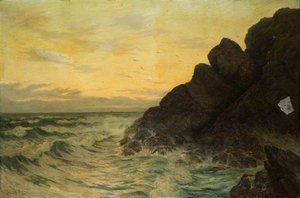
Pähkinänkuoressa
- Artistic Movement Or Style: Watermill Paintings
- Artists Who Influenced This Artist:
- Frederic Church
- George Inness
- Full Name: Alfred Harvey Moore
- Nationality: Britannia
- Notable Artworks: ['The Old Water Mill']
- Place Of Birth: Liverpool

